FORMING
Human–AI Creative Decision-Making in Performance with MYOS
EmbodimentIntentionCo-Creation
Coming soon · In development
Introduction
FORMING brings MYOS-based performance into an artistic co-creation process supported by SYMBIO. The work centers on the relationship between embodied action, artistic intention, and creative decision-making: how an artist expresses an intention, responds to AI proposals, and shapes the direction of a performance through listening and revision. It is being developed as a sound work and a presentation of SYMBIO within a specific artistic practice.
How can muscular activity and spoken intention inform the development of a sound work?
How can listening and performance guide the revision of AI-supported creative proposals?
Video
Coming soon
Why SYMBIO and MYOS
SYMBIO provides a conversational setting in which the artist can express an intention through voice, discuss a proposal, and develop changes to the system. This allows the artist to describe what a performance is trying to achieve and reconsider a technical choice in relation to what is heard. The system is developed through this exchange, with proposals returning to the artist for testing and revision.
MYOS brings another form of evidence into that process: muscular activity measured during actual performance. Spoken intentions and physical data offer different starting points for development. The artist can discuss an idea with SYMBIO, explore it through MYOS-based playing, and bring the resulting data and listening observations into the next revision. Their combination keeps the work connected to both what the artist intends and what happens when the system is performed.
MYOS
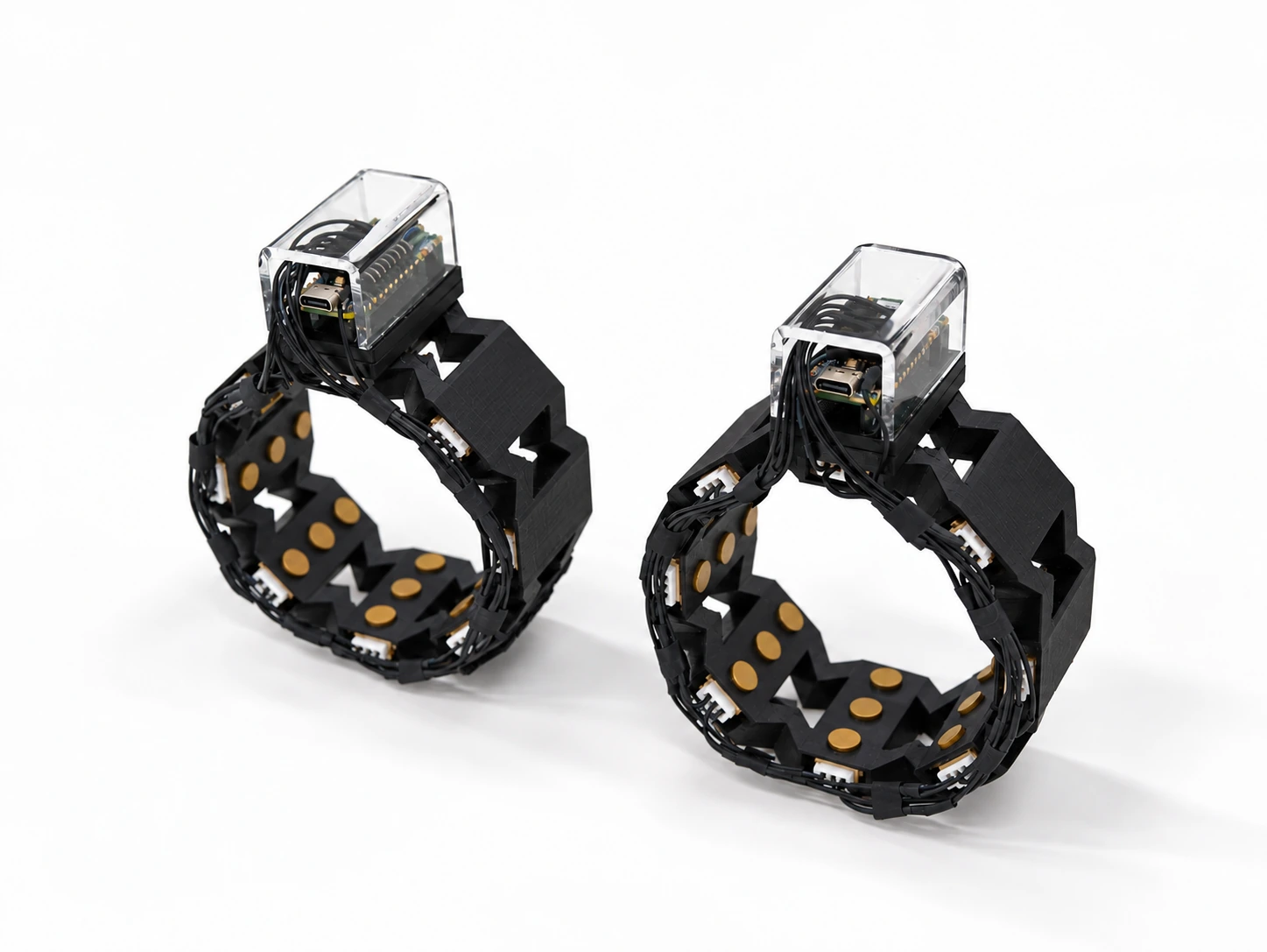
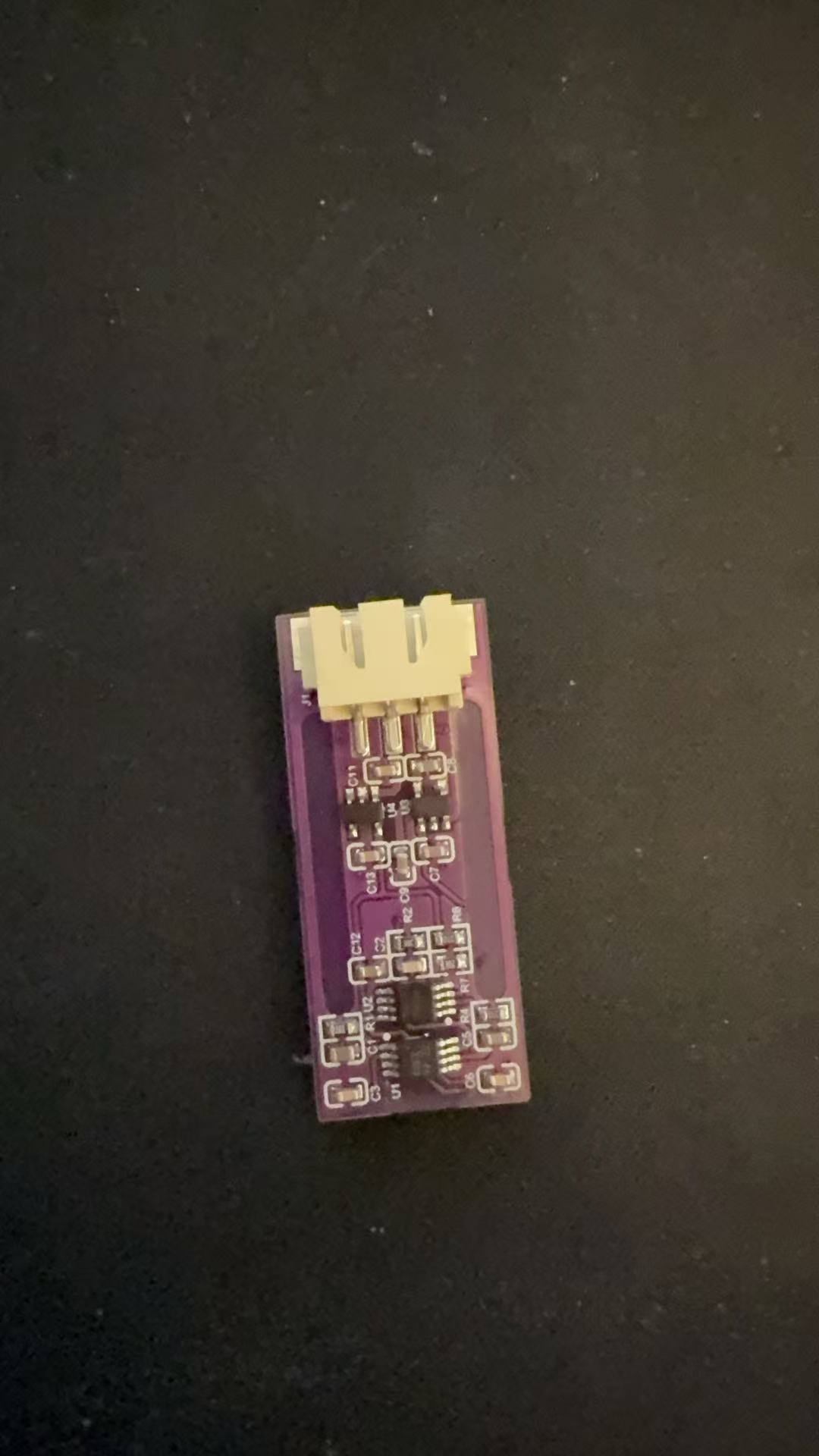
MYOS is a wearable 16-channel EMG sensing interface, arranged as left and right assemblies with eight channels on each side. Its design combines a custom wearable structure with muscle-sensing electronics. In FORMING, it provides real muscle-activity data for performance and for the iterative development of the sound system.
System Structure and Development Loop
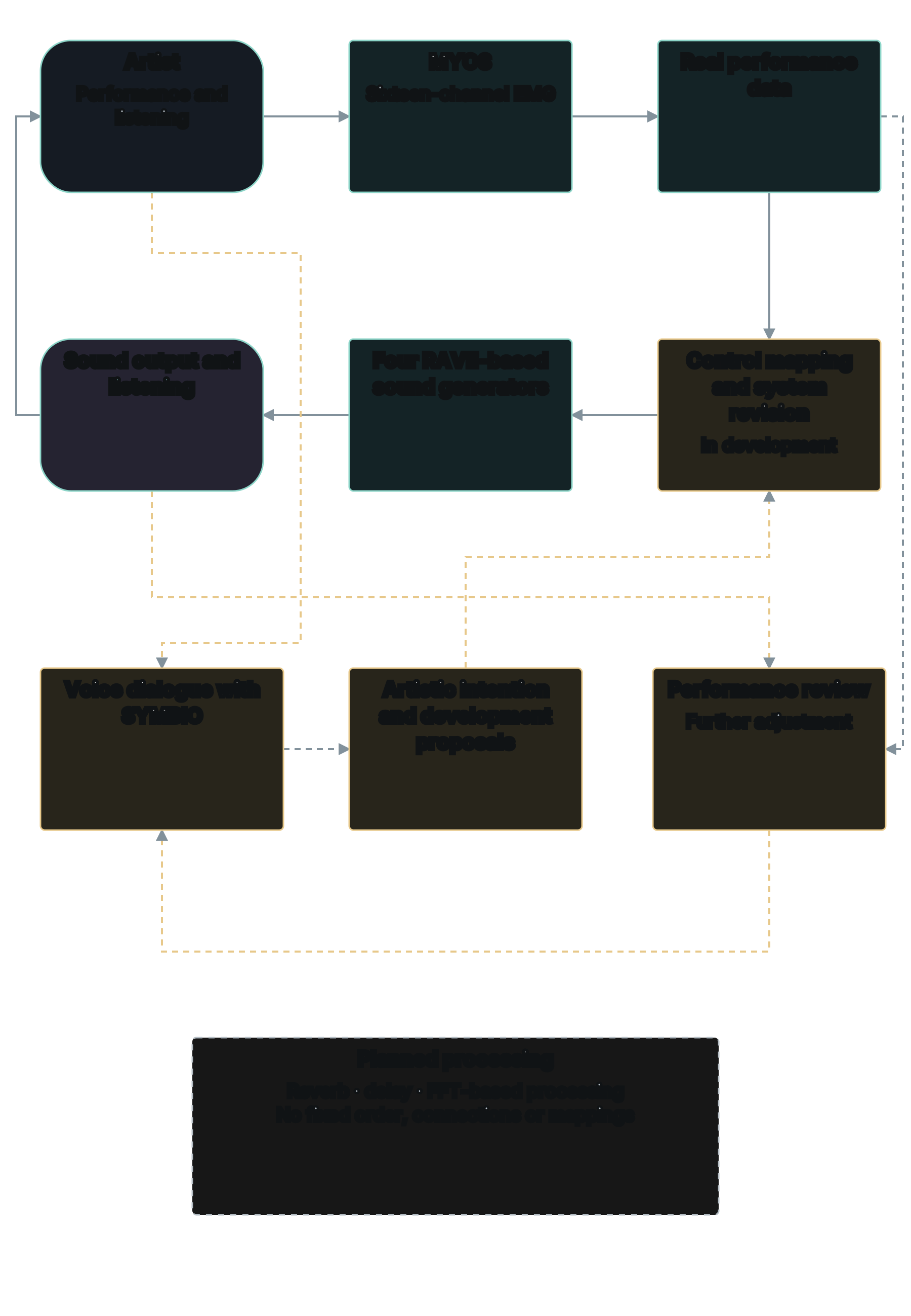
FORMING connects a performance path with a development loop. In the performance path, MYOS supplies muscle-activity data to a control structure being developed around four RAVE-based sound generators. In the development loop, the artist discusses intentions and possible adjustments with SYMBIO, tests changes through performance, and returns the resulting data and listening observations to the discussion. Proposals, implementation, and artistic evaluation remain distinct steps within the same cycle.
Performance and development

Sound
Four RAVE-Based Voices
The sound design is organized around four RAVE-based sound generators, approached as oscillator-like voices within a larger instrument. Here, “oscillator-like” describes their role as sources of sound that can be brought into relation during performance; the audio itself is generated through RAVE. The four voices form the core around which embodied control and further sound processing are being developed.
A four-voice structure provides scope to develop the sound through balance, contrast, density, and continuity. Individual voices can be considered in relation to the larger sound field: how clearly a voice is perceived, how several voices coexist, and how their relationships change over time. These are compositional questions to be explored through listening and performance, with the roles of the voices remaining open to revision as the work develops.
Embodied Control and Listening
MYOS provides real muscle-activity data for exploring how physical action can shape this four-voice instrument. The specific relationships between the data and the sound generators are still being developed. Changes to the control structure are considered through their audible consequences and through the experience of performing them. Voice dialogue with SYMBIO allows these observations to become proposals for the next iteration, keeping sound design and system development within the same feedback loop.
Planned Processing
Reverb has not yet been integrated. Its planned role is to develop the spatial extent and persistence of the generated sound: how a voice occupies an apparent space, how it recedes, and how its residue continues after an event. This could give the work a way to connect immediate bodily actions with sound that unfolds over a longer duration. The character and placement of this processing remain to be developed through listening.
Delay has also not yet been integrated. It is being considered as a means of developing temporal relationships within the sound, allowing earlier material to return and interact with what is heard later. Repetition, overlap, and separation could become part of the work’s phrasing and sense of continuity. Its role will depend on what these returns contribute to the performance, with routing and control choices still open.
FFT-based processing is planned as a framework for exploring changes in spectral content. It offers a possible direction for shaping how timbral detail is distributed and how the four voices become distinct or blend within the overall sound. The specific spectral operations have not yet been fixed. Their selection and implementation will be developed in relation to an artistic need and assessed through audible results.
The relationship between the four generators and these planned processes remains part of the composition’s development. Their final order, connections, and control mappings are not yet fixed. FORMING develops these choices through a cycle of voiced intention, technical proposal, actual performance, and listening, so that the architecture can change in response to the sound and the artist’s decisions.
Development Reflection
An open question is how muscle signals can form musically meaningful relationships with the four RAVE voices that are worth performing with. Mapping and subsequent processing are still in development. The next step is to test these choices through concrete performance and listening, then decide which technical proposals to retain.