MYOS
16-Channel Wearable EMG Sensing Interface
Sensor DesignGesture Learning3D Modeling
Tian Li · Sensing hardware, circuits and interaction
Intention
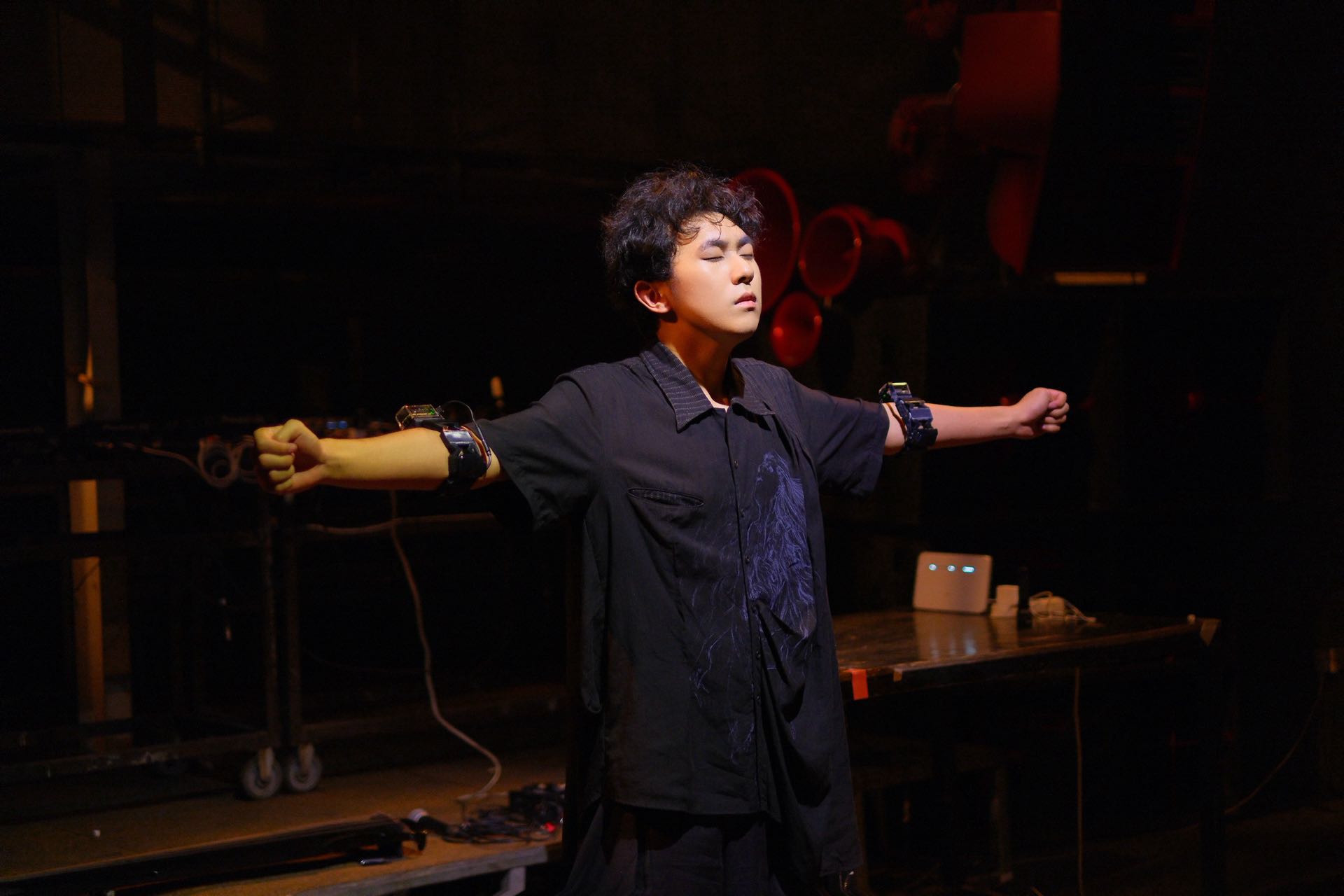
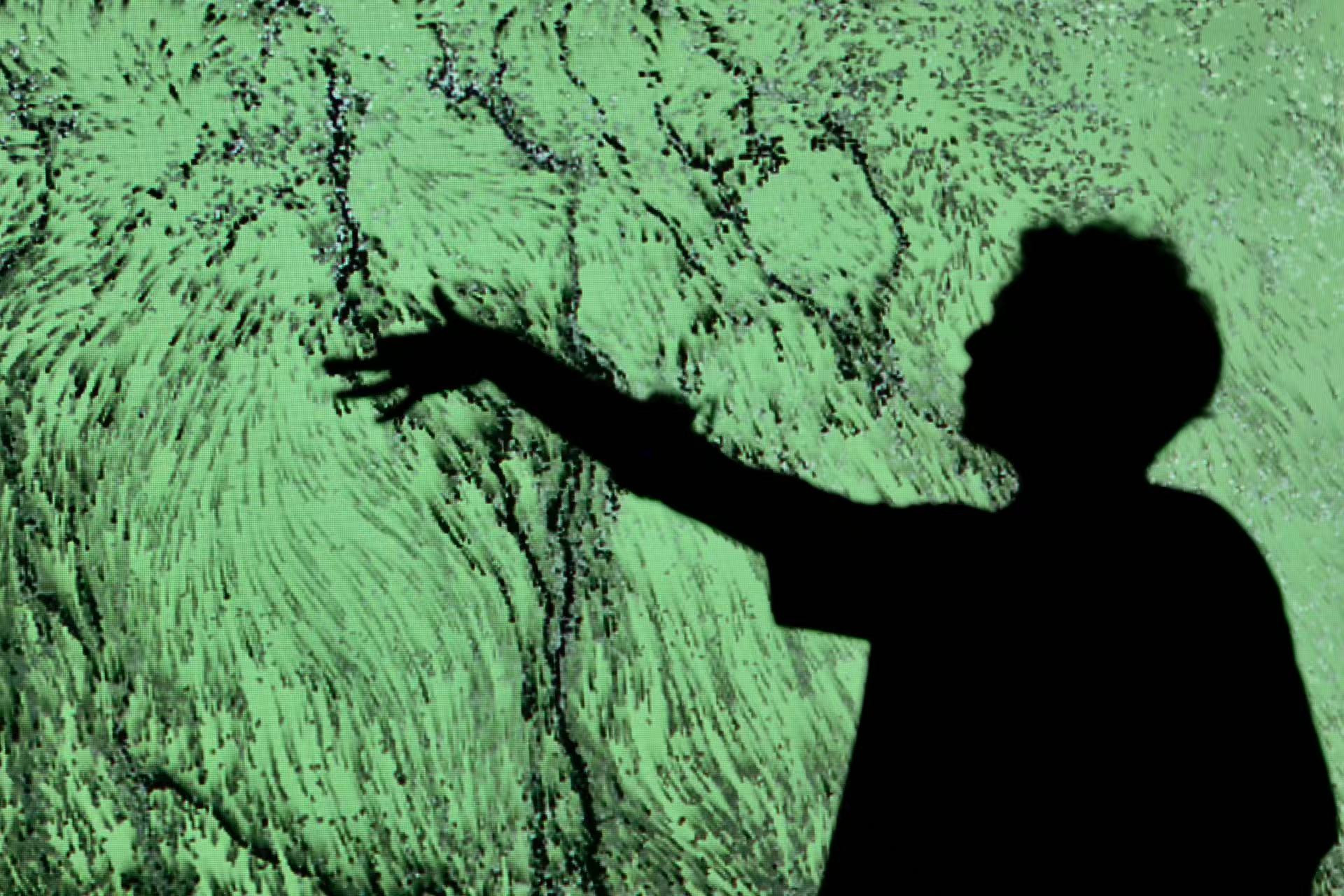
MYOS makes muscular activity available as a material for artistic interaction. The wearable interface connects physical action with a configurable control system, allowing an artist to work with measured activity and learned gesture patterns when shaping sound or other media. MYOS is pronounced Muse, in reference to the artistic Muses.
How can muscular activity become a material for artistic interaction?
How can continuous muscle-activity control and learned gesture patterns work together?
Hardware Structure
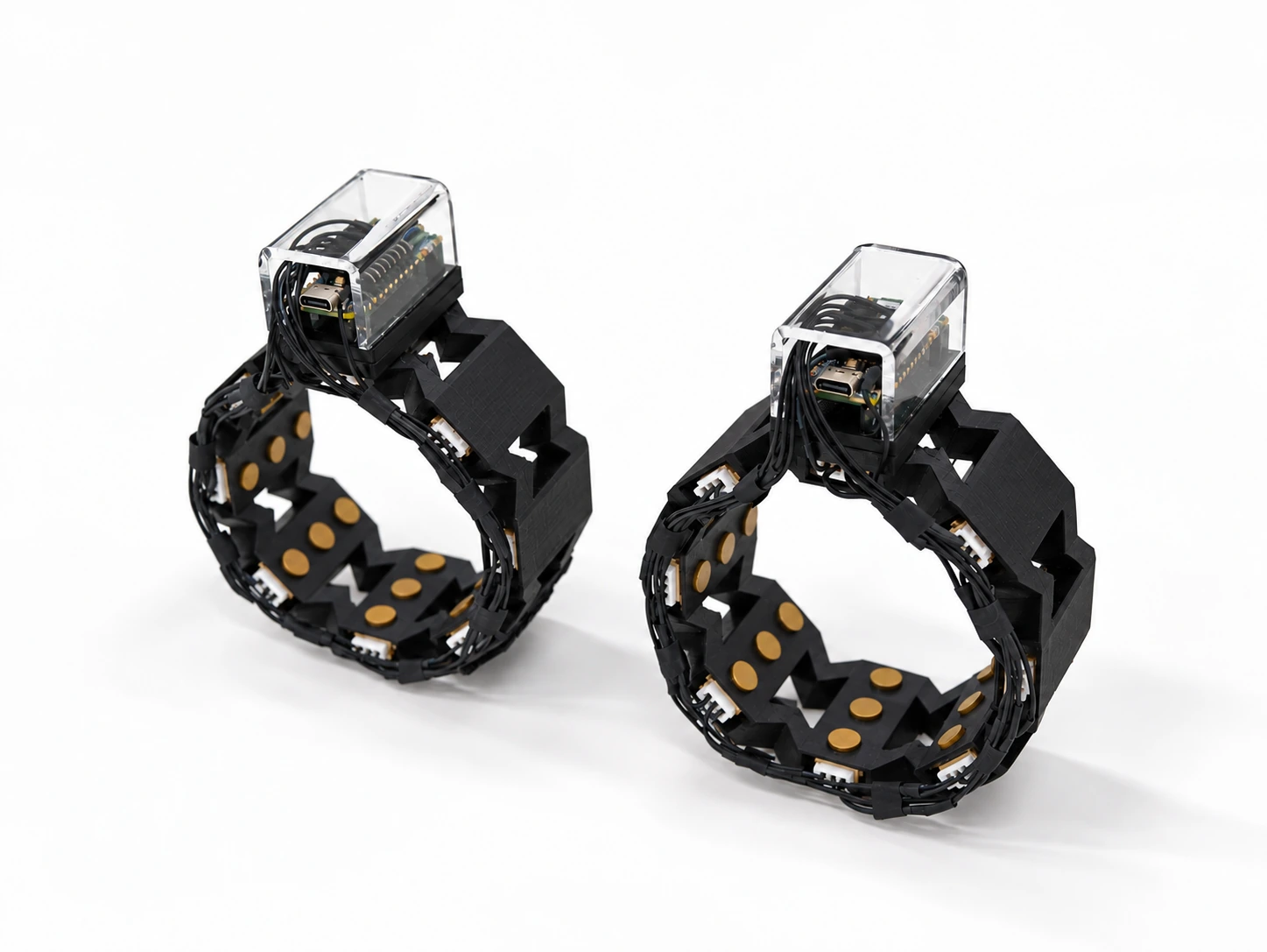
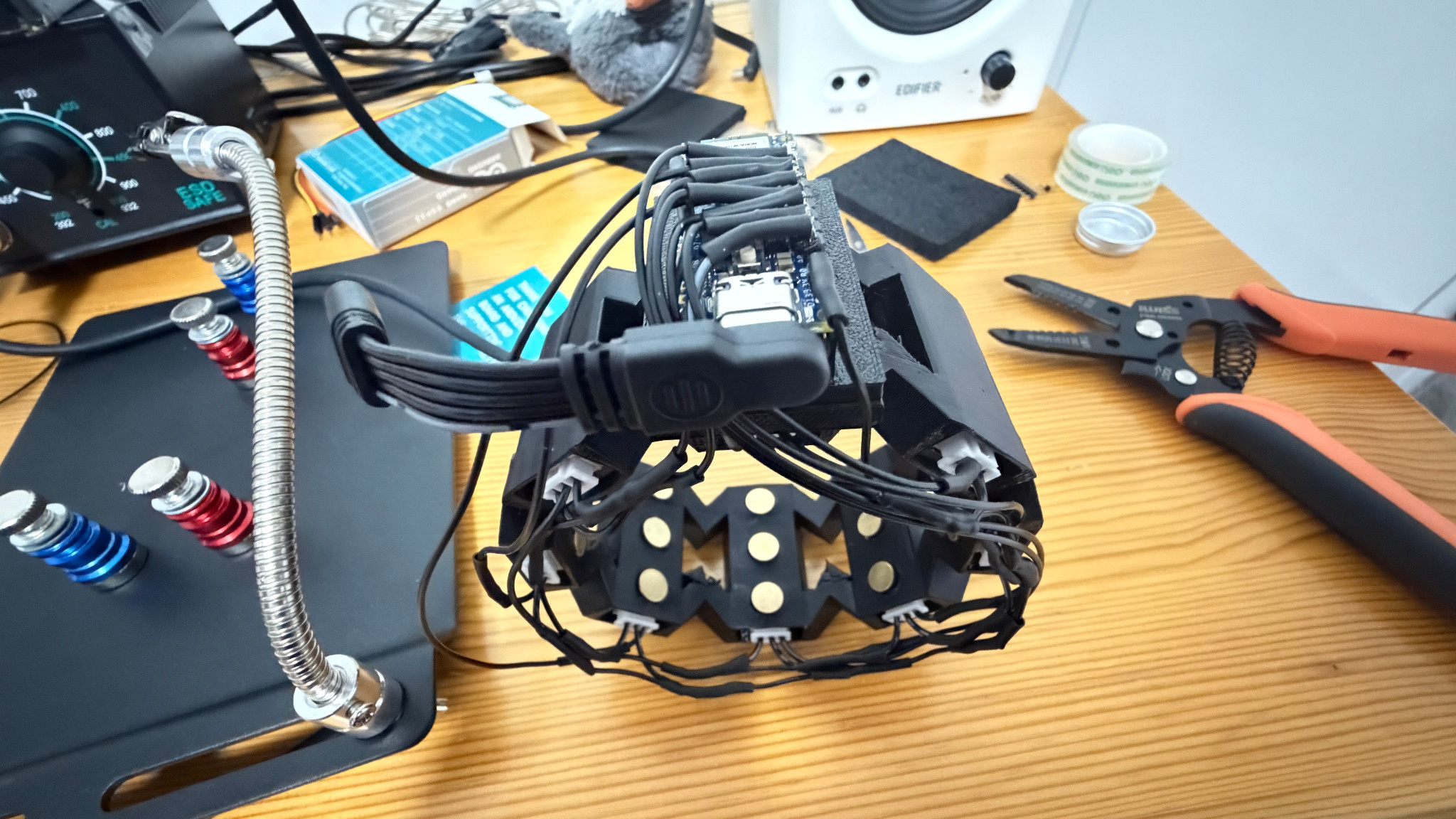
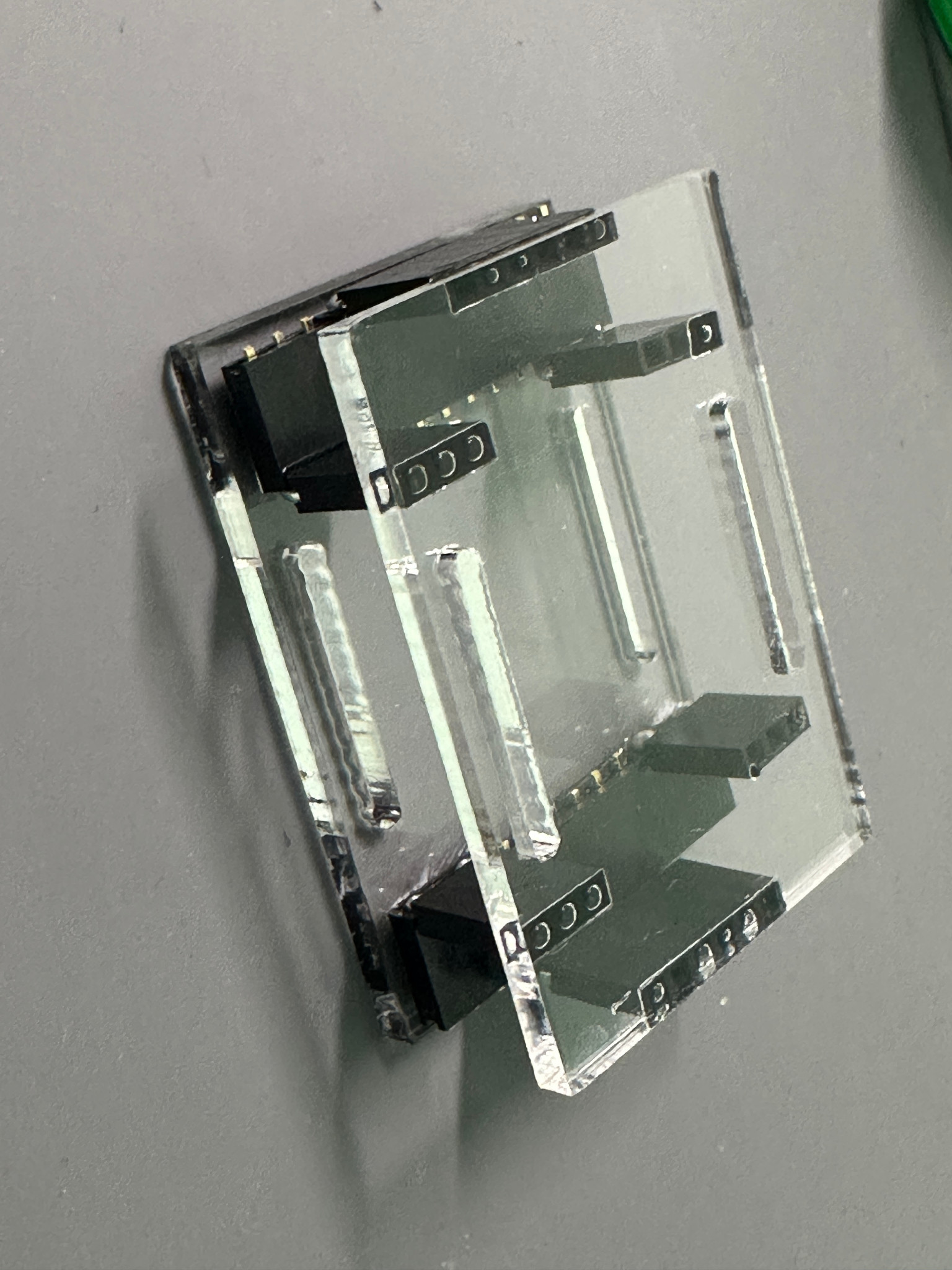
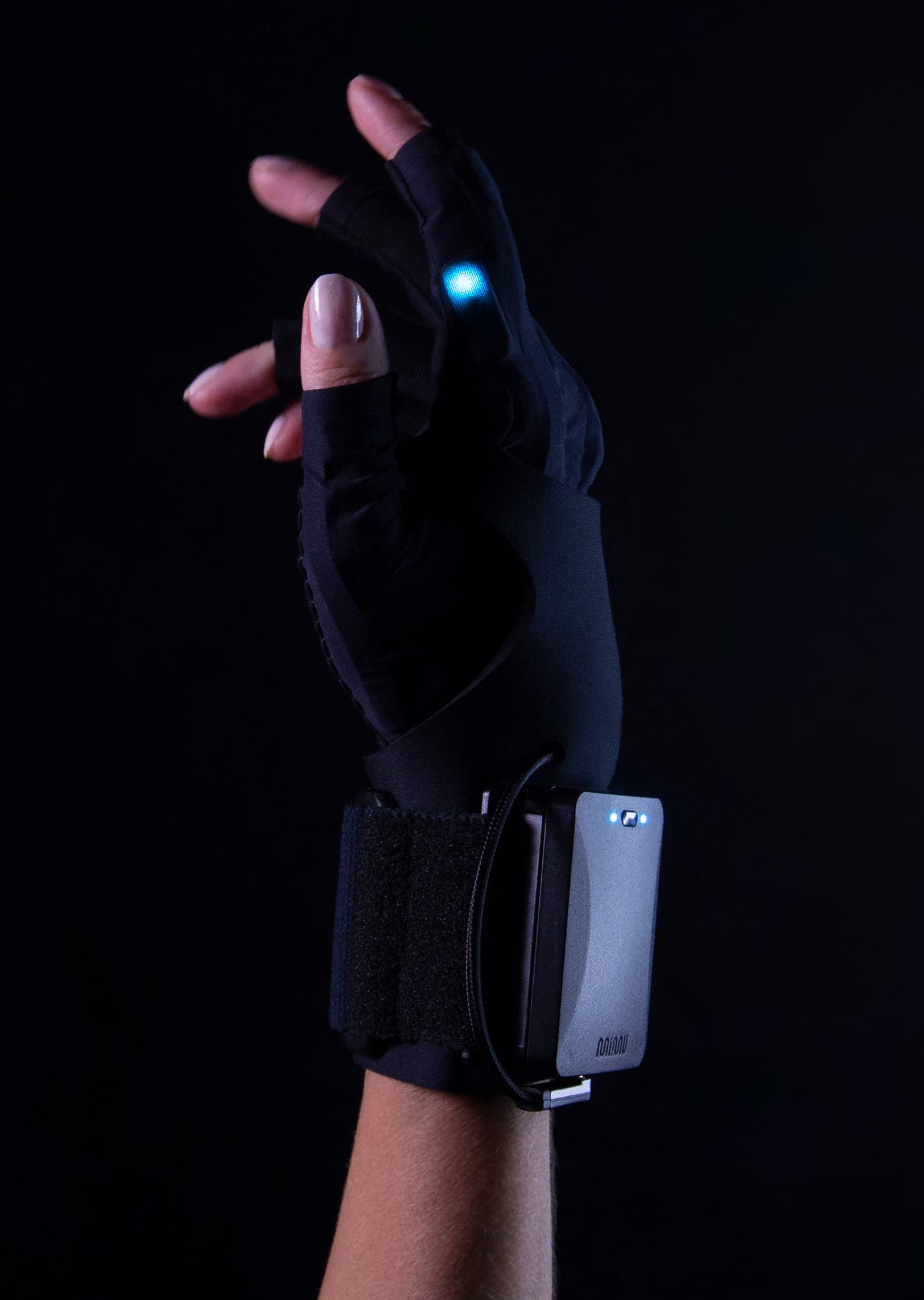
The current MYOS design, developed around July 2026, has sixteen EMG channels, arranged as left and right wearable units with eight sensor positions on each side. Custom enclosures organize the sensor modules around the body, with openings for the contact points. The two enclosures have their own geometry and are designed as distinct parts of the paired interface.
The redesigned enclosures address issues encountered with the earlier strap-based version, where sensors could shift and local fastening could feel uneven or too tight. The modeled housing aims to provide more consistent sensor positioning and fit.
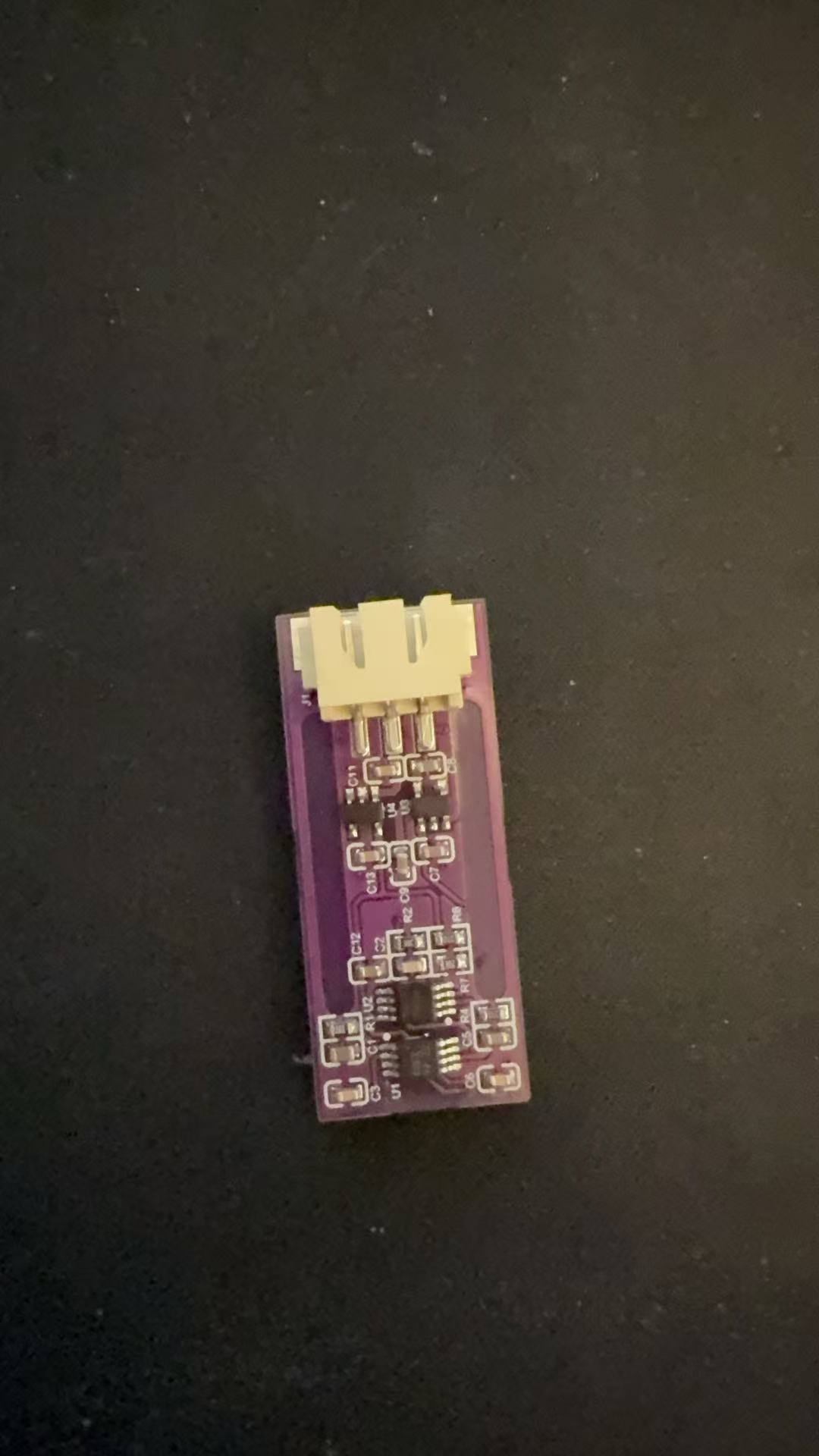
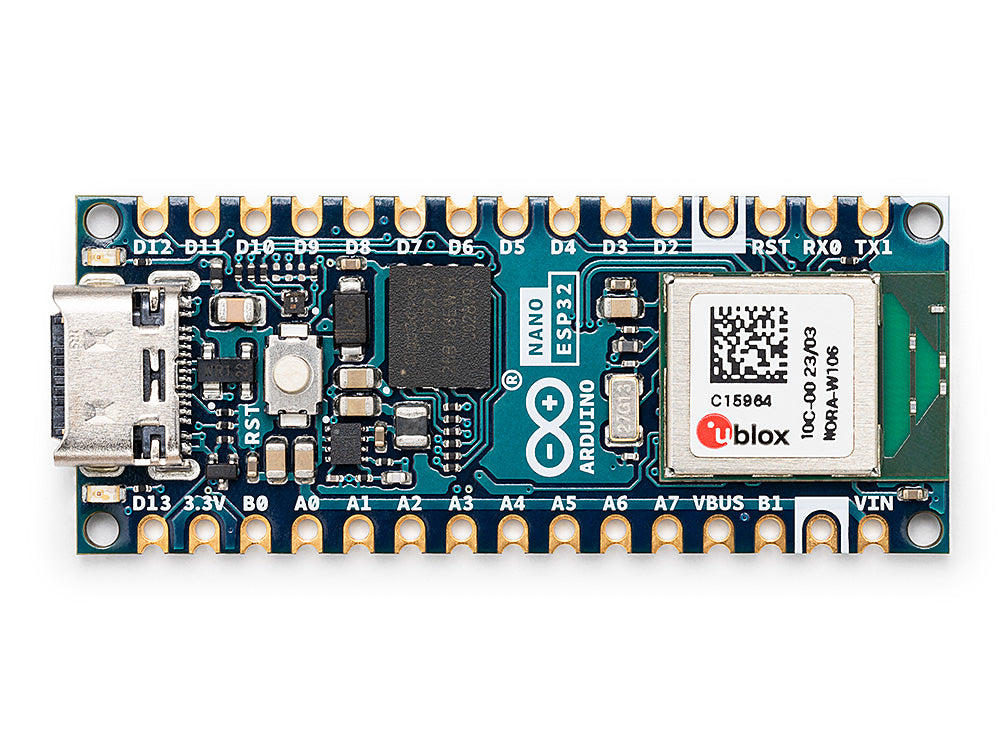
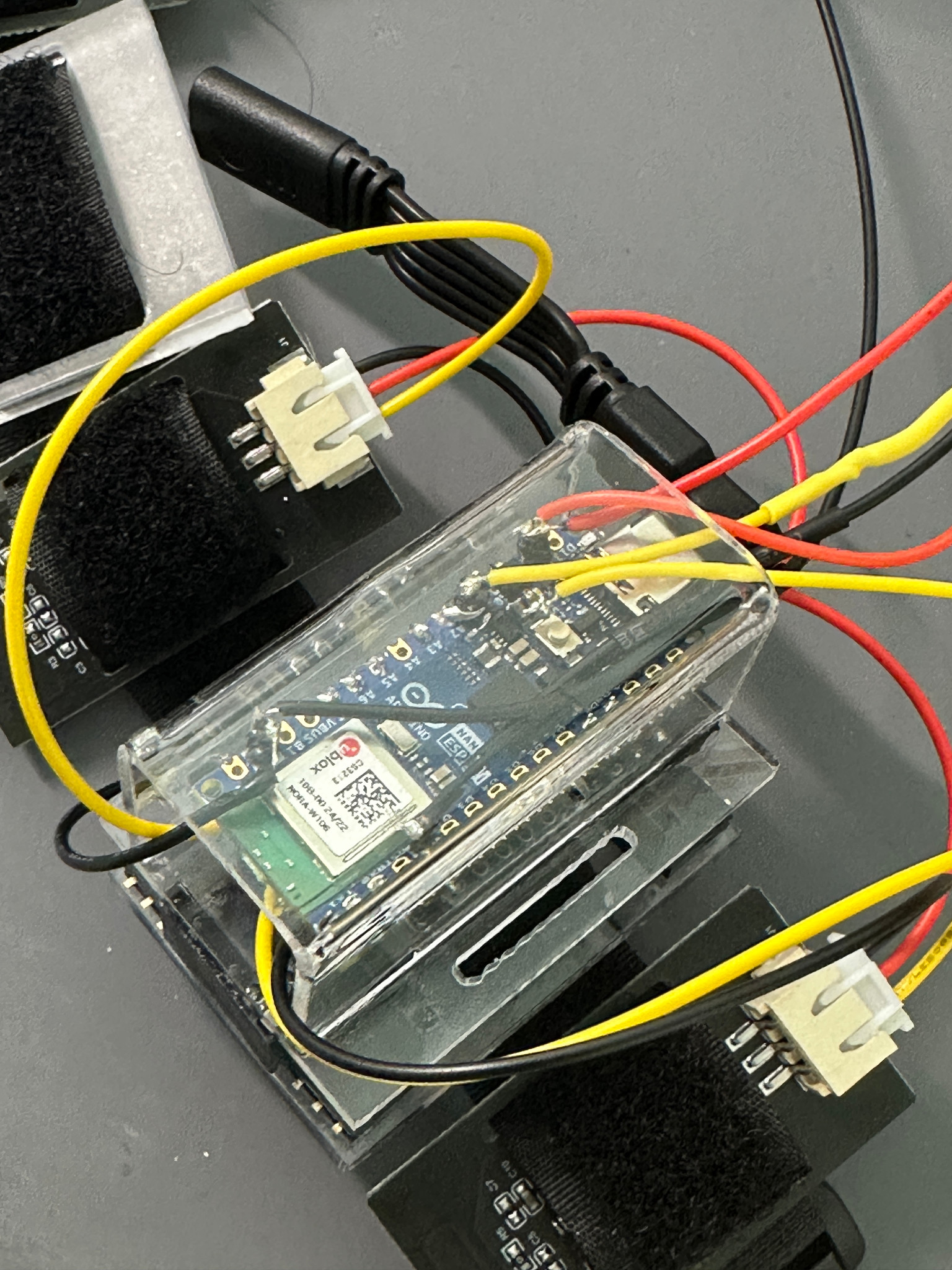
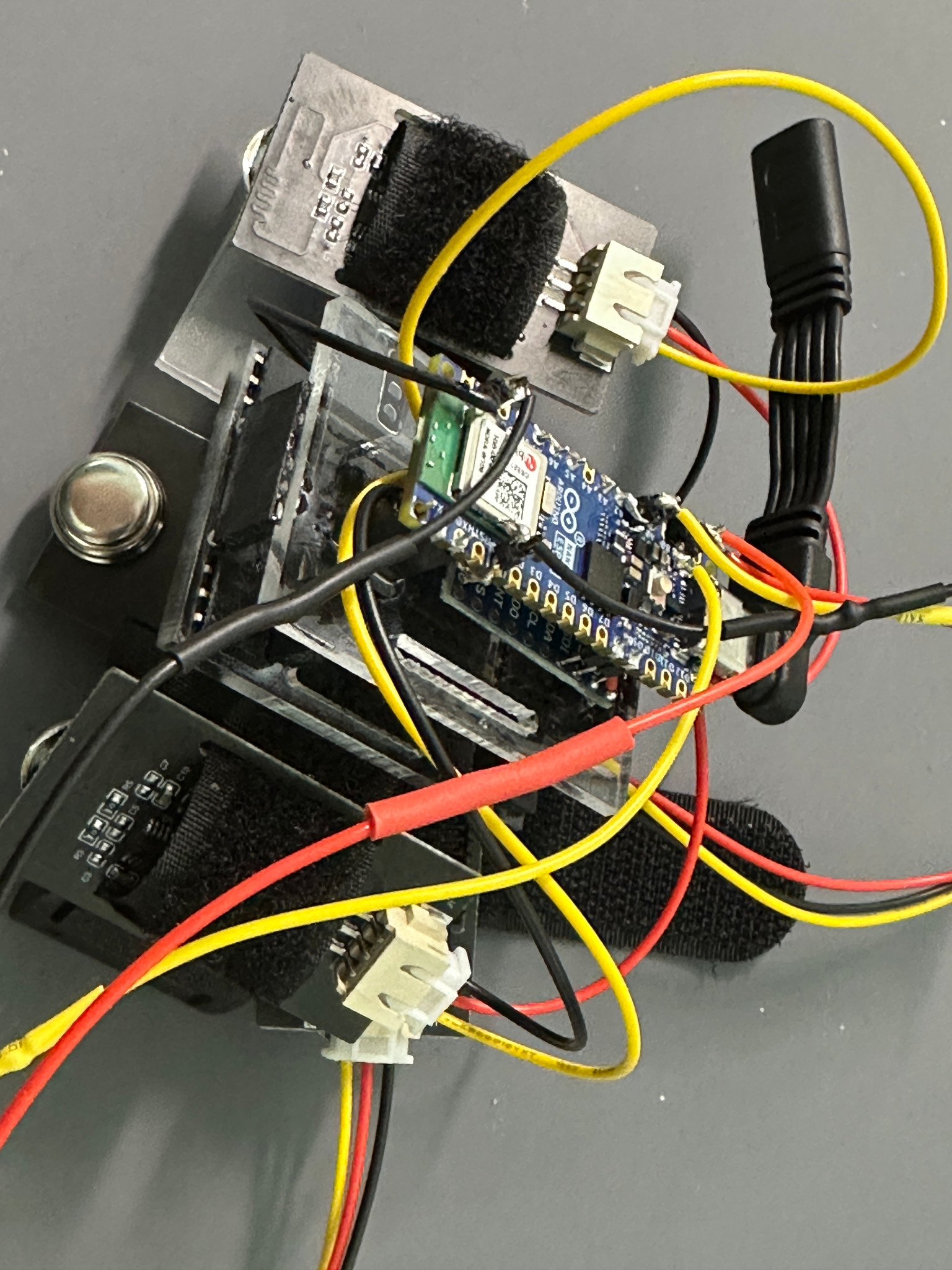
Each compact sensor module combines an INA333-based analog front end with three contact points and a small PCB. The front end conditions the muscle-sensing signal before acquisition. An acquisition system built around Arduino Nano ESP32 carries the sensor data into the digital workflow and supports wireless transmission using OSC over Wi-Fi.
Two wearable units, with eight sensor modules on each side. The contact points face inward through the modeled enclosures.
Exploded view. Drag or use arrow keys to rotate.
From Muscle Activity to Media Control
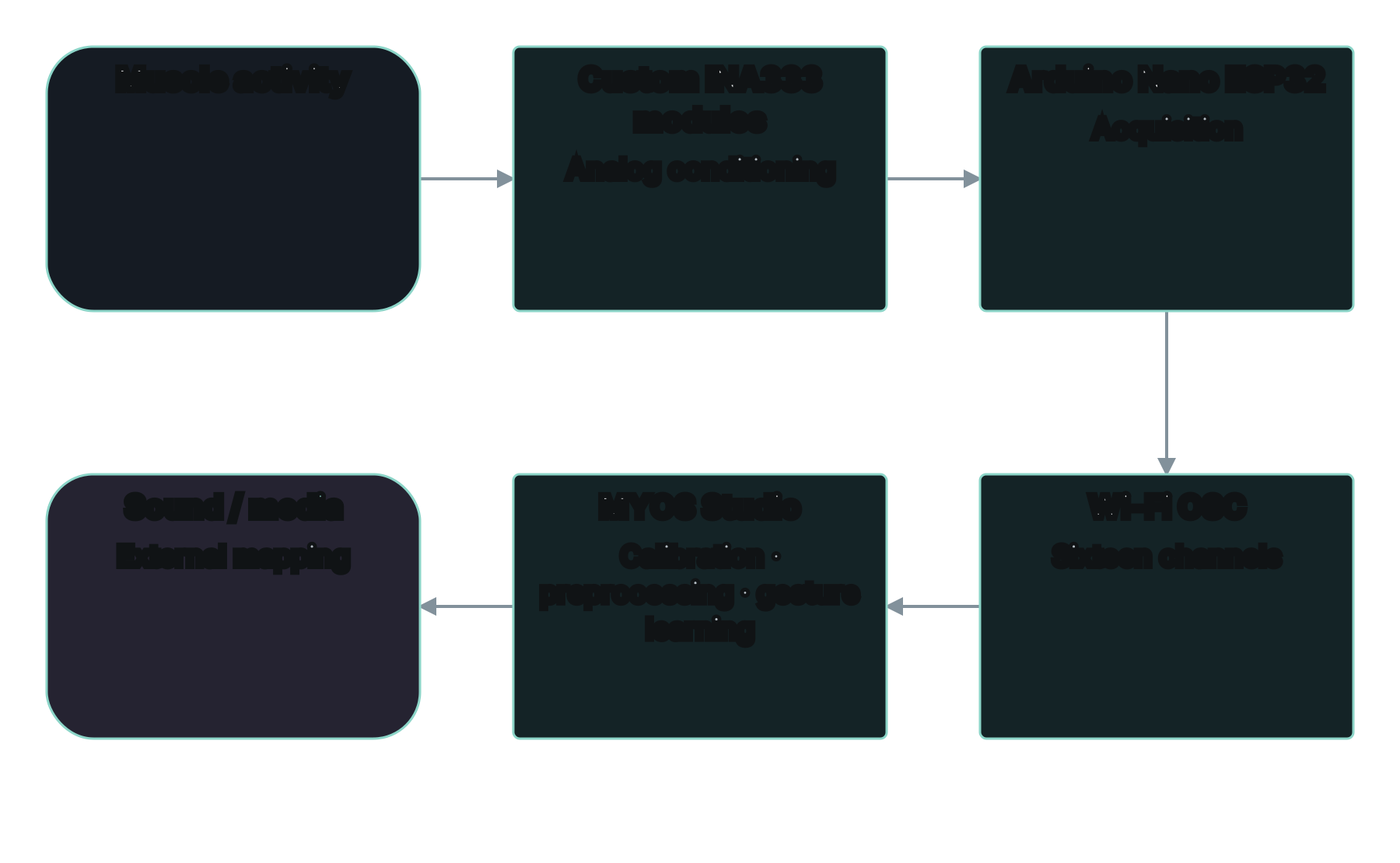
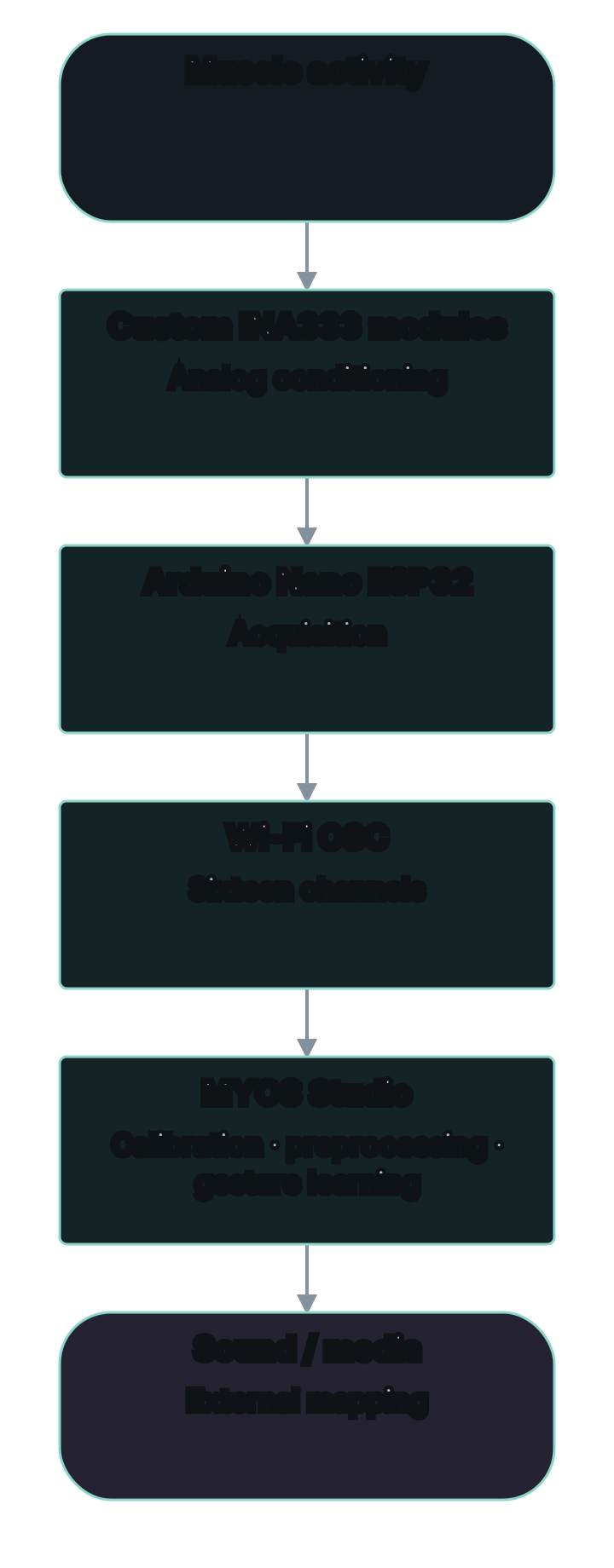
The signal path connects sensing, data preparation, and artistic mapping. After acquisition, the software extension provides ways to inspect and prepare the EMG data before it is used in an external sound or media environment. The artist chooses how the available signals and gesture estimates are mapped to the work.
From muscle activity to media control
Software Extension
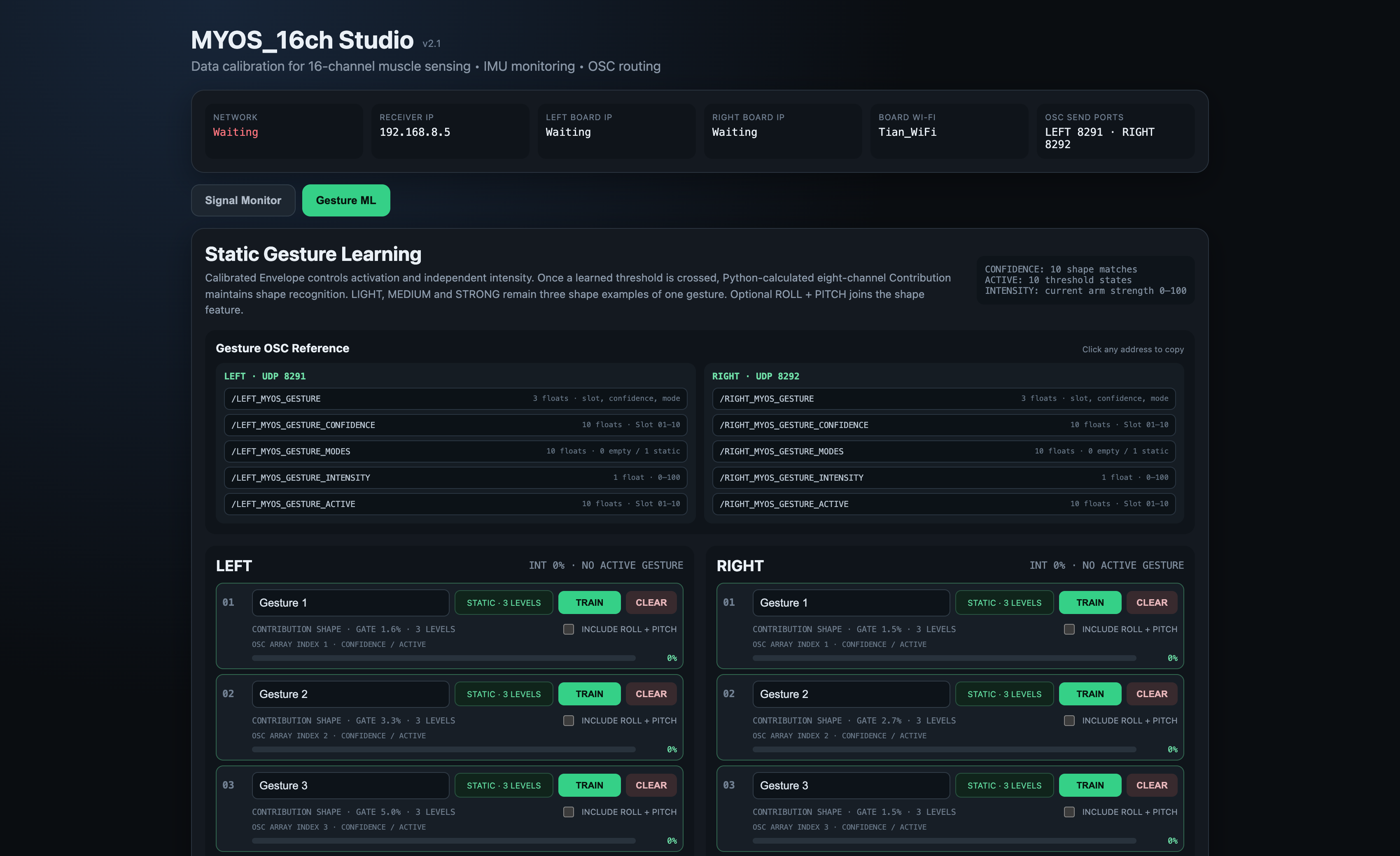
MYOS Studio is the separate software extension for session calibration, monitoring, OSC forwarding, and static gesture matching. The Max patch handles fixed scaling and routing; the Studio workflow establishes session references and compares static channel patterns with stored examples. These functions and their current limits are documented on the MYOS Studio page.
Previous Versions in Performance
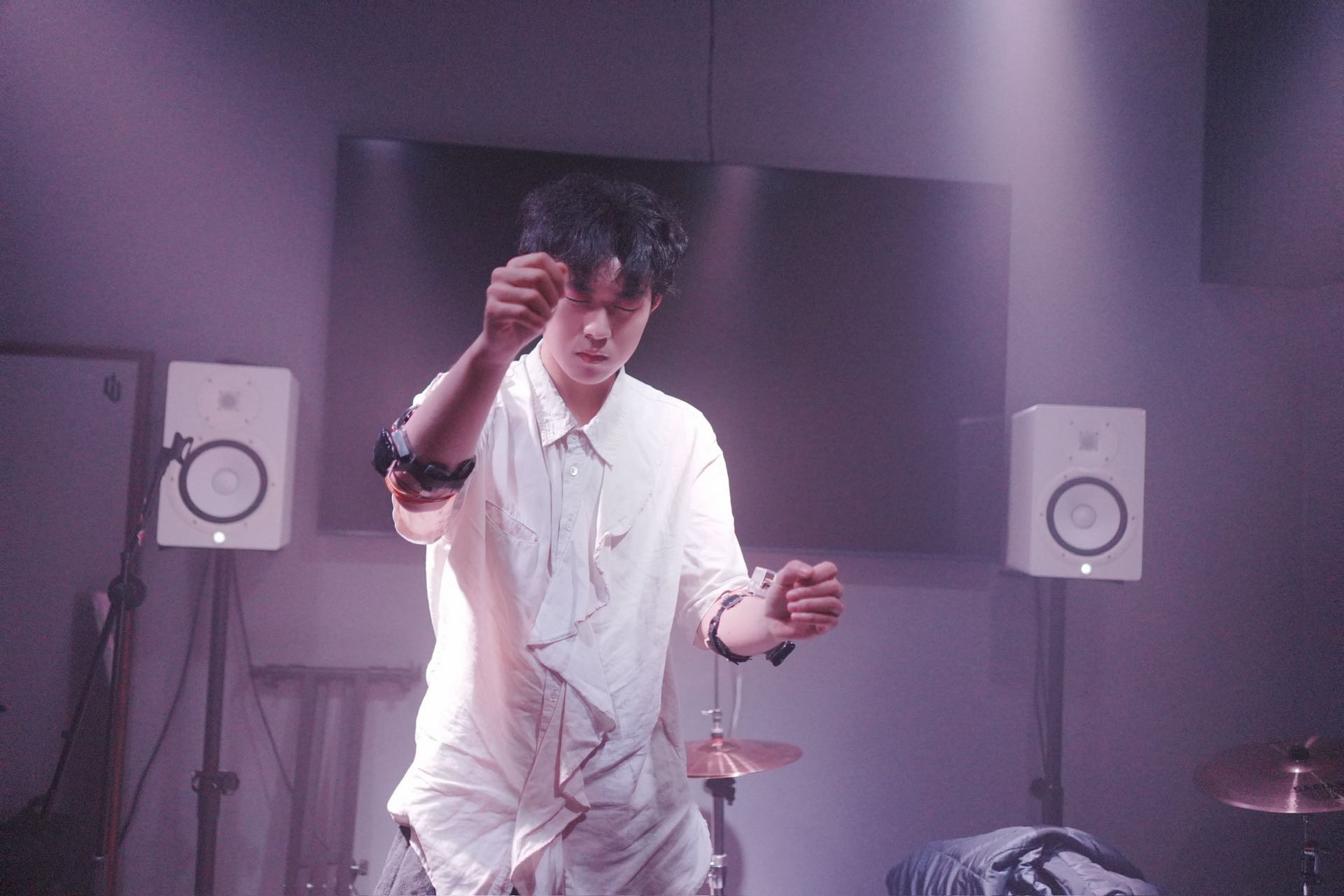
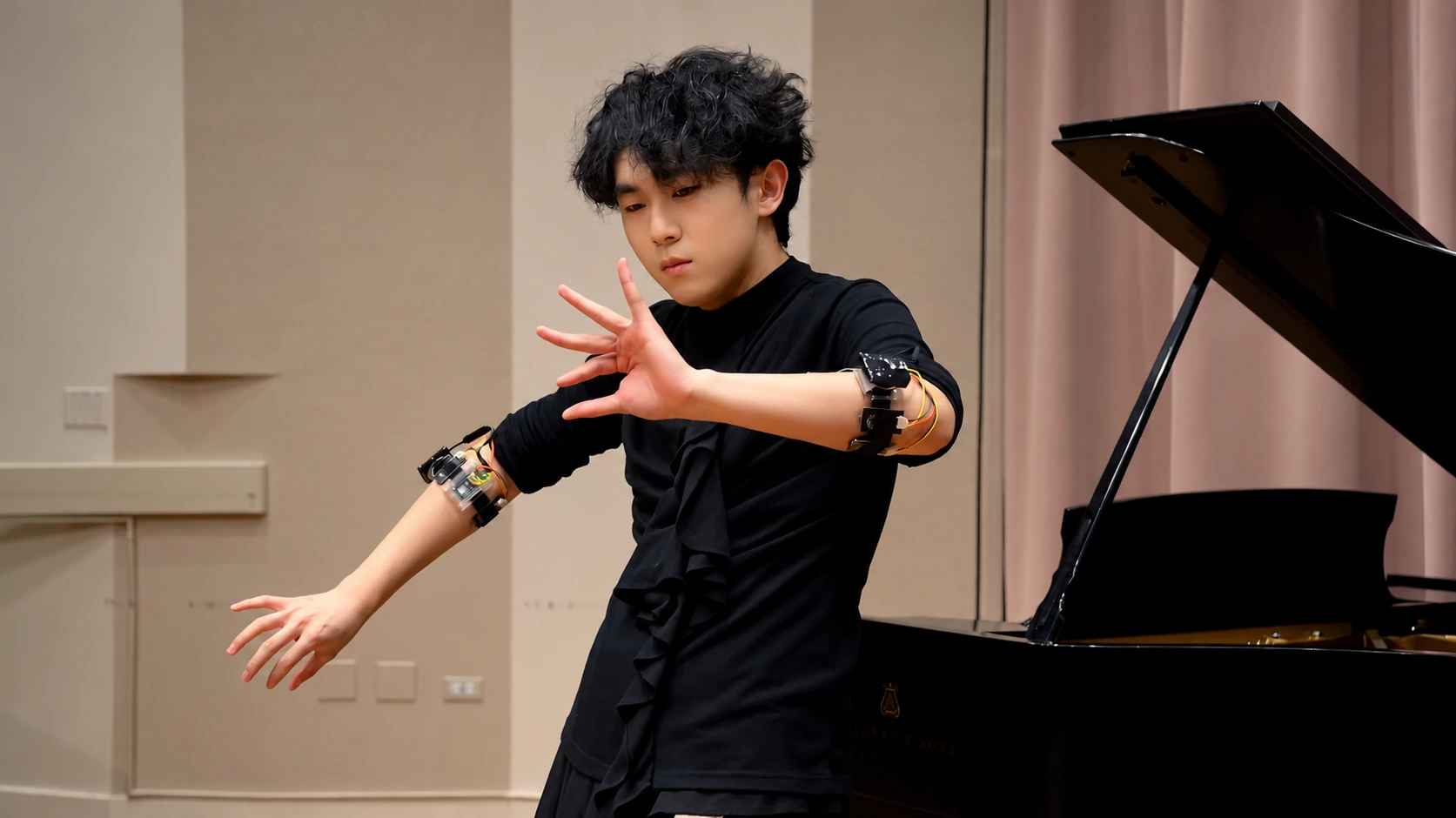
The earlier eight-channel strap version of MYOS dates from December 2025 and was used in Dual and Spectral Traces. These works provide performance contexts for the previous hardware, while the current sixteen-channel design brings together separate left and right eight-channel units.
Performance Documentation
Related Projects
 MYOS Studio
 Dual
Dual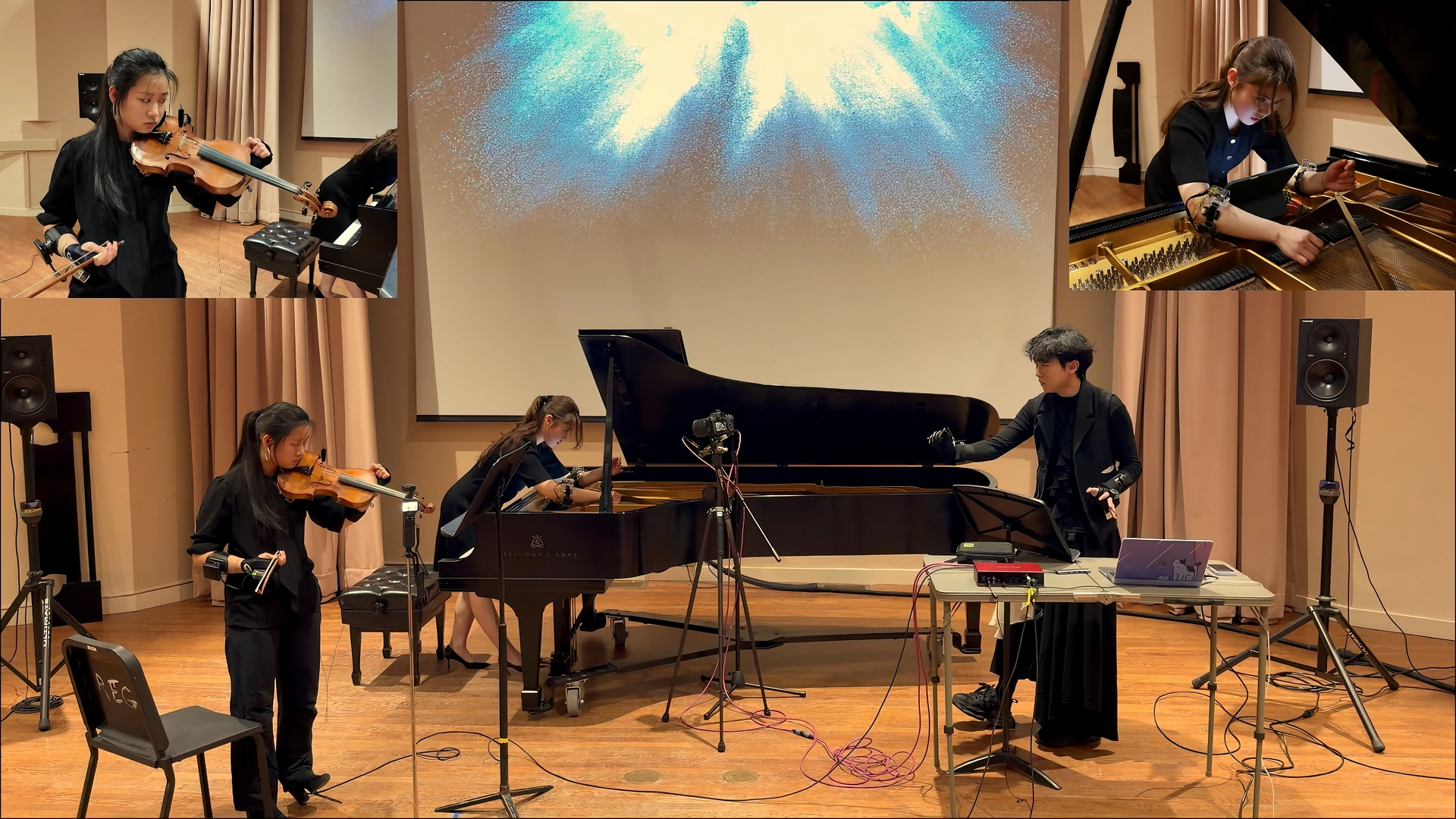 Spectral Traces
References

Credits
Tian Li — Sensing hardware, circuits and interaction
3D Modeling — Zhikang Xu