Developing Artistic Practice with AI
I use emerging technologies to turn artistic questions into creative situations that I can take part in firsthand, observe, and continue to question. Technology is a means of inquiry; artistic questions determine what I want to do. While developing these projects, however, I also began to recognize that the way I work with AI during development affects the questions I can ask and the artworks I ultimately make.
Before INTERPRET, my understanding of AI was still limited, and I once took GPT to represent AI as a whole. My excitement about new technology led me to underestimate the need to learn the tools in depth. While developing INTERPRET, I kept adding requirements without giving sufficient thought to the overall structure, and spent a great deal of time on the process. I later drew on engineers’ practices and sought advice from friends with computer science backgrounds. This helped me recognize that understanding collaboration requires more than asking the tool I am using: it also requires external knowledge, other people’s experience, and my own practice. Learning about neural networks is only one part of understanding AI.
Filming CoMotion gave me a more concrete reminder. Even after multiple rounds of AI-assisted code review returned feedback indicating that the code had passed review, the system still stuttered and crashed on site. This led me to reconsider what it means for a check to be complete: what a review covers and whether an artwork holds up under actual operating conditions need to be examined separately. Confidence during development and experience of the work in real conditions need to continually inform and recalibrate one another.
I had also used GPT to organize my ideas before handing them to Codex for implementation. Even before IN BETWEEN, this handoff had already revealed problems with context loss; working directly with Codex was more appropriate for the task at that time. I also tried to build PACS (Personal AI Collaboration System) to organize collaboration between myself and AI tools. I gradually began arranging collaboration according to the capabilities of different tools and managing the structure of the entire creative system myself, rather than simply giving each tool separate instructions.
This shift also found expression in the work itself. IN BETWEEN initially aimed to use two avatars to represent two creators, but later became more concerned with how AI’s distinctive ways of exploring and exchanging information could contribute to developing ideas. Both the collaborative relationships within the artwork and those involved in making it need to be redesigned around specific capabilities.
Subsequently, while developing SYMBIO and the website, I organized feedback, development instructions, and reviews more explicitly. I distinguished what had been confirmed, what remained unknown, and what was suggested, so that each exchange could provide a basis for the next round of work. Collaboration felt smoother to me, but this remains a practice that I continue to adjust. I want new technologies to expand what I can explore, rather than let me skip the thinking involved. Depth and breadth of knowledge, a clear understanding of capability boundaries, and continued technical learning form the basis for my continued collaboration with AI.
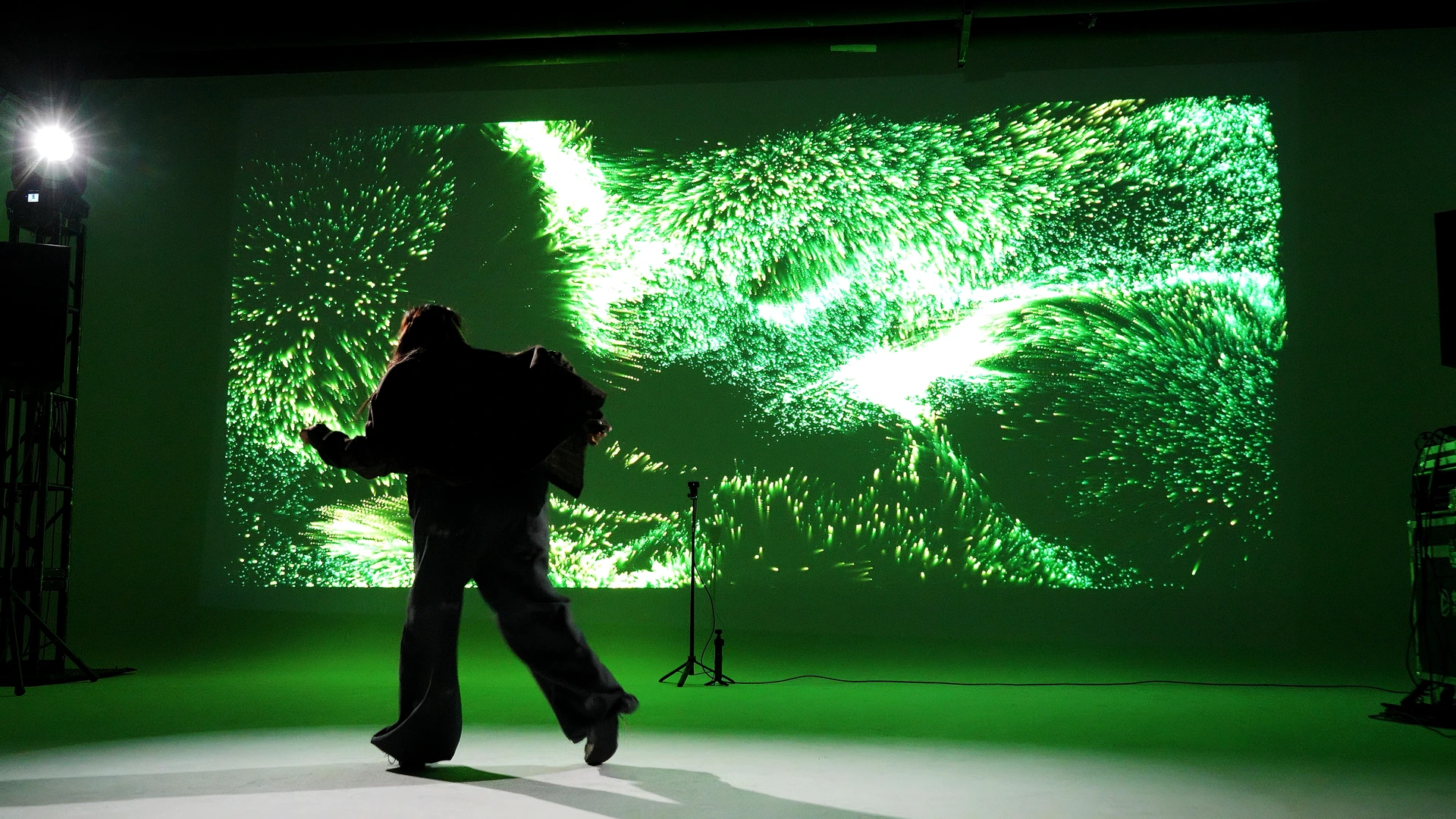 INTERPRET
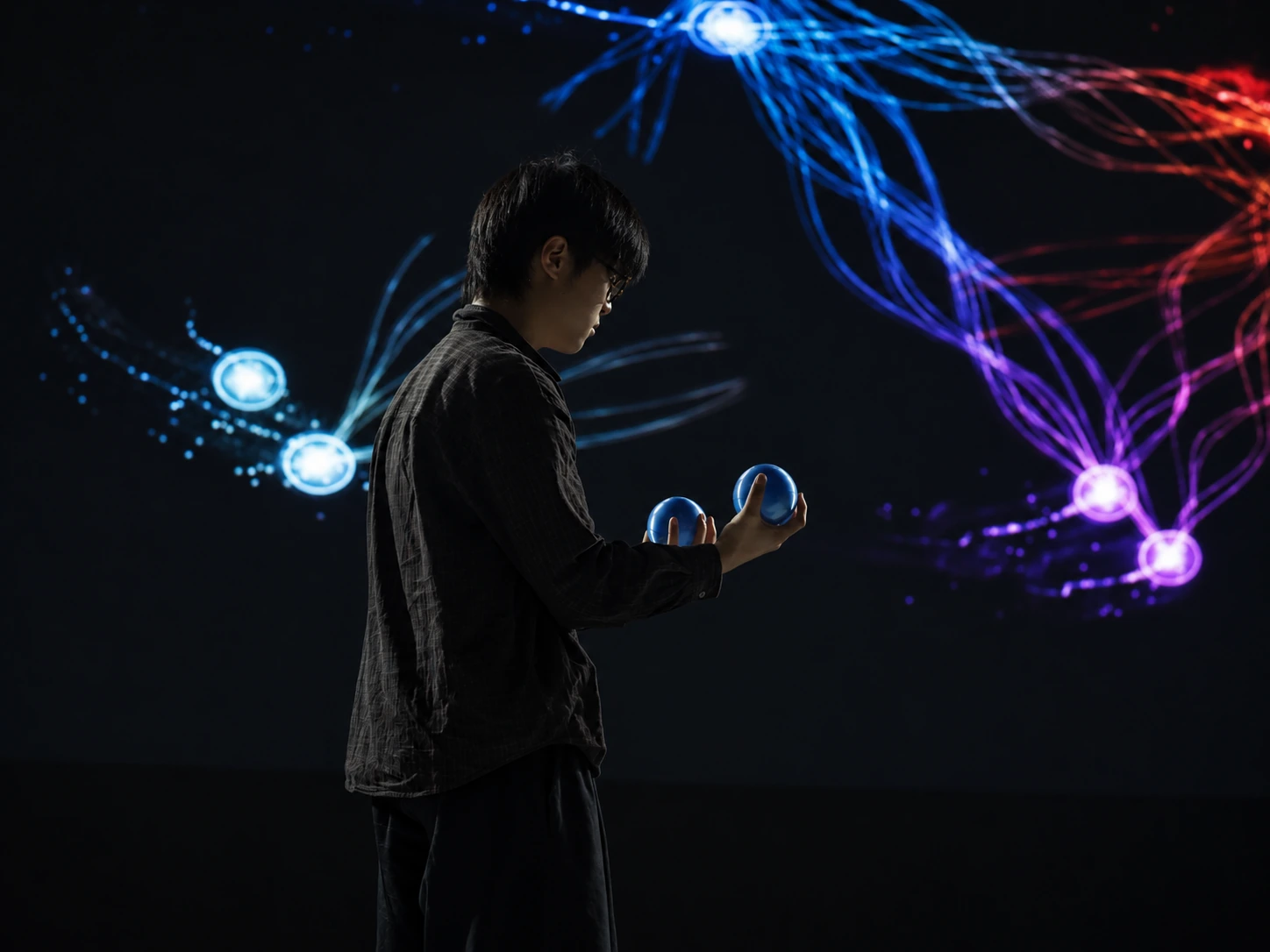 CoMotion
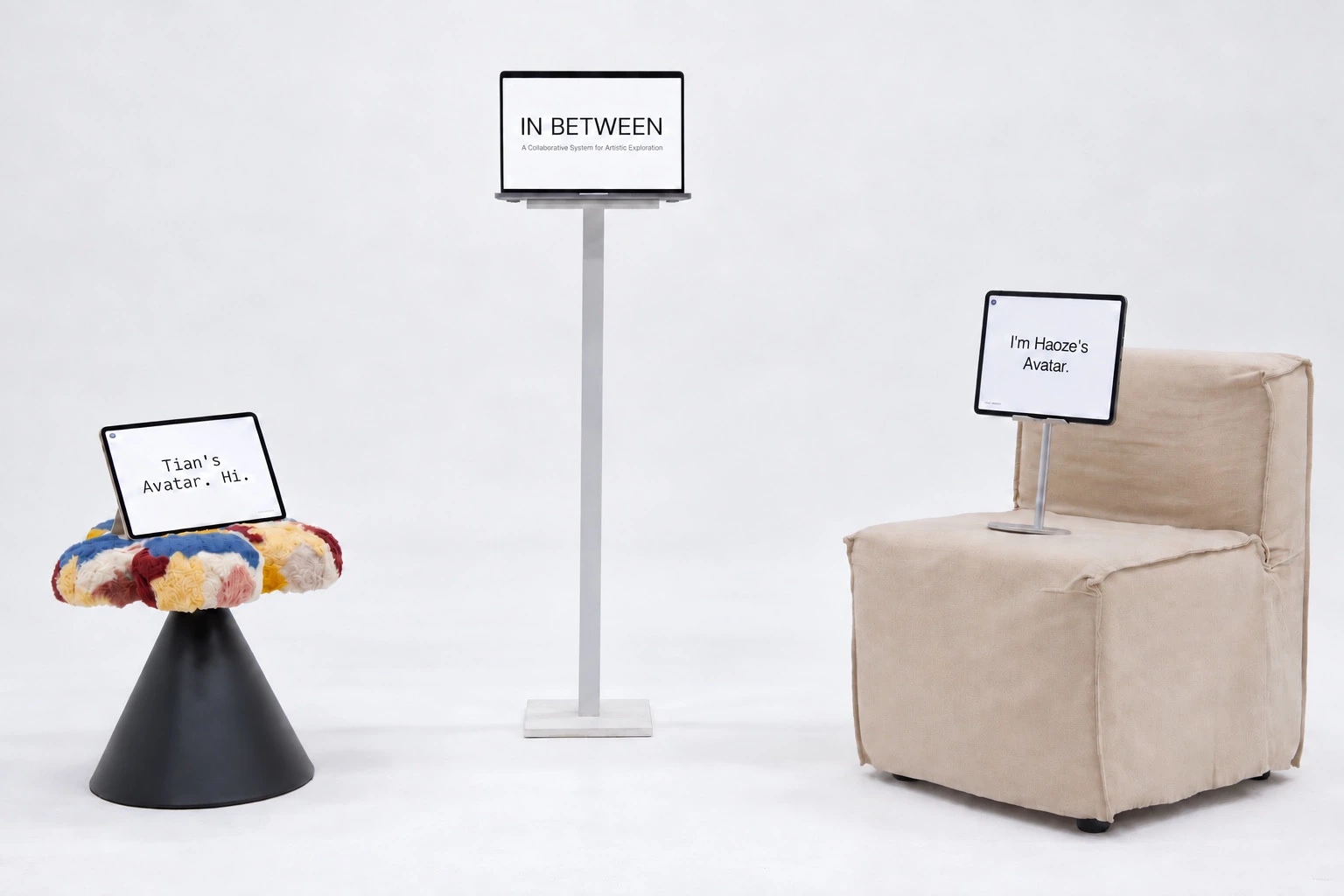 IN BETWEEN