Spectral Traces
Electroacoustic Composition for Violin, Piano, and Wearable Interfaces
ImprovisationVisualizationSpectral Processing
Tian Li · Composition, live electronics performance and custom spectral freeze implementation
Description
Spectral Traces is an electroacoustic composition that extends the sounds of violin and piano through wearable-controlled live processing. Drawing on spectral approaches to sound, it explores how an instrumental gesture can continue through changes in timbre, duration, and texture. All electronic sound is derived live from the violin and piano, with no fixed-media layer.
How can a live instrumental gesture continue through spectral transformation?
How can wearable control extend the dialogue between instrumental playing and electronic sound?
Performing Through Wearable Interfaces
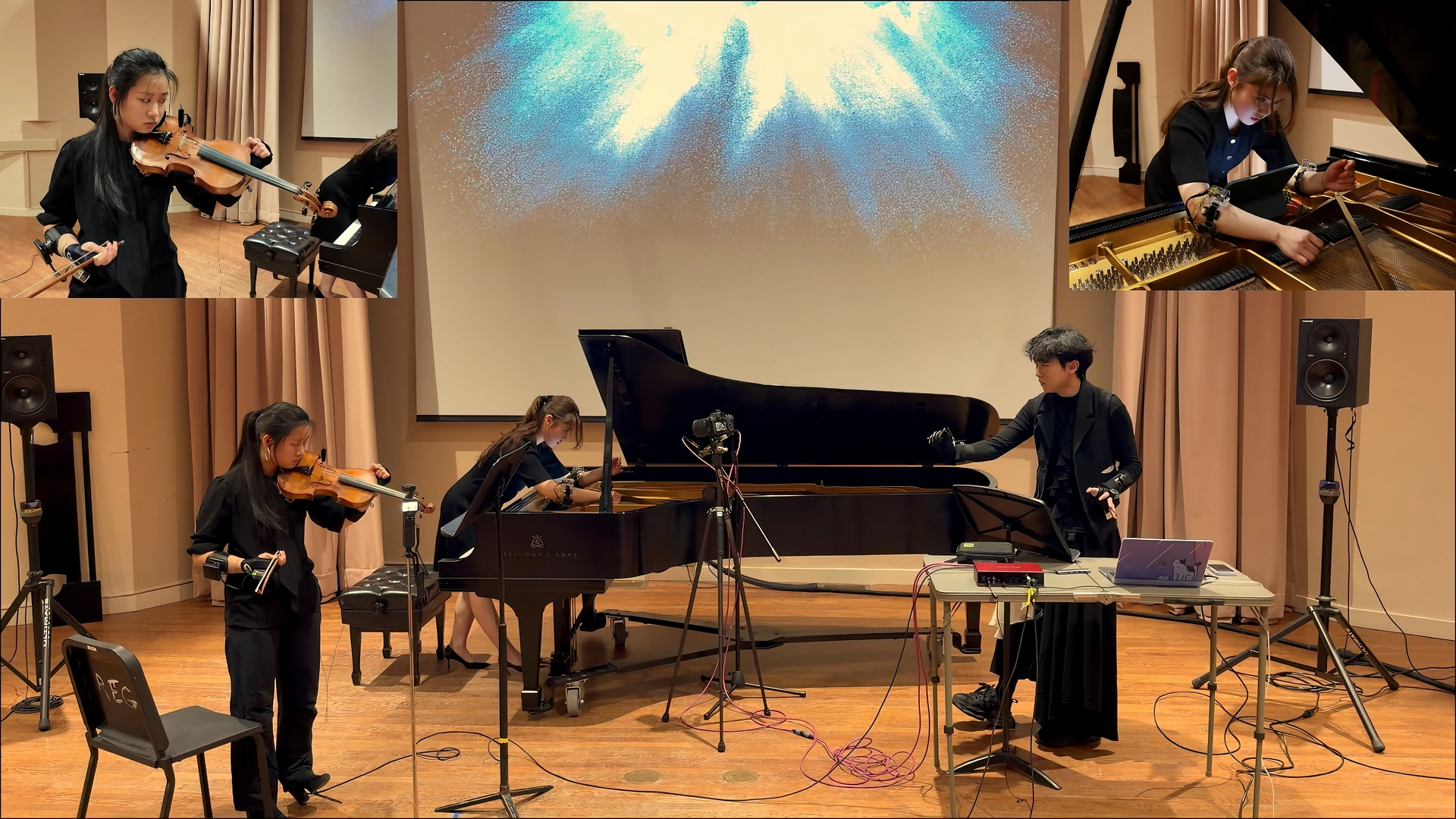
Three performers share the electronic system. Tian Li performs with LYRA on the right hand and GEMINI on the left; the violinist wears two GEMINI units; and the pianist wears two MYOS units from the earlier eight-channel generation. Max receives and processes these inputs to control the live electronics.
The score places physical gestures alongside instrumental notation. In Part 1, the pianist raises and lowers the right arm and uses free finger movement, while later violin passages call for hand shaking after pizzicato. These instructions make movement part of the composition and connect instrumental performance with the electronic extension of its sound. Atau Tanaka's Suspensions was an important artistic reference for this approach.
Live Spectral Processing
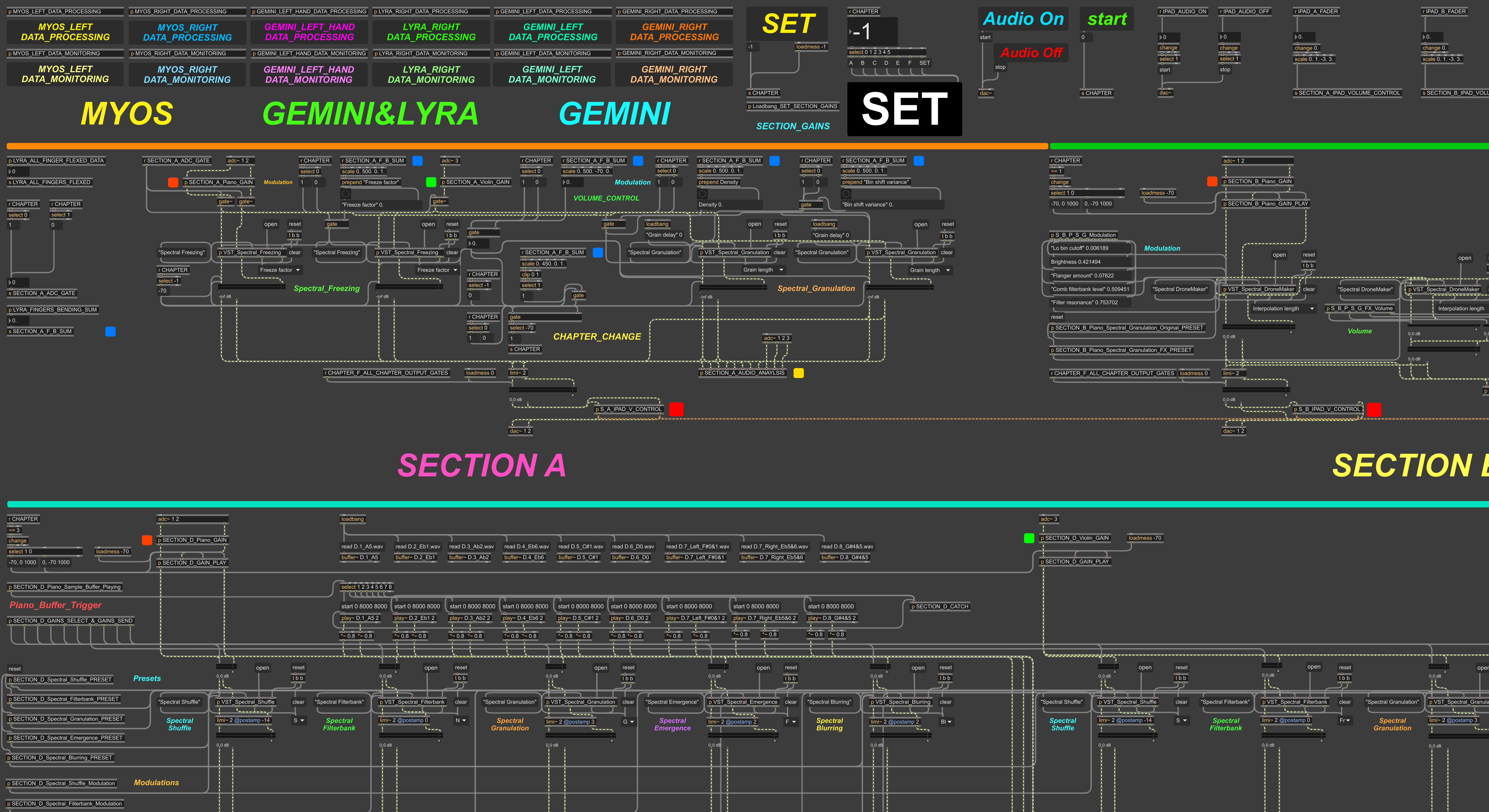
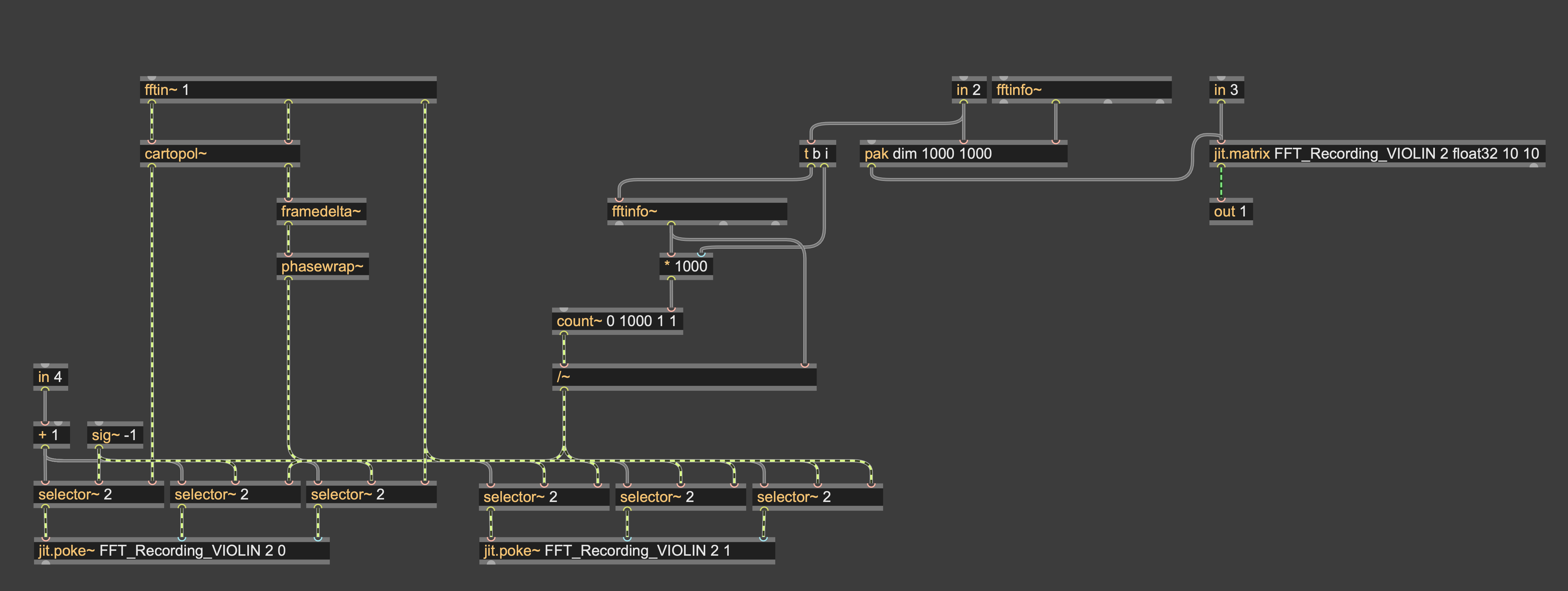
The electronics develop the acoustic material through spectral freezing, blurring, and granulation. Tian Li's own spectral-freeze implementation captures spectral information from the live input, allowing a moment of instrumental sound to be held and extended. It is one component within a larger processing environment that also uses Michael Norris's spectral processing tools.
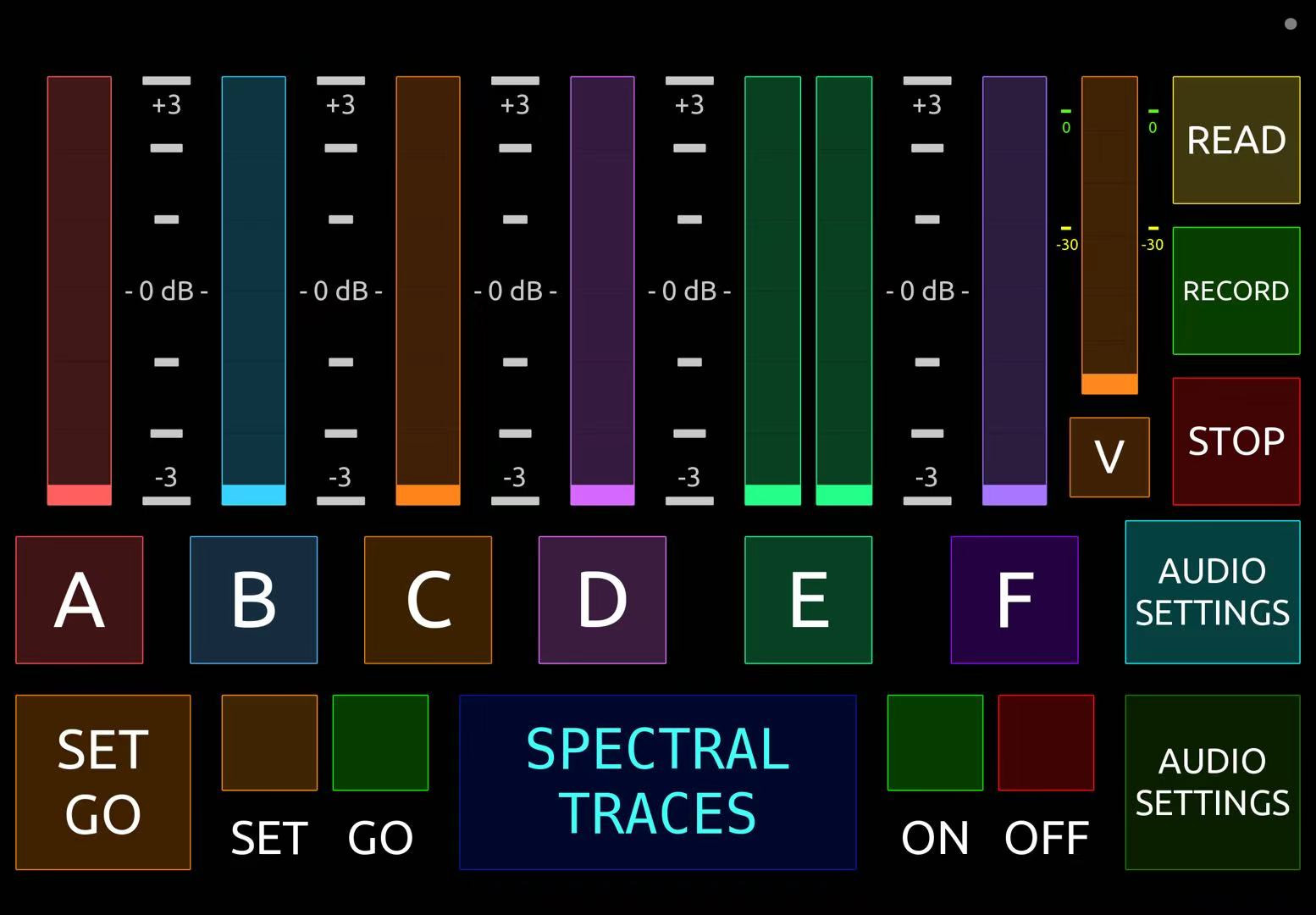
Max brings these processes and the wearable controls together across the work's sections. A TouchOSC panel provides section controls, level faders, and audio controls for the performance system.
Visual Traces
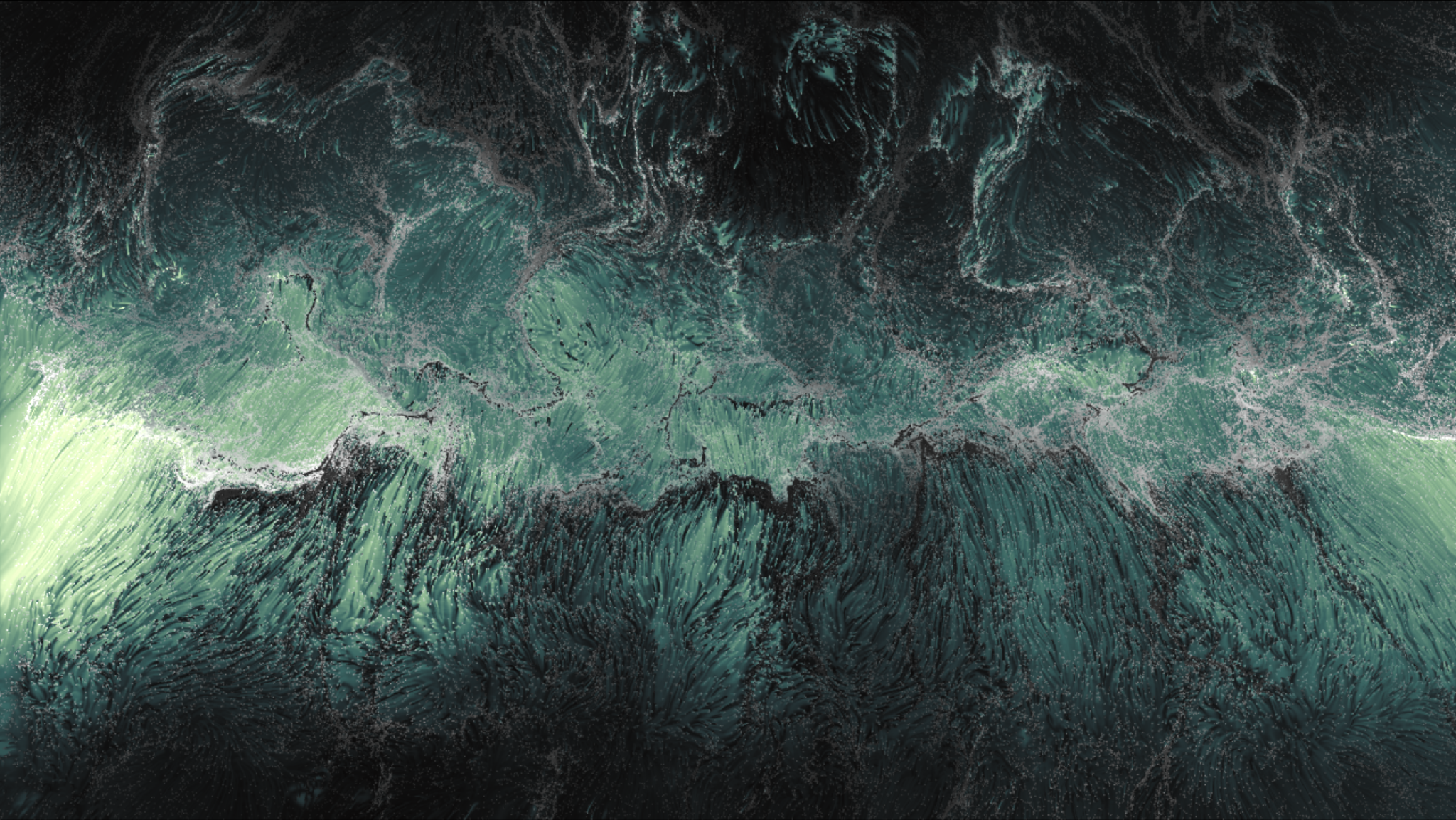
The visuals approach the sound through an analogy between small elements and a larger field. Frequency components contribute to a sound's character; visual particles accumulate into a sea-like image. Depth-based color changes create a wave-like appearance. This visual language offers another way to encounter the evolving textures of the performance, without proposing a one-to-one correspondence between spectral bins and particles.
Score
The six-page score for Part 1 combines violin and piano notation with illustrated movement instructions and extended playing techniques. It includes bowed and plucked violin material, changes of bow position, and actions on the piano strings, placing acoustic articulation and physical gesture within the same score.
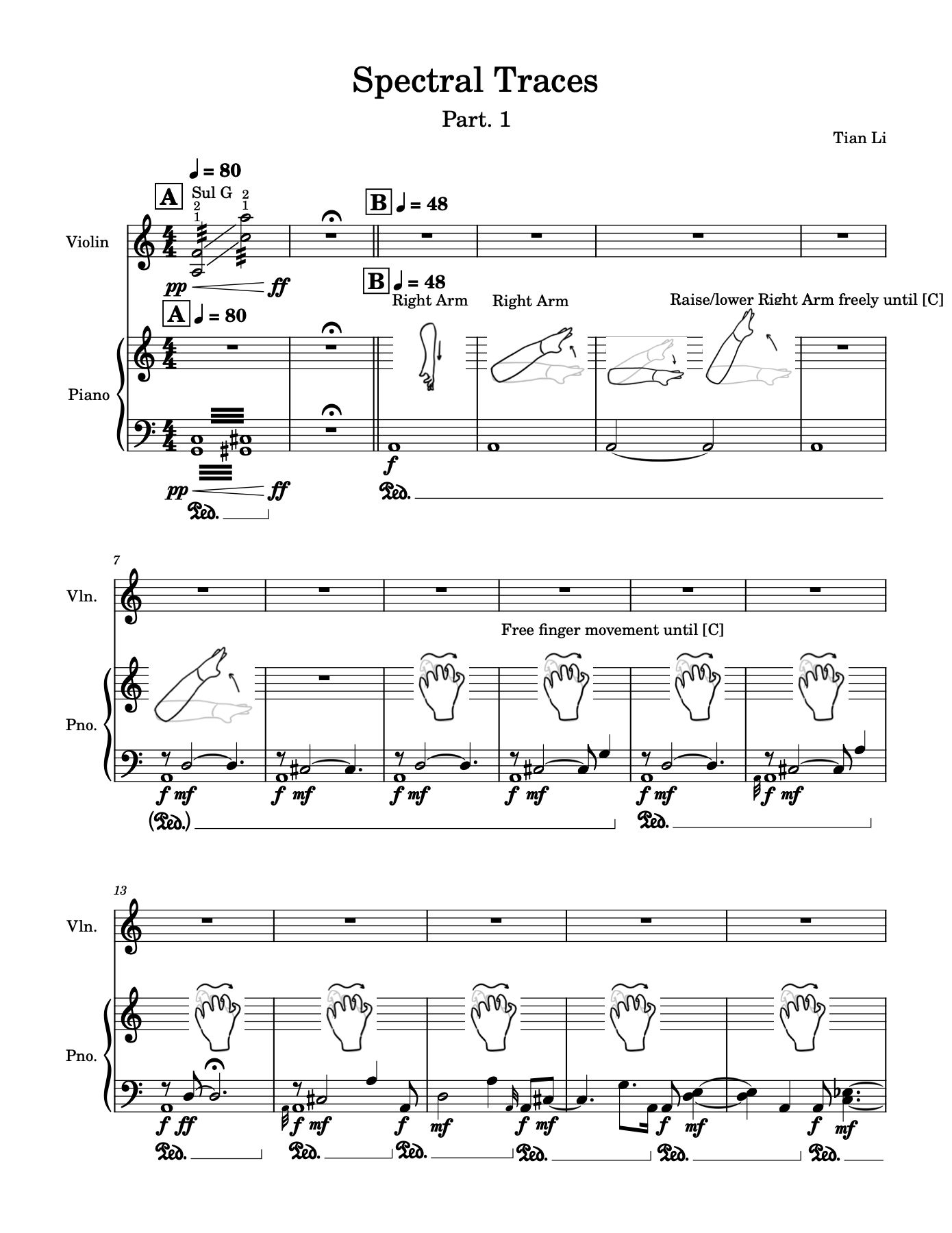
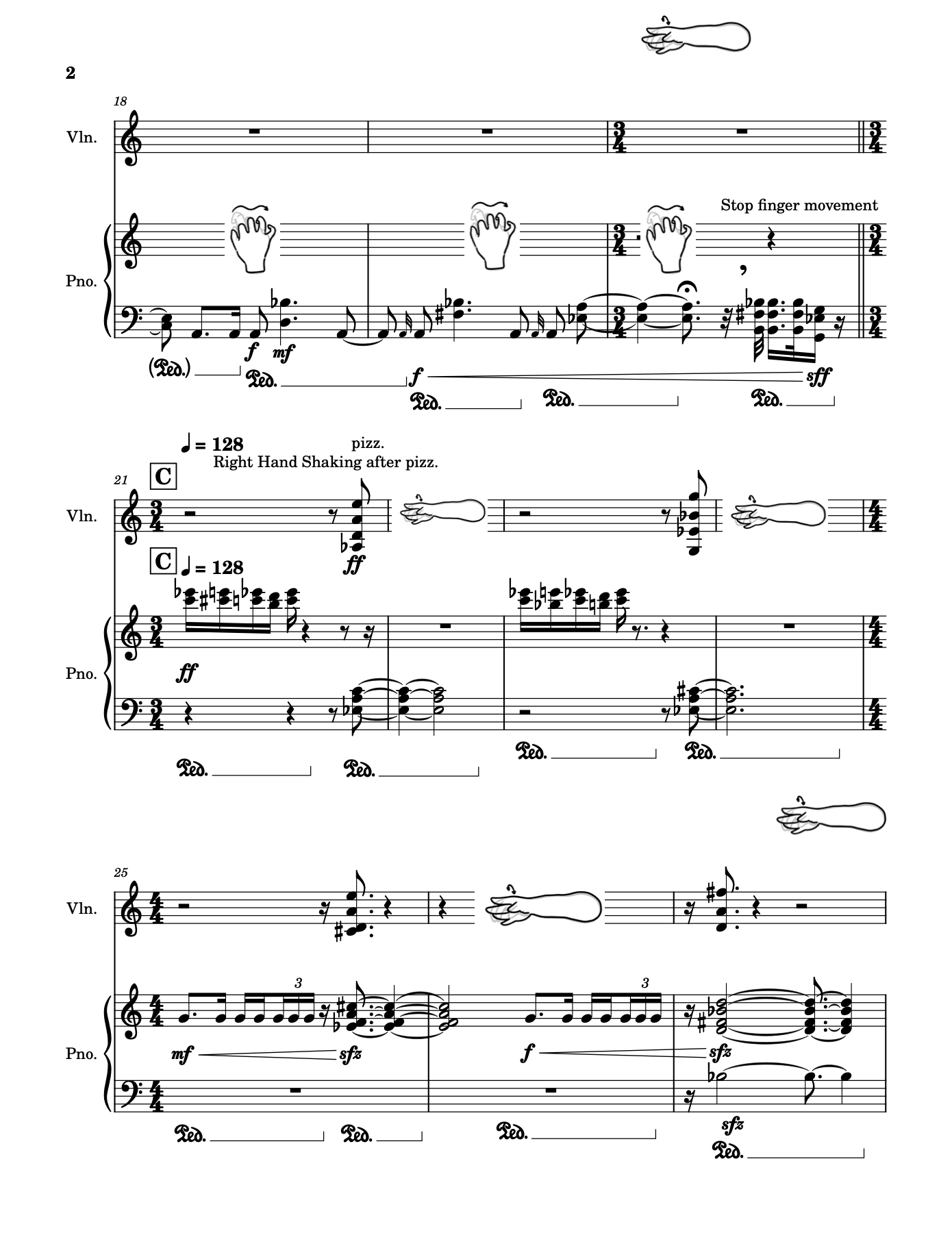
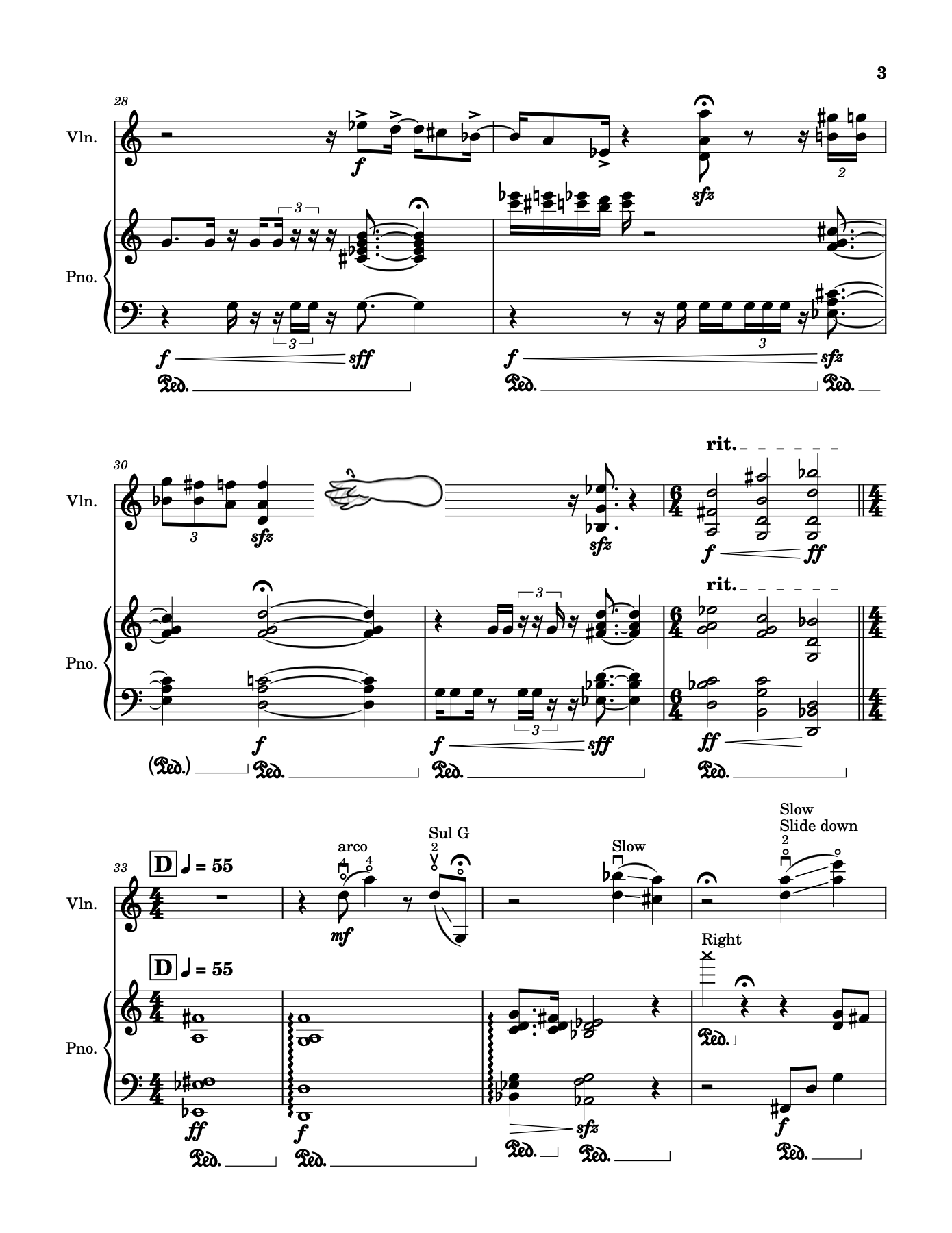
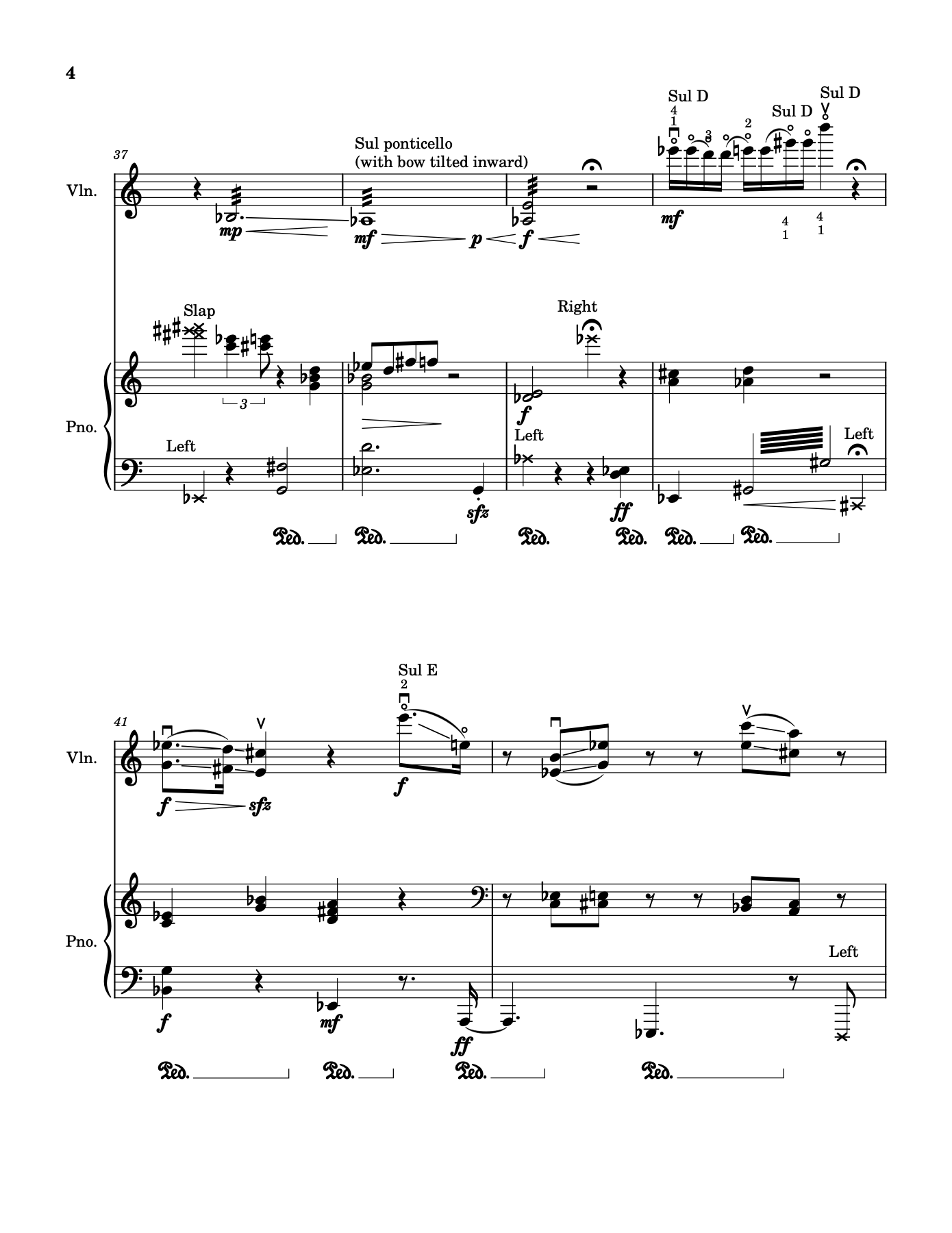
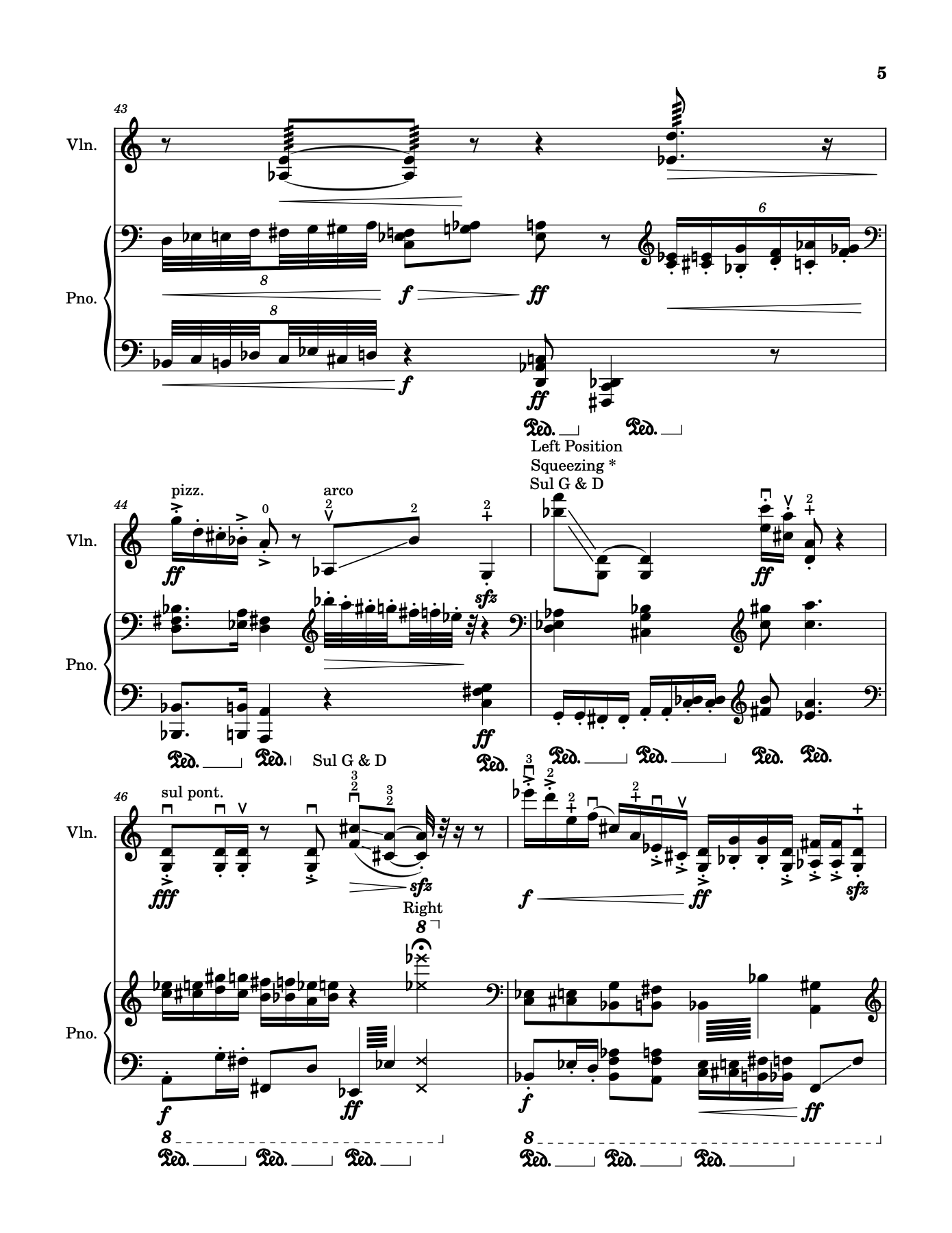
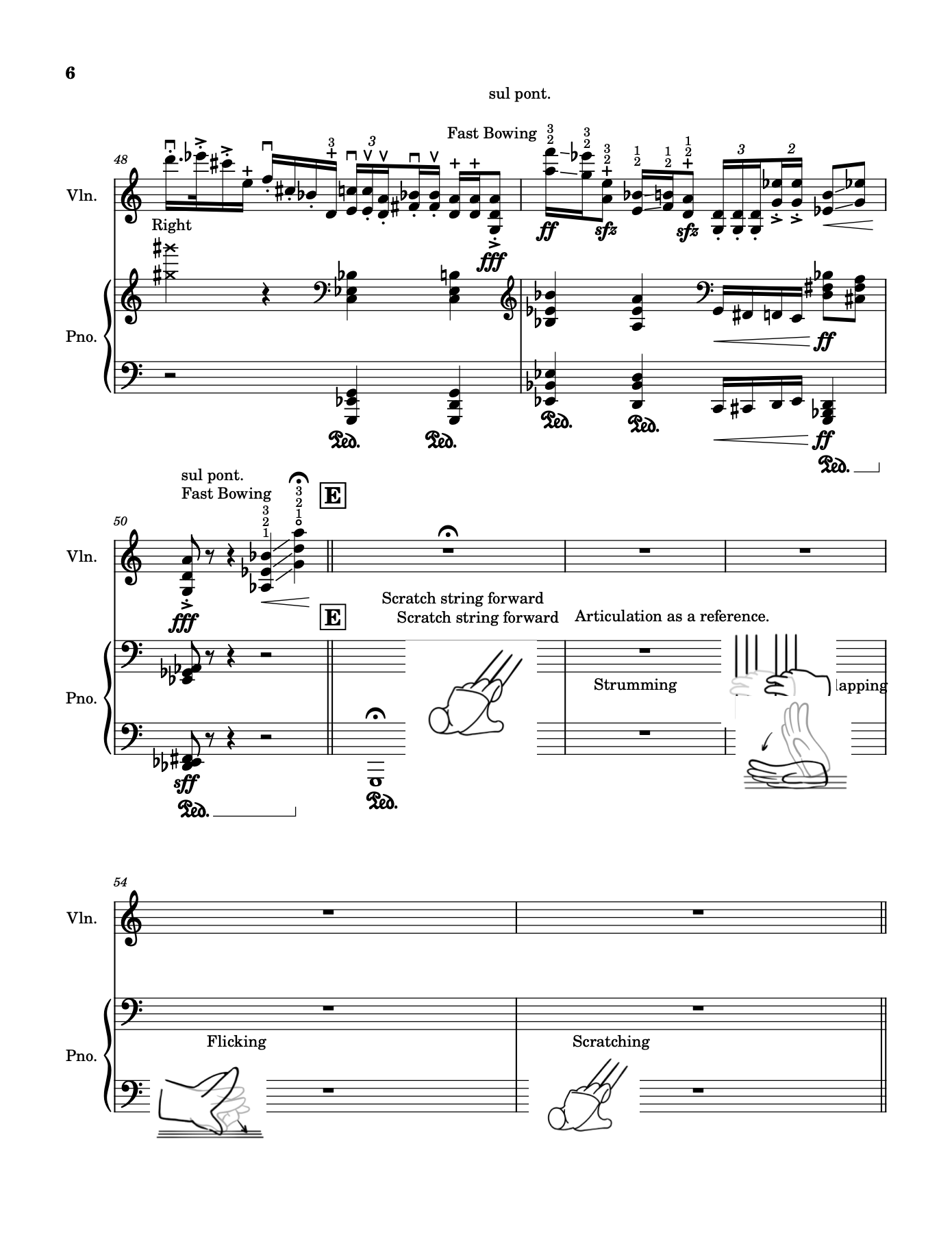
Spectral Traces, Part 1. Score for violin and piano with movement instructions.
Related Projects
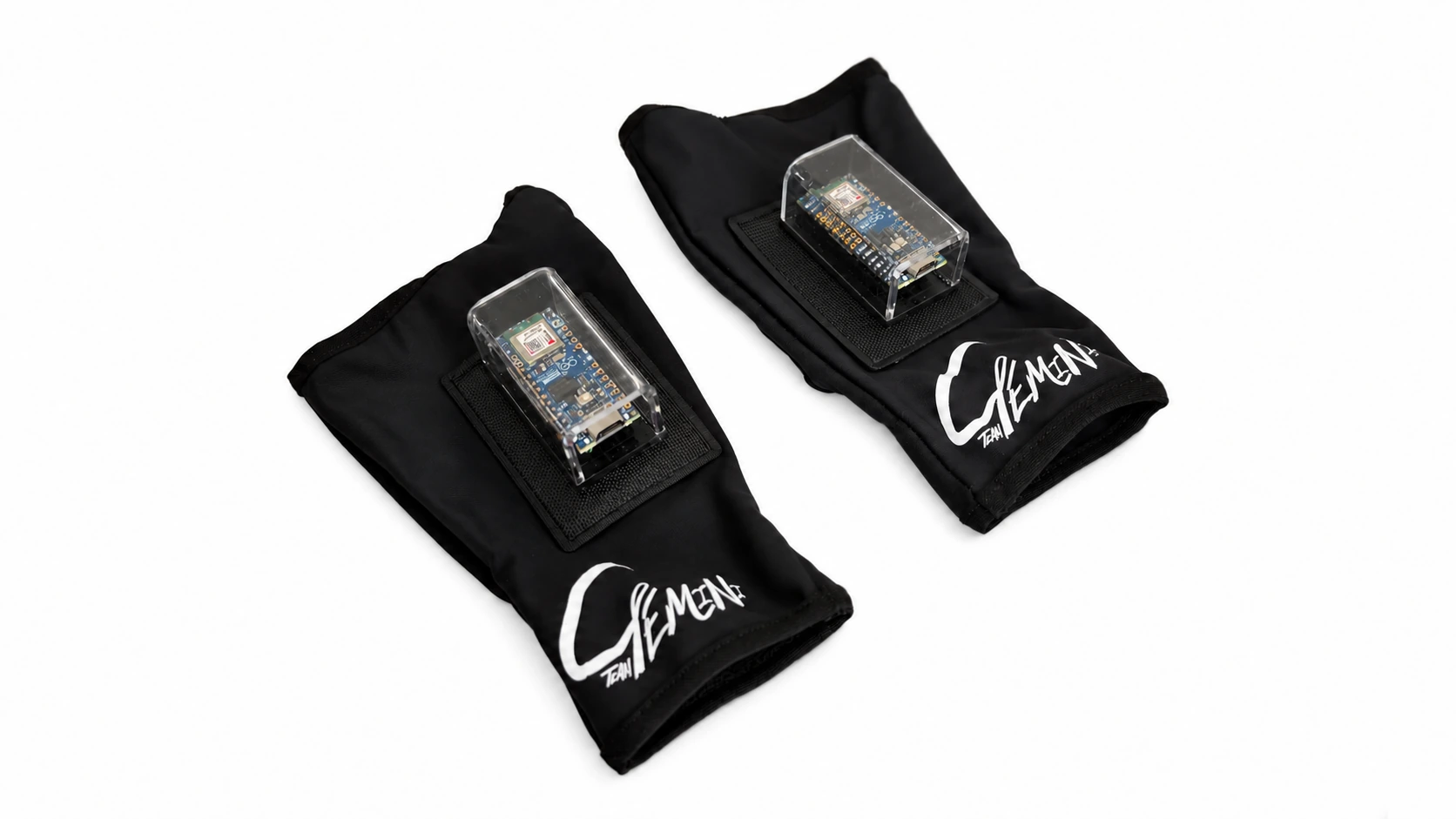 GEMINI
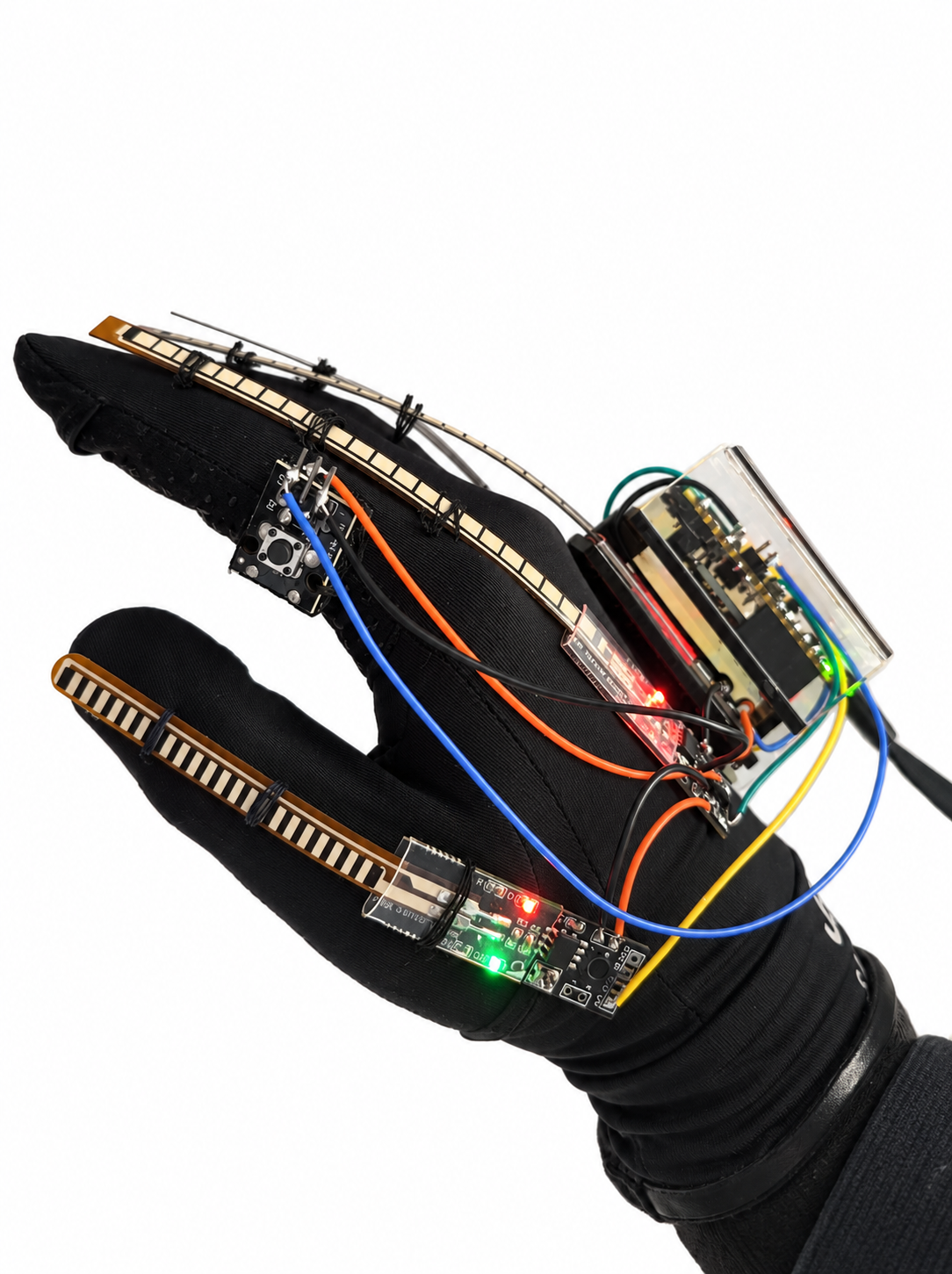 LYRA Extension
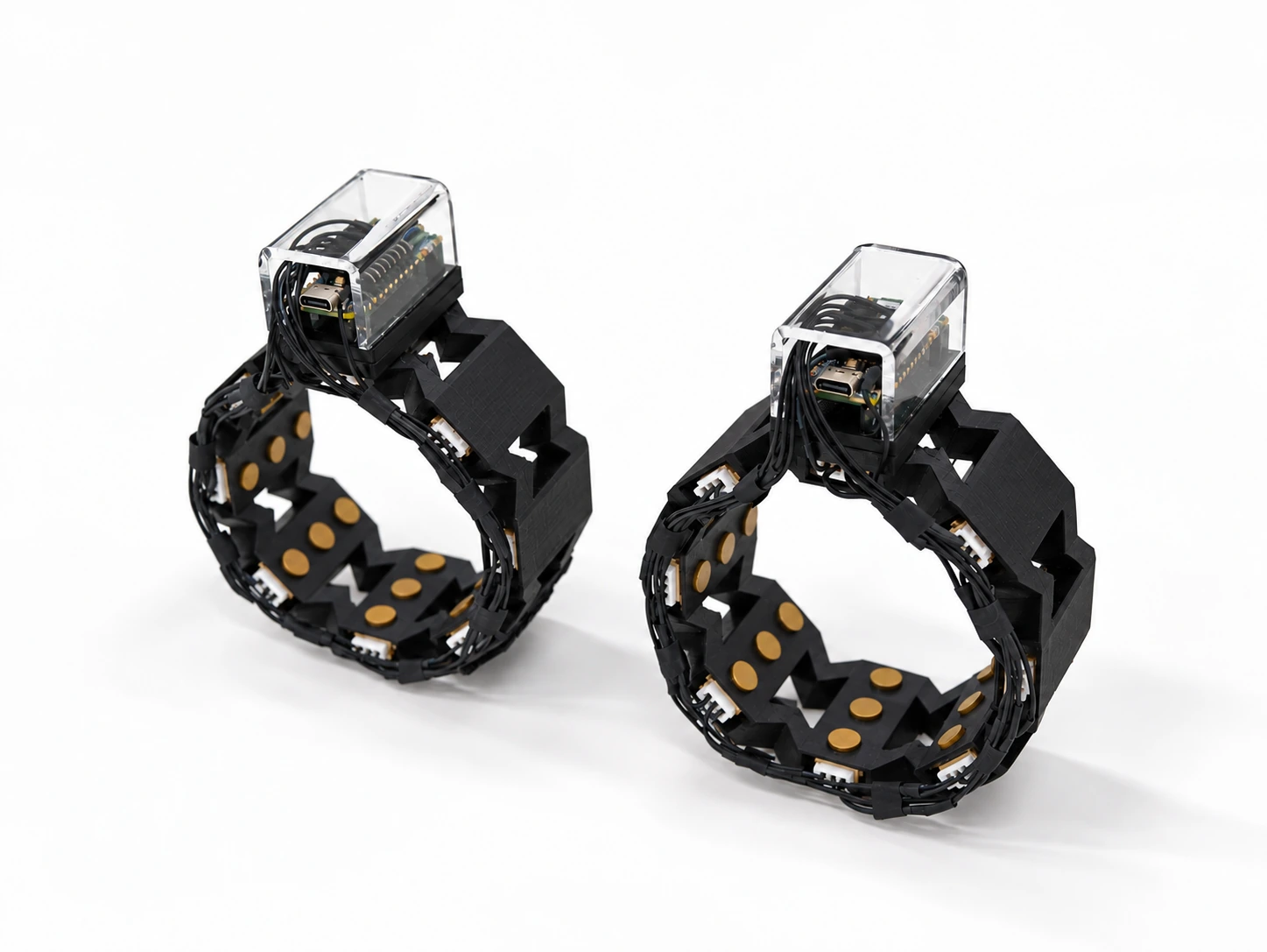 MYOS
MYOSReferences
Atau Tanaka, Suspensions — reference performance by Sarah Nicolls
Credits
Composition: Tian Li Live Electronics Performance: Tian Li Custom Spectral Freeze Implementation: Tian Li
Software used: Max and Michael Norris's spectral processing tools. Artistic reference: Atau Tanaka, Suspensions.