Dual
Electronic Performance with 8-Channel Muscle Sensor and Generative Audio AI
ImprovisationAmbientElectronic
Tian Li · Composition; MYOS circuit design and hardware construction
Description
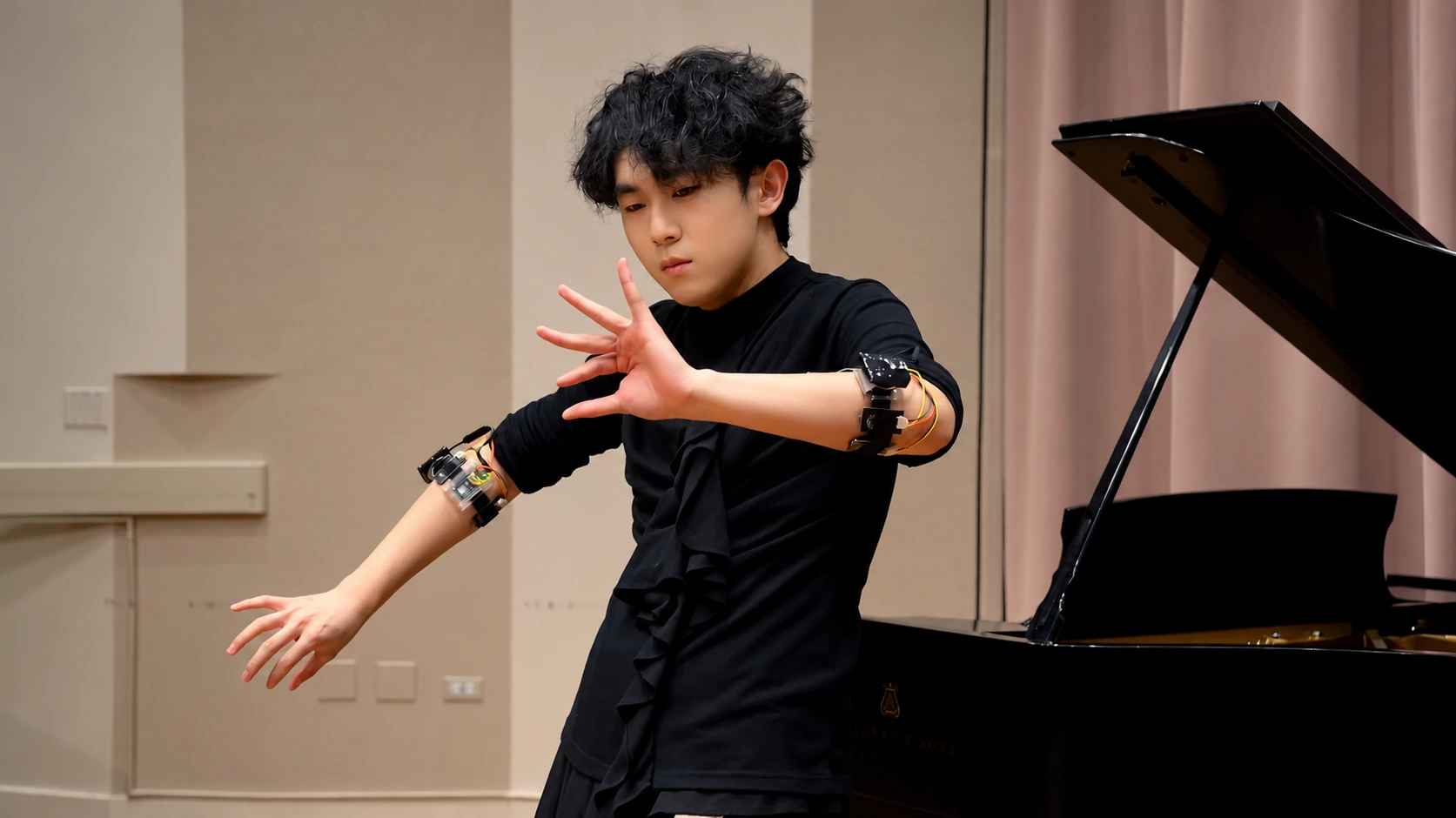
Dual is an electronic performance in which muscle tension and forearm movement shape generative audio. It uses the earlier eight-channel version of MYOS, bringing physical effort into a sound world built from water, fire, and harmonic ambient material. A six-section graphic score guides the performance while leaving room for improvisation within changing gestures, textures, and dynamics.
How can muscular effort shape the texture and form of generative audio?
How can a graphic score guide improvisation across changing sound materials?
Video
Water and Fire
Two RAVE models were trained separately on water and fire recordings, using approximately two and a half hours of audio for each. Their generated sounds are combined with electronic layers that develop these contrasting materials, followed by harmonic ambient sounds in the closing section.
Tests of individual latent dimensions examined changes in volume, spectral centroid, and spectral spread. These observations informed the mapping of sensor data to the models. An amplitude-driven cross-synthesis process also uses the dynamics of an electronic sound layer to modulate RAVE output, connecting the behavior of the sound layers during performance.
Gesture and Form
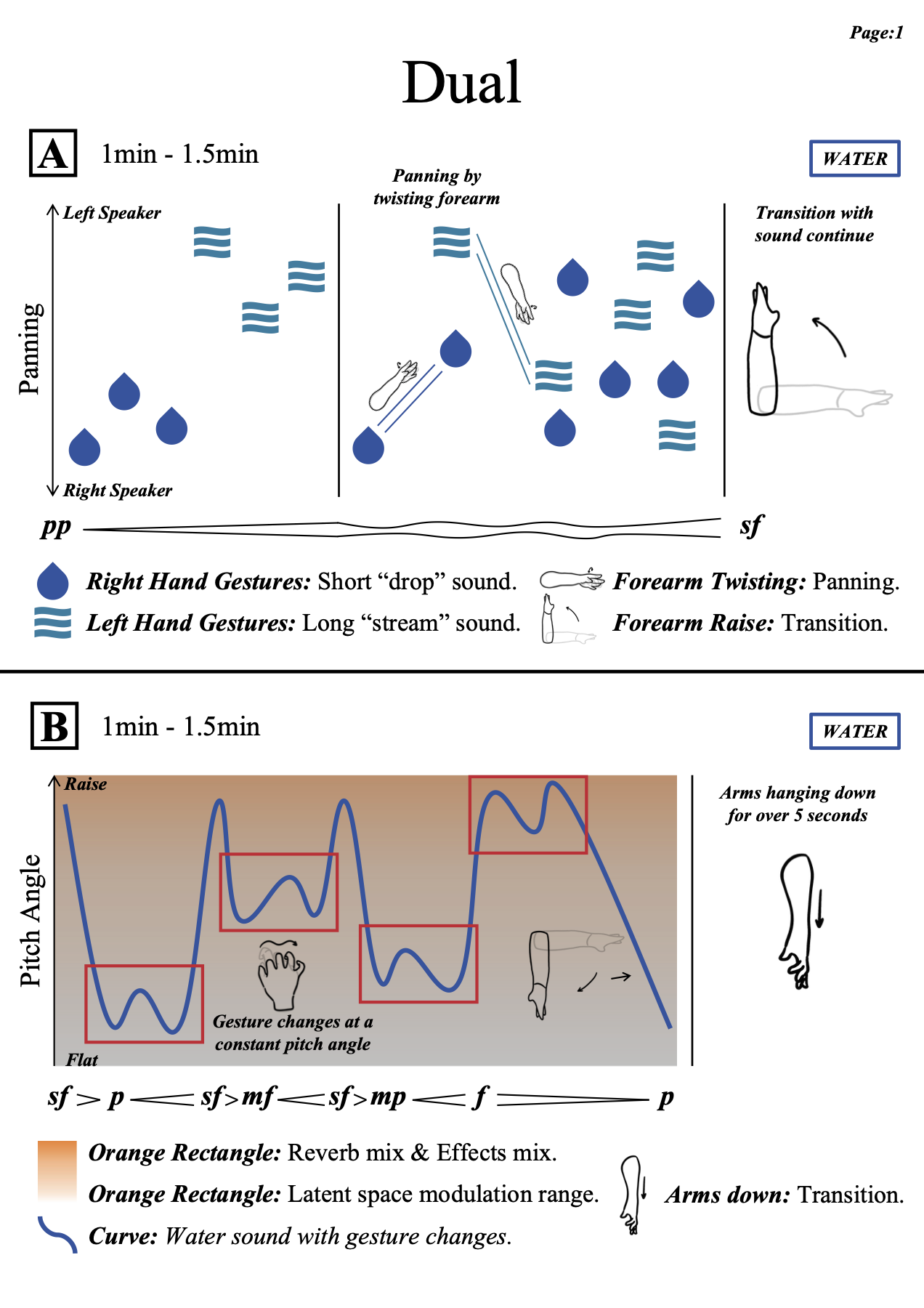
The score begins with short water drops and longer streams, then moves through water and fire textures into their combination with electronics. Early instructions connect hand gestures to contrasting sounds and forearm rotation to stereo panning. Later sections use forearm pitch to select among high-frequency textures, signature sounds, rhythmic material, and low-frequency drones. Gesture tension controls playback speed, forearm rotation changes the balance between layers, and acceleration modulates the RAVE models.
These relationships change as the piece develops. Section E extends the preceding material with reverb freeze, granulation, and pitch variation. The final section brings water and fire into an ambient setting, moving from small gestures toward greater activity before returning to a quiet ending. The score gives durations, dynamic contours, and physical transition cues while allowing the performer to shape the detail of each passage.
Performance System
Max receives and processes MYOS muscle and motion data, including measures of change, signal magnitude, forearm orientation, and acceleration. These streams are routed to the controls required by each section. Playback smoothing addresses clicks during speed changes, supporting continuous movement between sounds. The interface and score together connect the performer's physical actions to both local sound changes and the larger form of the work.
Score
The graphic score sets out six sections, A through F, with gesture instructions, approximate durations, dynamics, and transitions.
The opening score page above shows sections A and B; the remaining score pages continue below.
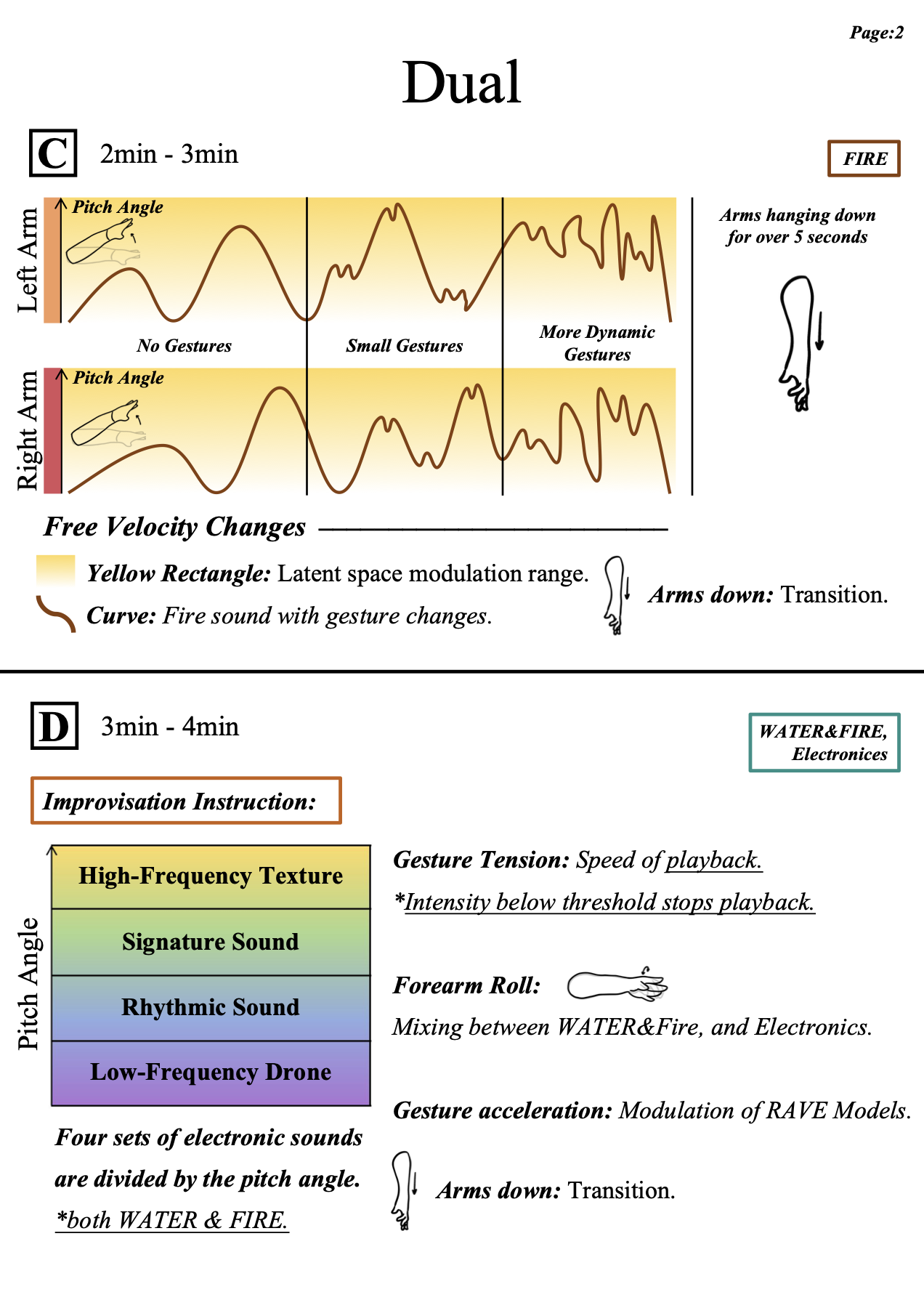
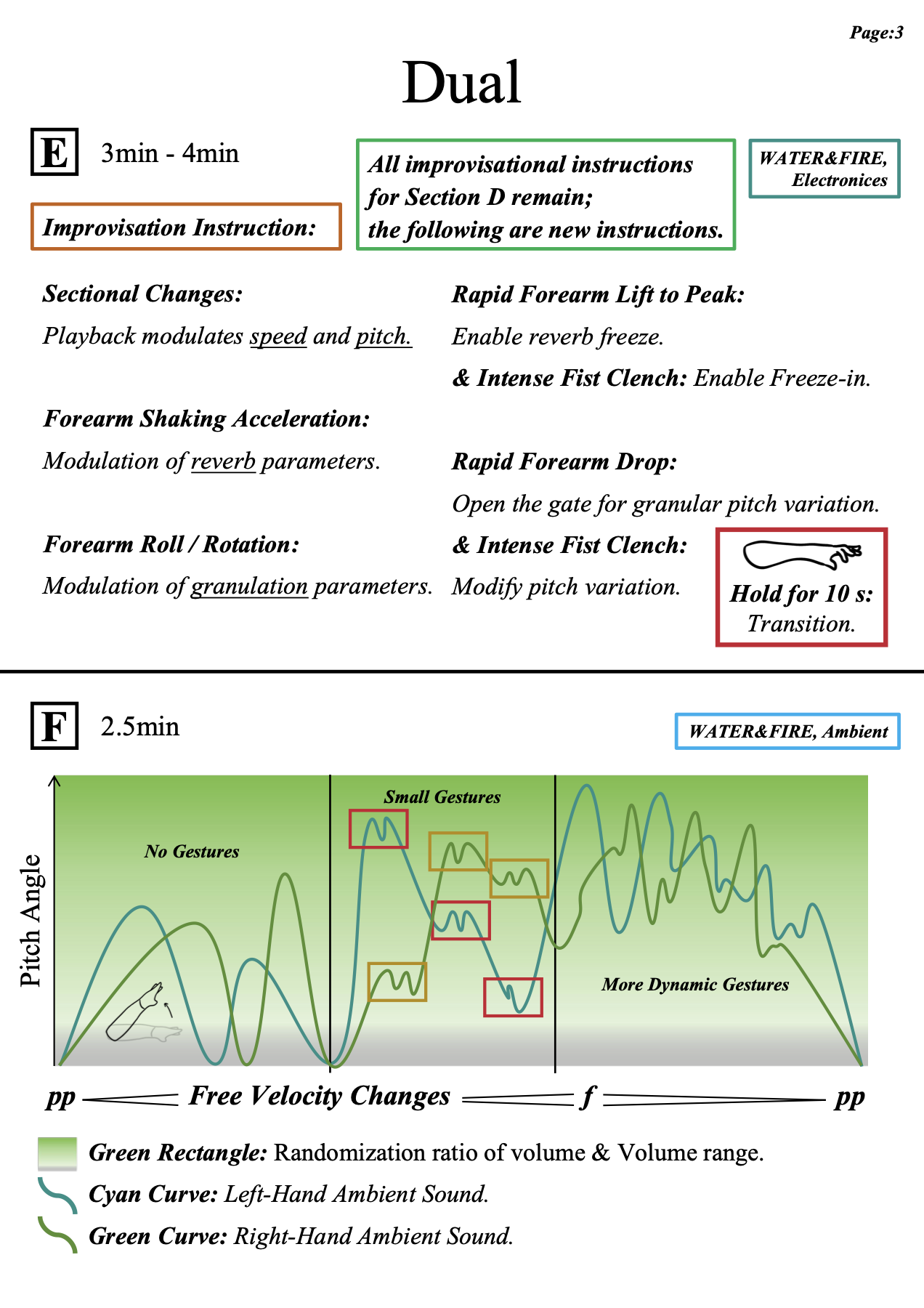
Graphic score for Dual, with six sections A–F.
Related Projects
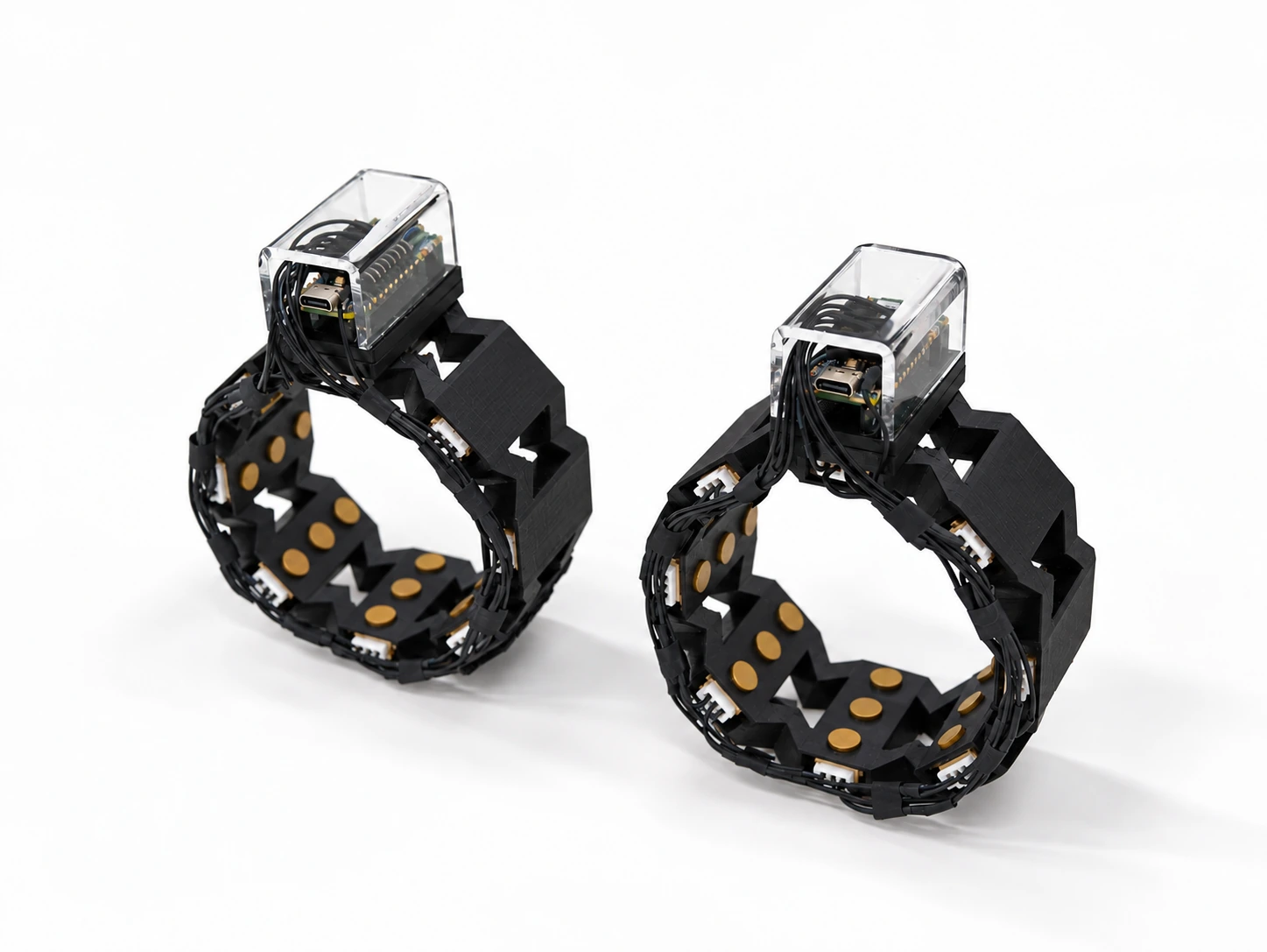 MYOS
MYOSReferences
Credits
Composition: Tian Li MYOS Circuit Design and Hardware Construction: Tian Li