NeuMu
Controlling Generative Audio AI through Artistic Parameters
Perceptual MappingCreative AgencyLatent Representation
Tian Li · Control interface, sound-parameter mapping and software system
Intention
NeuMu aims to give artists a more accessible interface for controlling RAVE-based generative audio. It approaches control through artistic parameters associated with perceived sound qualities, connecting a desired change in sound with guidance in a model’s latent representation. The project explores how artists can shape generated sound through listening, adjustment, and an understanding of how a particular model responds.
How can artists guide generative audio through perceived sound qualities?
How can listening reveal the possibilities and limits of model-dependent controls?
Artistic Parameters and Latent Guidance
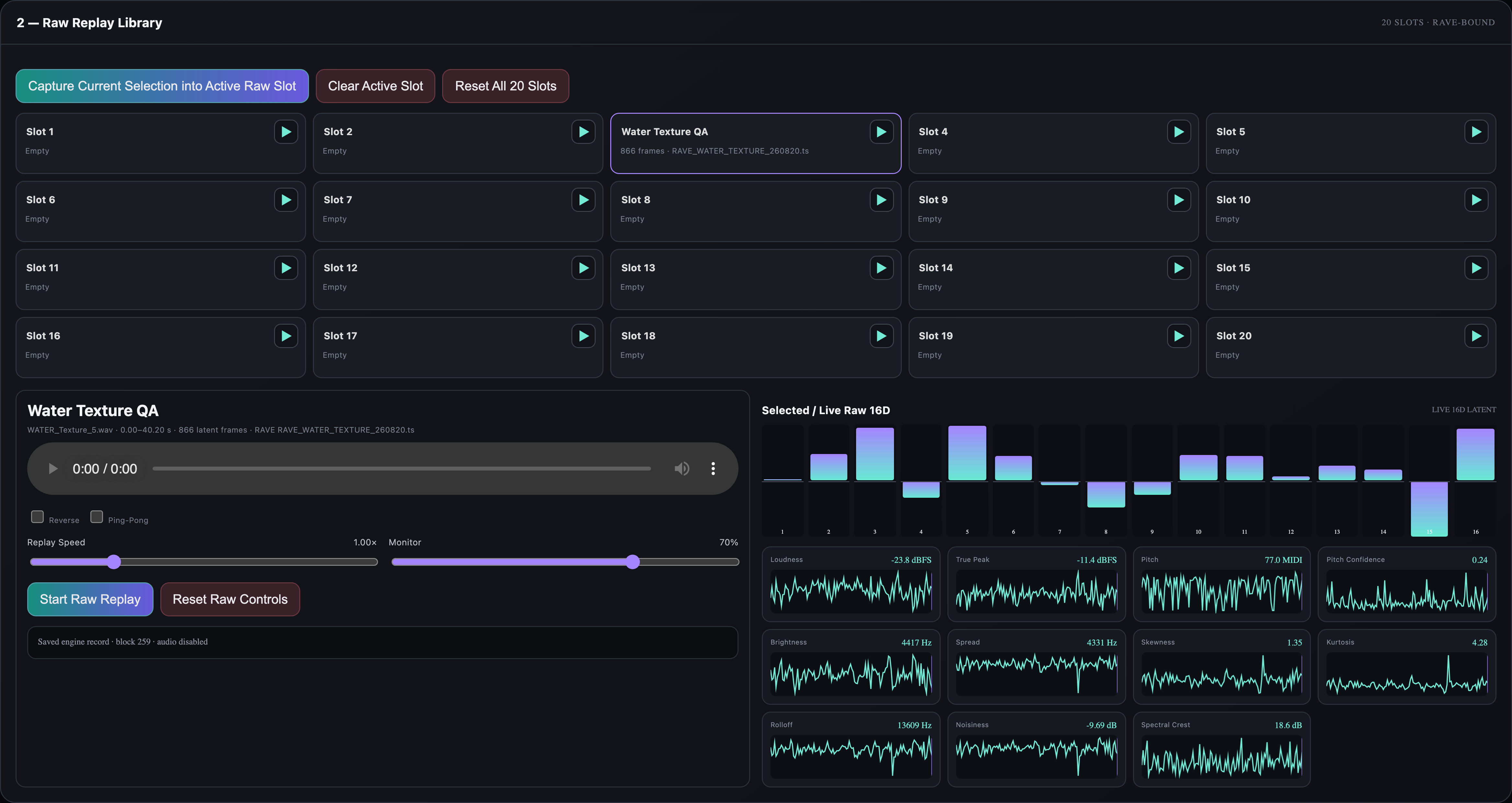
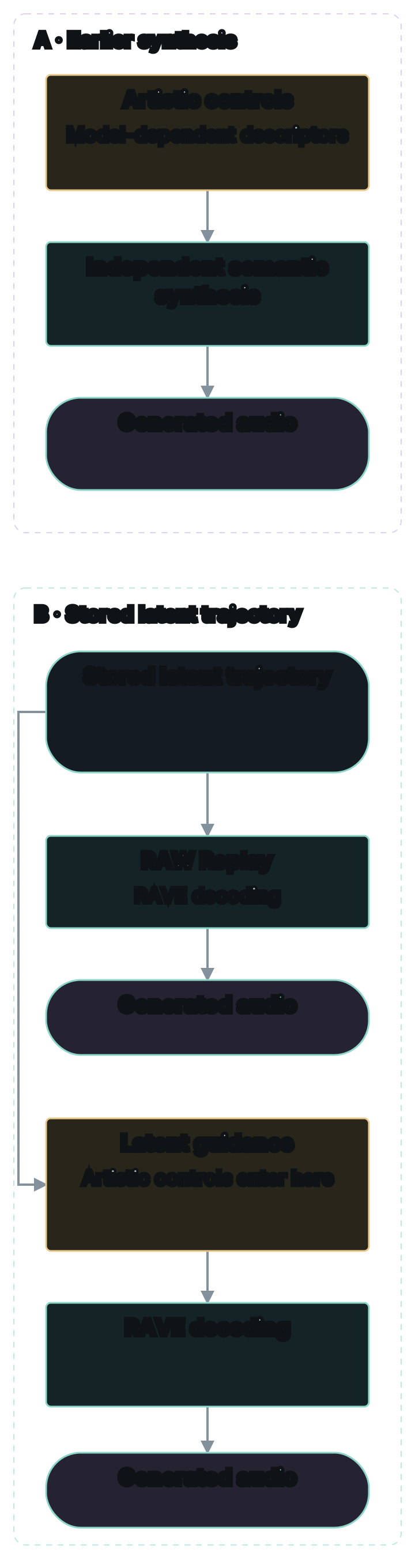
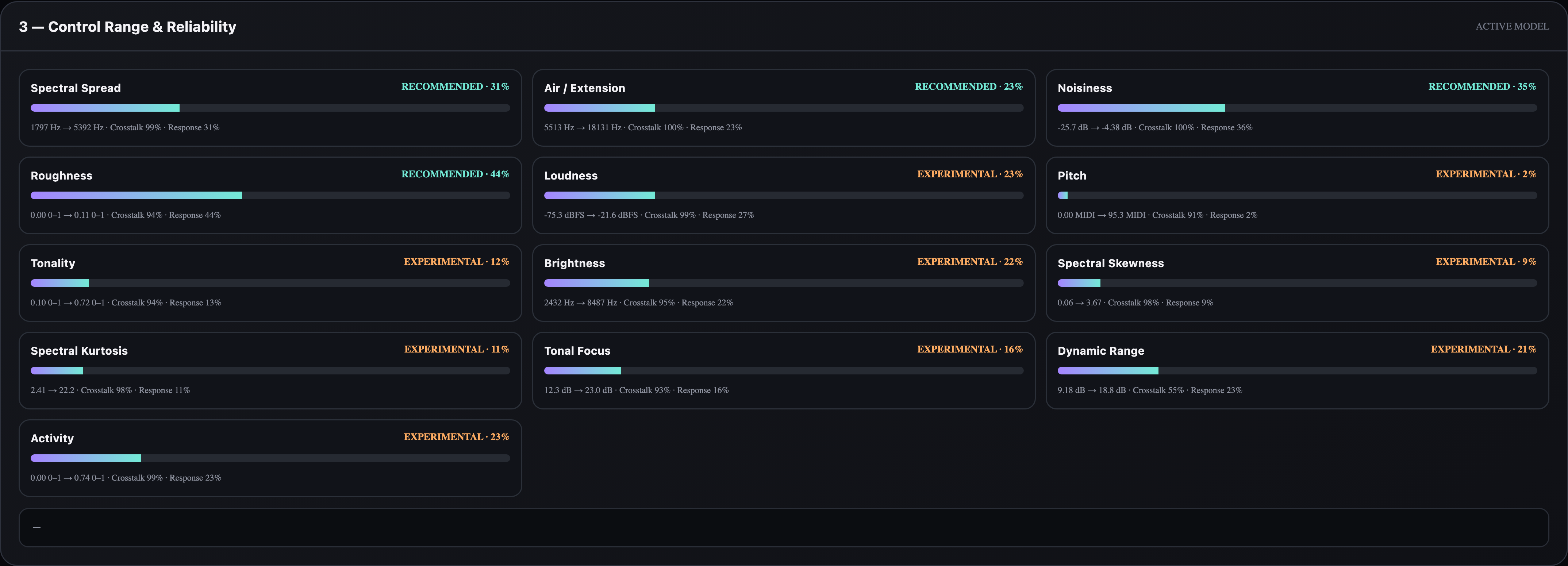
The documented interface includes descriptors such as loudness, pitch, brightness, noisiness, roughness, and activity. Their availability depends on the model and the checks carried out on its controls. These descriptors guide a latent trajectory before RAVE decodes it into audio. Their effects can interact, and the relationship between a descriptor and the resulting sound remains specific to the model.
Artistic control in latent space
Comparing Sound and Control
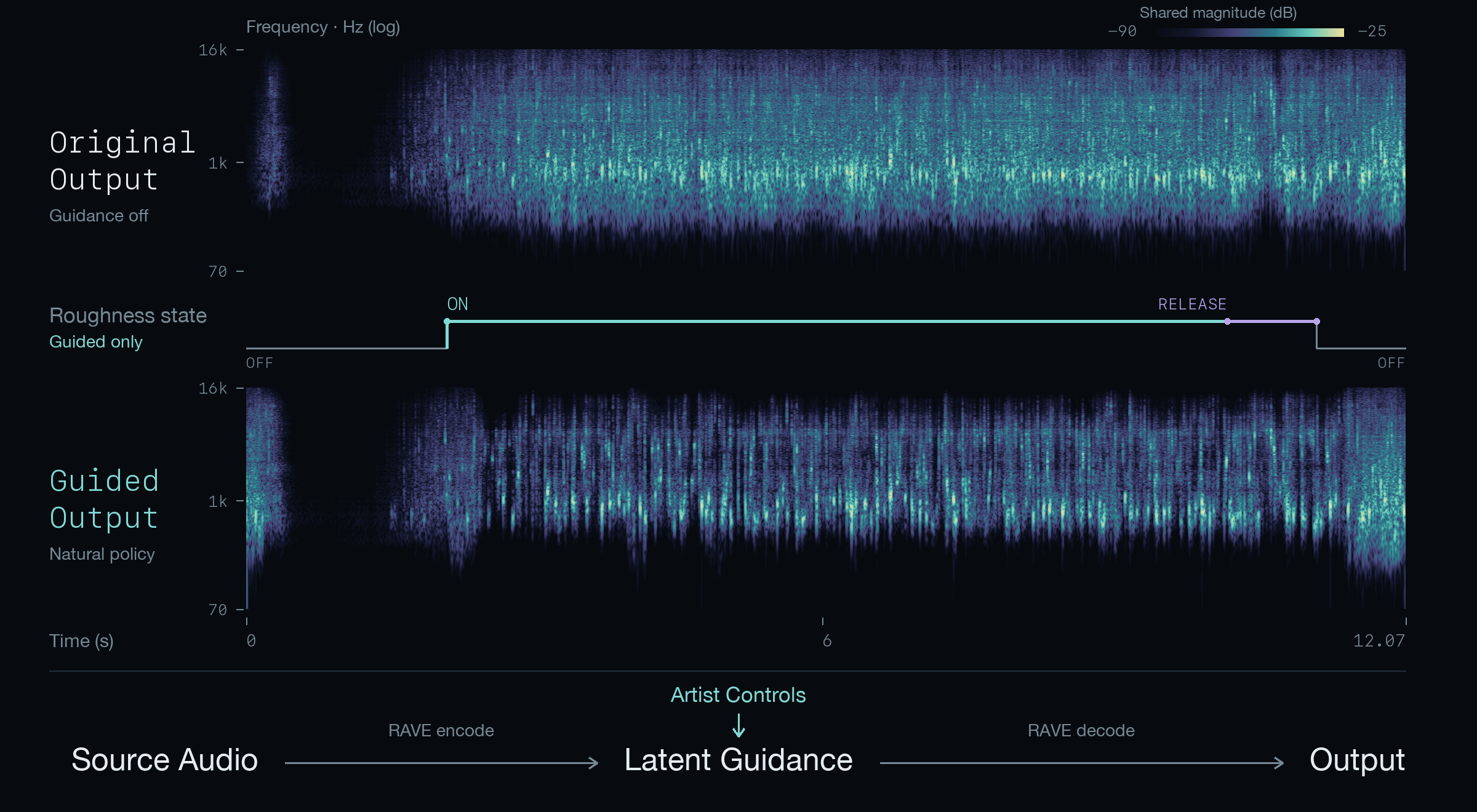
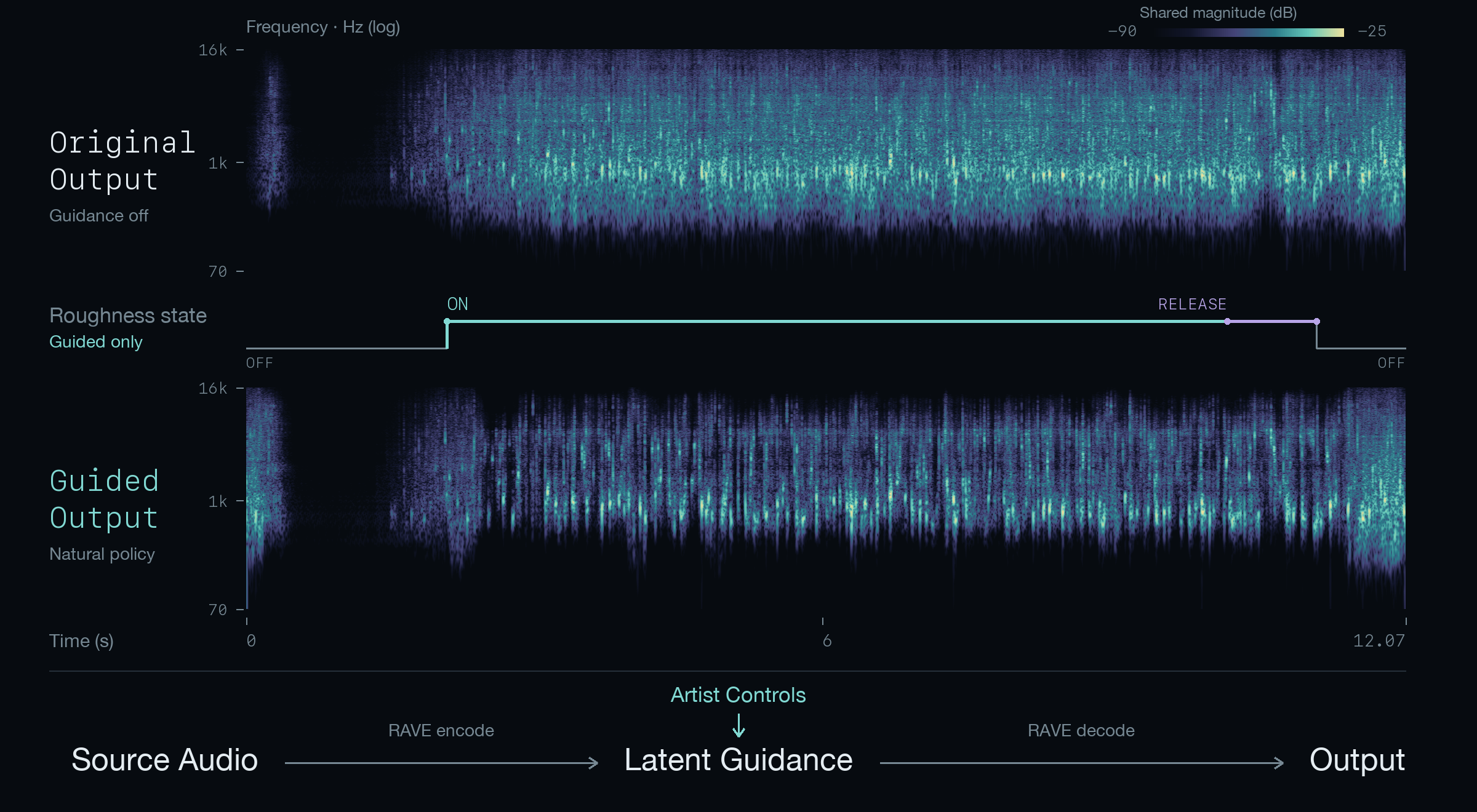
An existing example compares two saved outputs from the same water-texture model and source trajectory. One is a raw RAVE replay; the other uses guidance, with Roughness selected during part of the excerpt. The paired spectrograms align the sounds with the recorded control interval, providing material for examining how the output changes. Other factors such as decoding and state also shape the result.
Audio Demonstrations
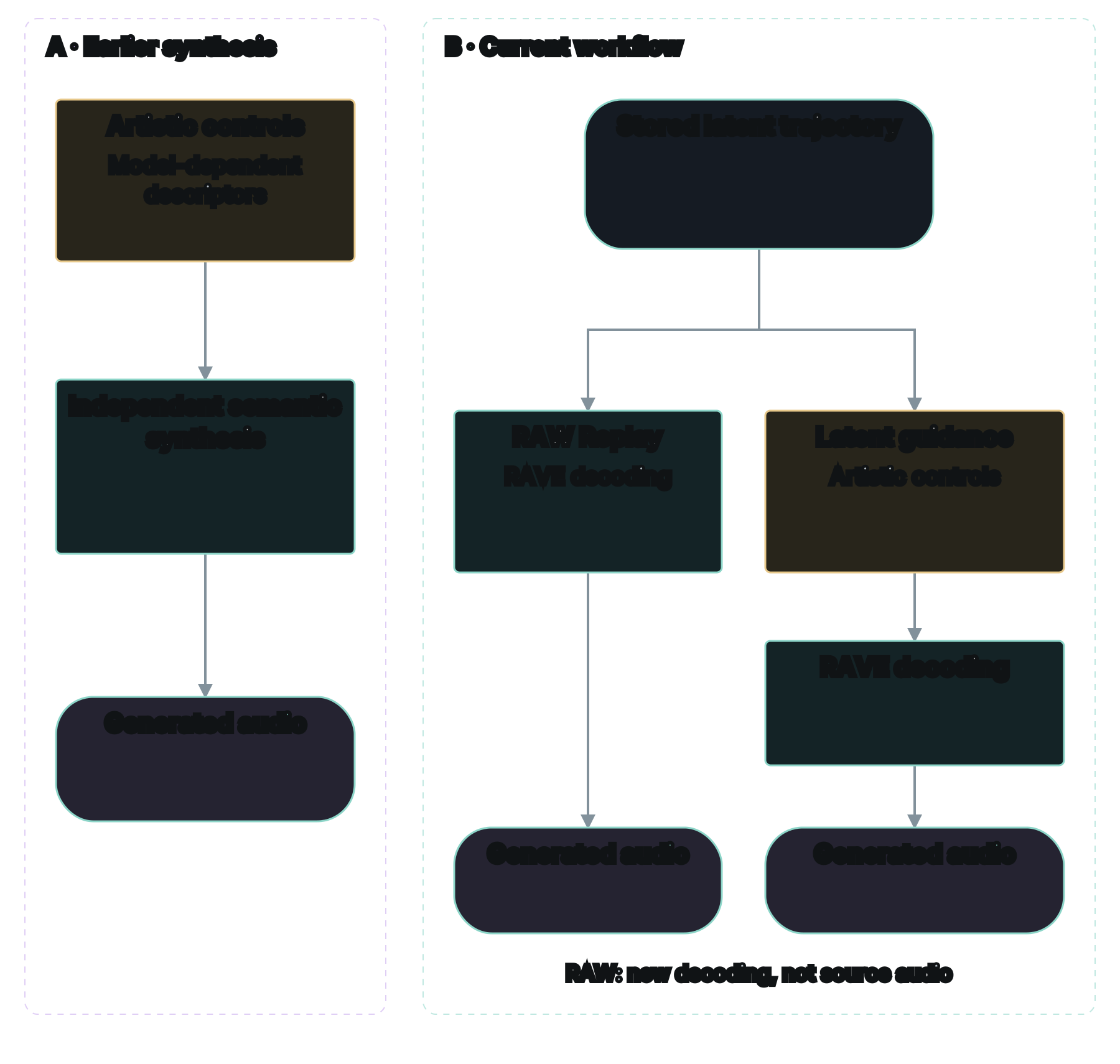
Two workflows: independent Semantic synthesis and RAW Replay with Semantic processing. A and B use different models and controllers. These recordings form a separate demonstration set from the saved-output figure above.
Select a demo and press Play.
Control settings, measurements and limitations
A · Earlier semantic synthesis: low and high descriptor requests.
| Request | Target | Measured |
|---|---|---|
| Brightness / spectral centroid · request 20% | 3,521 Hz | 3,273 Hz |
| Brightness / spectral centroid · request 80% | 6,687 Hz | 8,229 Hz |
| Noisiness / spectral flatness · request 20% | -15.64 dB | -17.53 dB |
| Noisiness / spectral flatness · request 80% | -7.66 dB | -7.84 dB |
| Loudness / block RMS · request 20% | -53.20 dBFS | -41.16 dBFS |
| Loudness / block RMS · request 80% | -33.10 dBFS | -26.00 dBFS |
B — RAW Replay + Semantic processing. Combined processing requests Roughness 70% and Noisiness 65%.
Recorded control settings: Pitch locked; Roughness limited to 71.93%.
Audio excerpts with their original gain.
Independent Semantic Synthesis
Earlier version · water-texture model
Requested descriptors drive synthesis directly, without a source recording. Compare the low and high versions in each pair.
RAW Replay + Semantic Processing
Current version · water-texture model
These clips share one latent trajectory. RAW Replay is the model's own decoding of it; compare it with the processed versions.
Use in INTERPRET
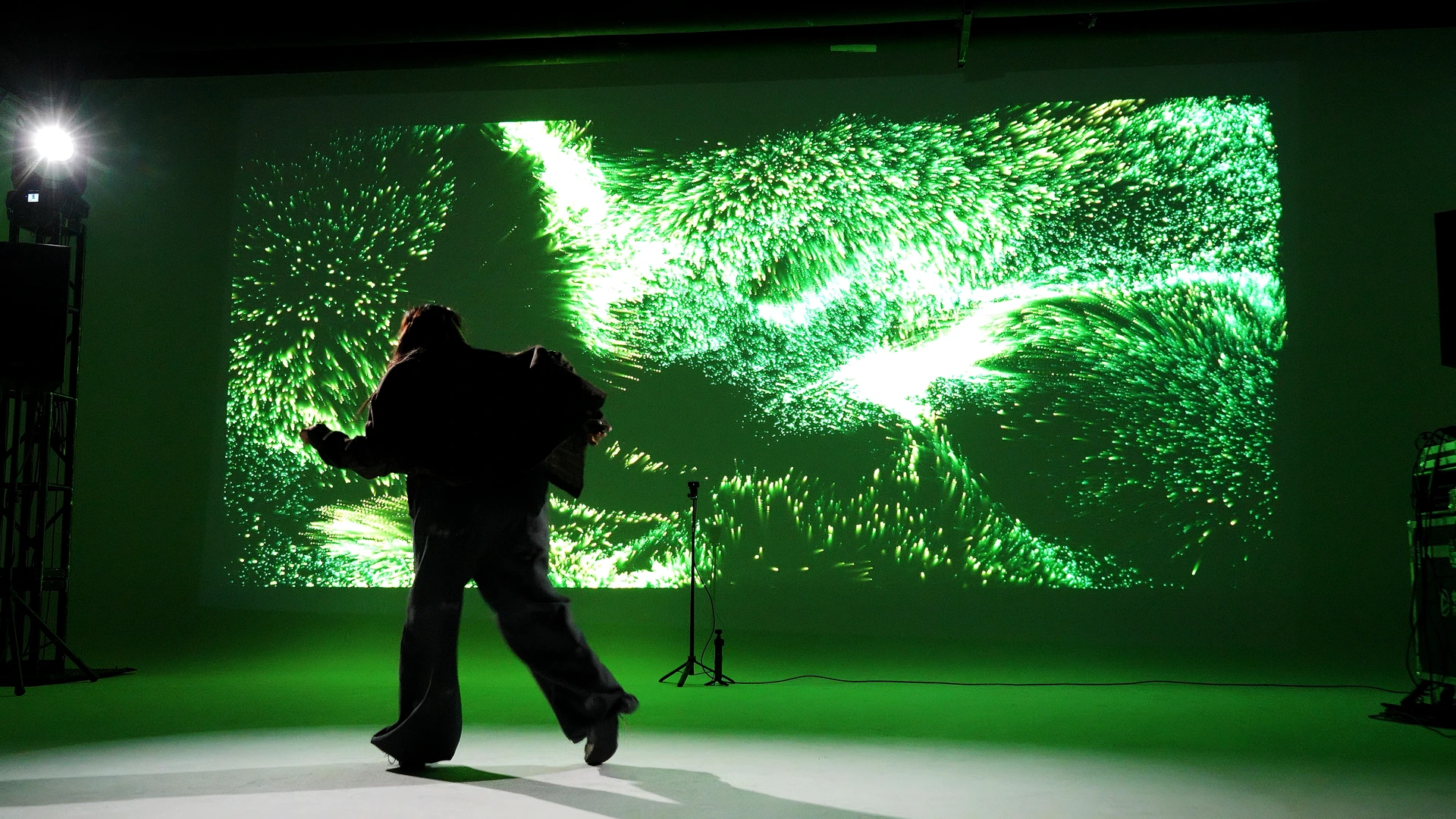
INTERPRET draws on many of NeuMu’s functions and materials within its dance-based audiovisual system. This connects the interface’s development with an artistic project in which generative audio forms part of an evolving exchange between movement, sound, and visuals.
References
Related Projects
 INTERPRET
Interface Documentation
A and B document different models and controllers.
Reflection
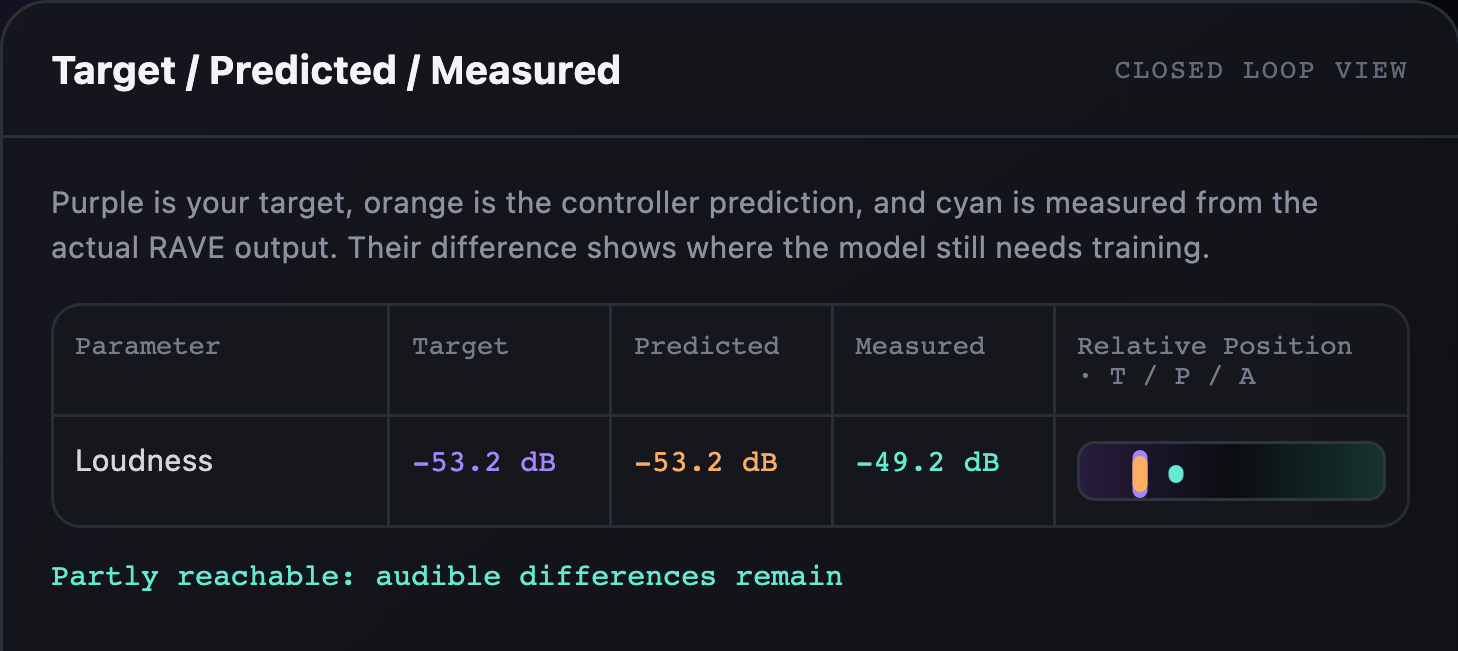
The documented controls remain model-dependent. Listening and the saved-output comparison provide material for examining changes in sound, but decoding, state initialization, feedback, and transitions can also affect the result.
Credits
Tian Li — Control interface, sound-parameter mapping and software system