CoMotion
Exploring Creative Behavior through Human–AI Co-Creation
MultisensoryMotion SensorsCreativity Research
Tian Li · Artistic concept, physical interface design, sound and visual design, interaction and system design
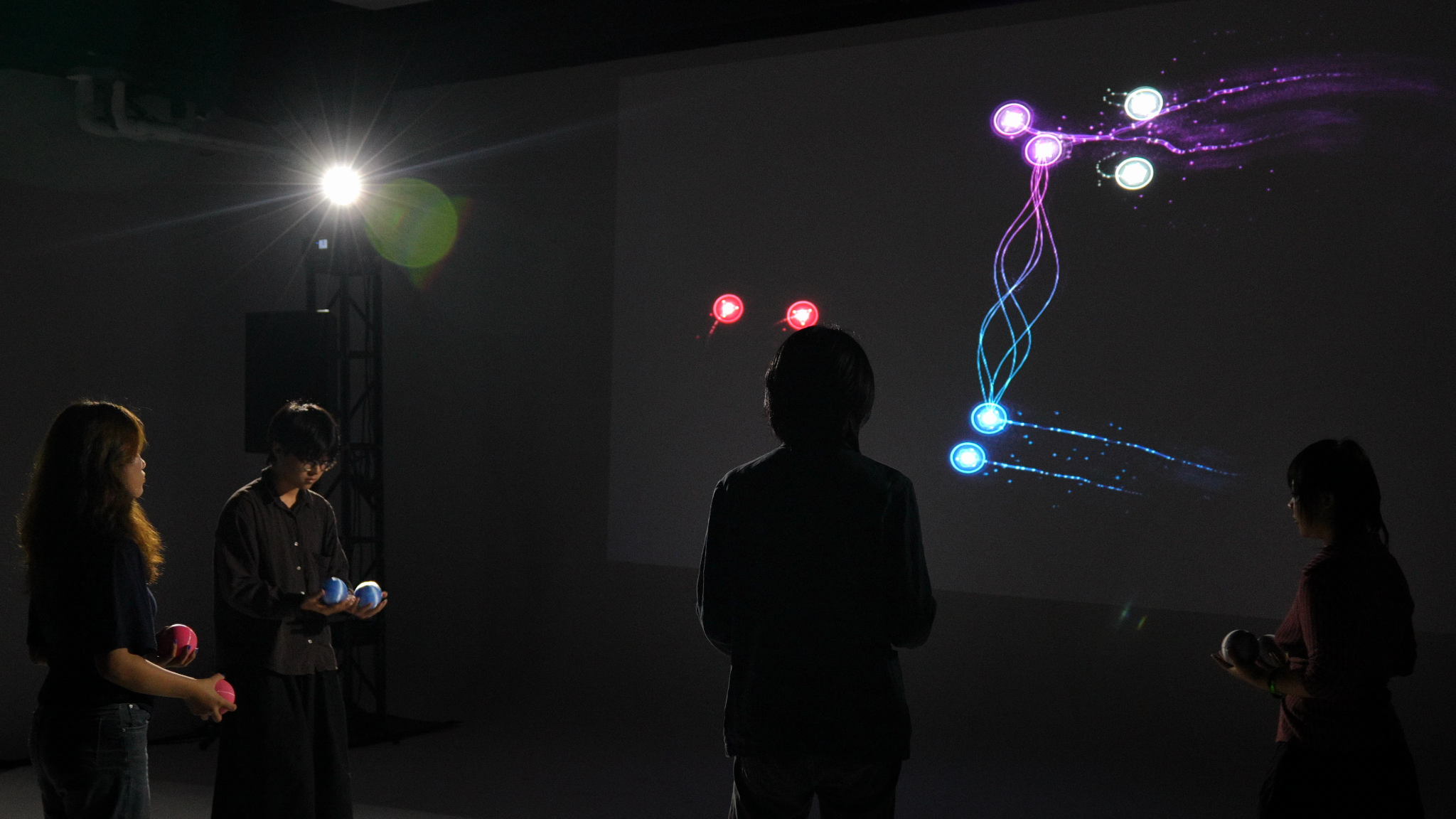
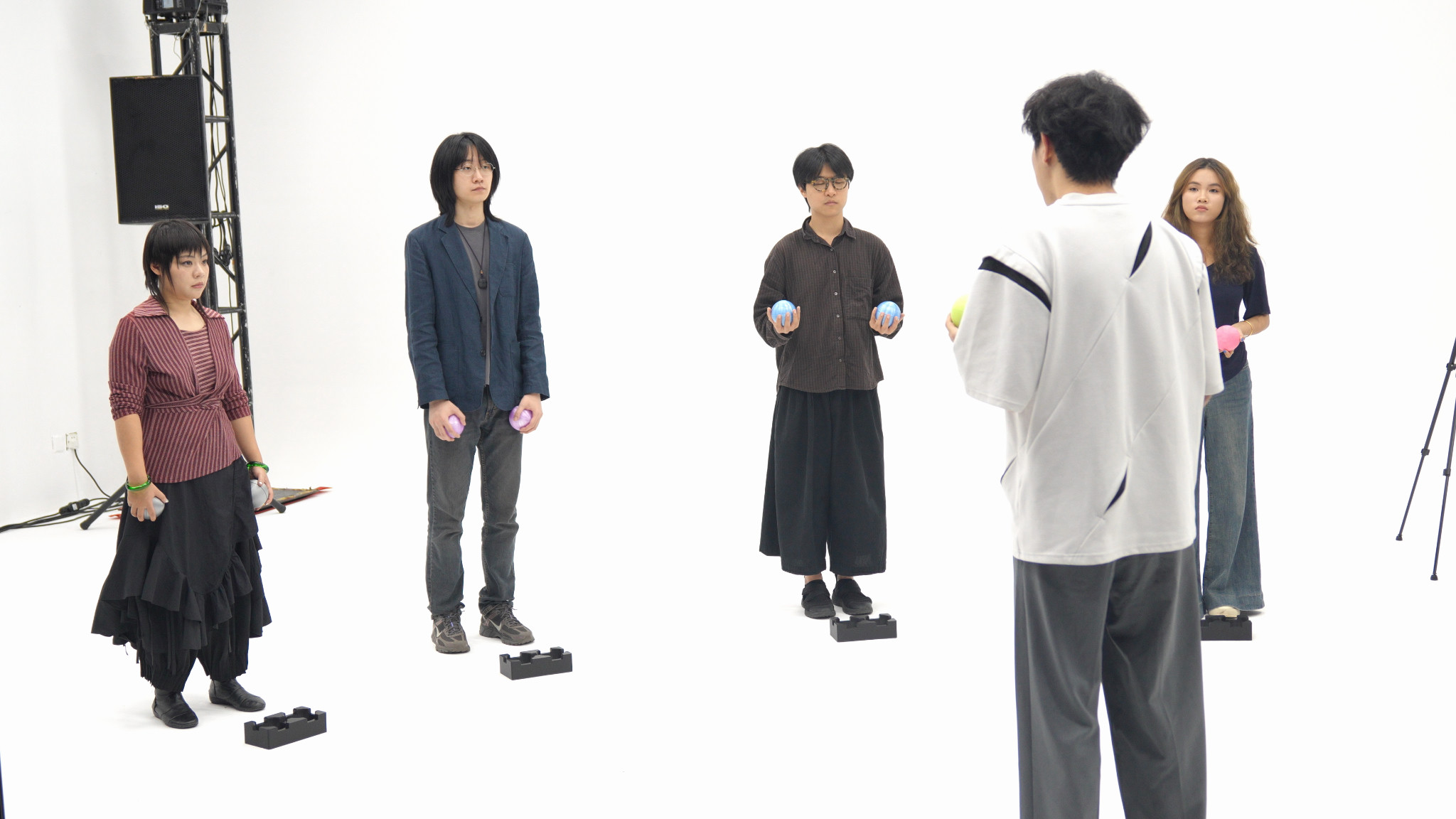
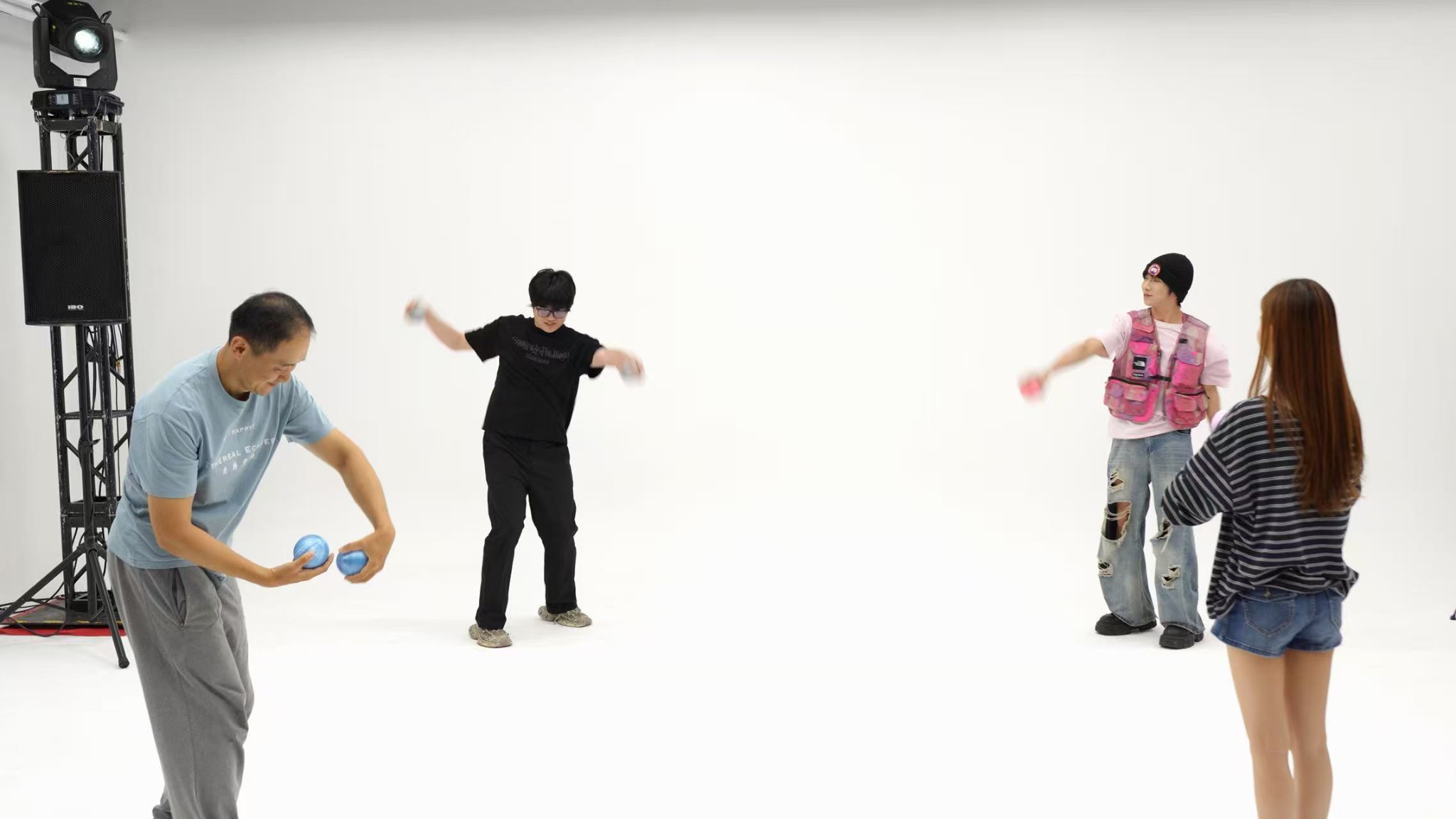
Four participants use paired motion-sensing balls to shape sound and projected visuals, encountering and responding to one another’s actions. CoMotion explores how artistic intentions develop through movement, observation, and response within a shared audiovisual environment. AI participation introduces another source of proposals within this exchange. The project examines how an evolving creative environment can influence individual expression and collaborative artmaking.
How do shared sound and visuals shape the way participants develop and respond to one another’s ideas?
What changes when bounded AI proposals enter a shared creative exchange?
Video
Coming soon
Paired Motion-Sensing Objects
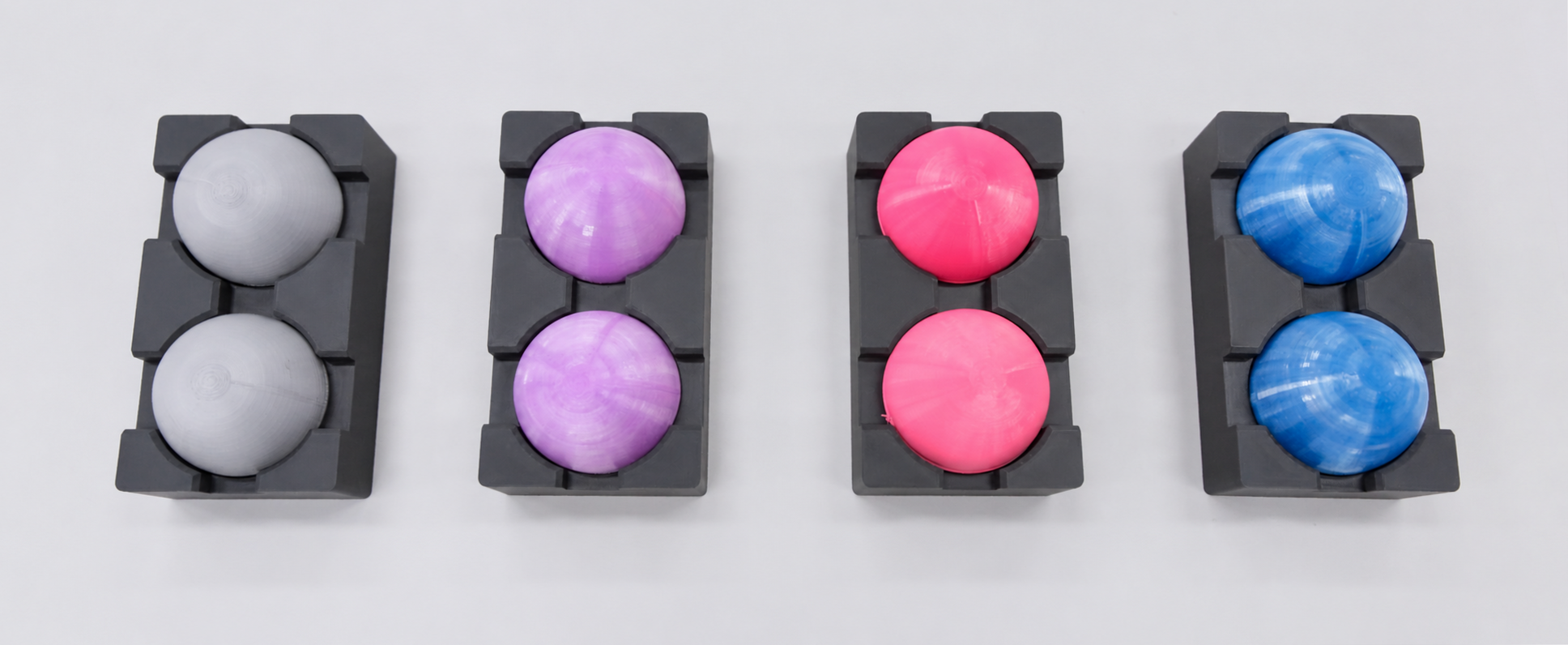
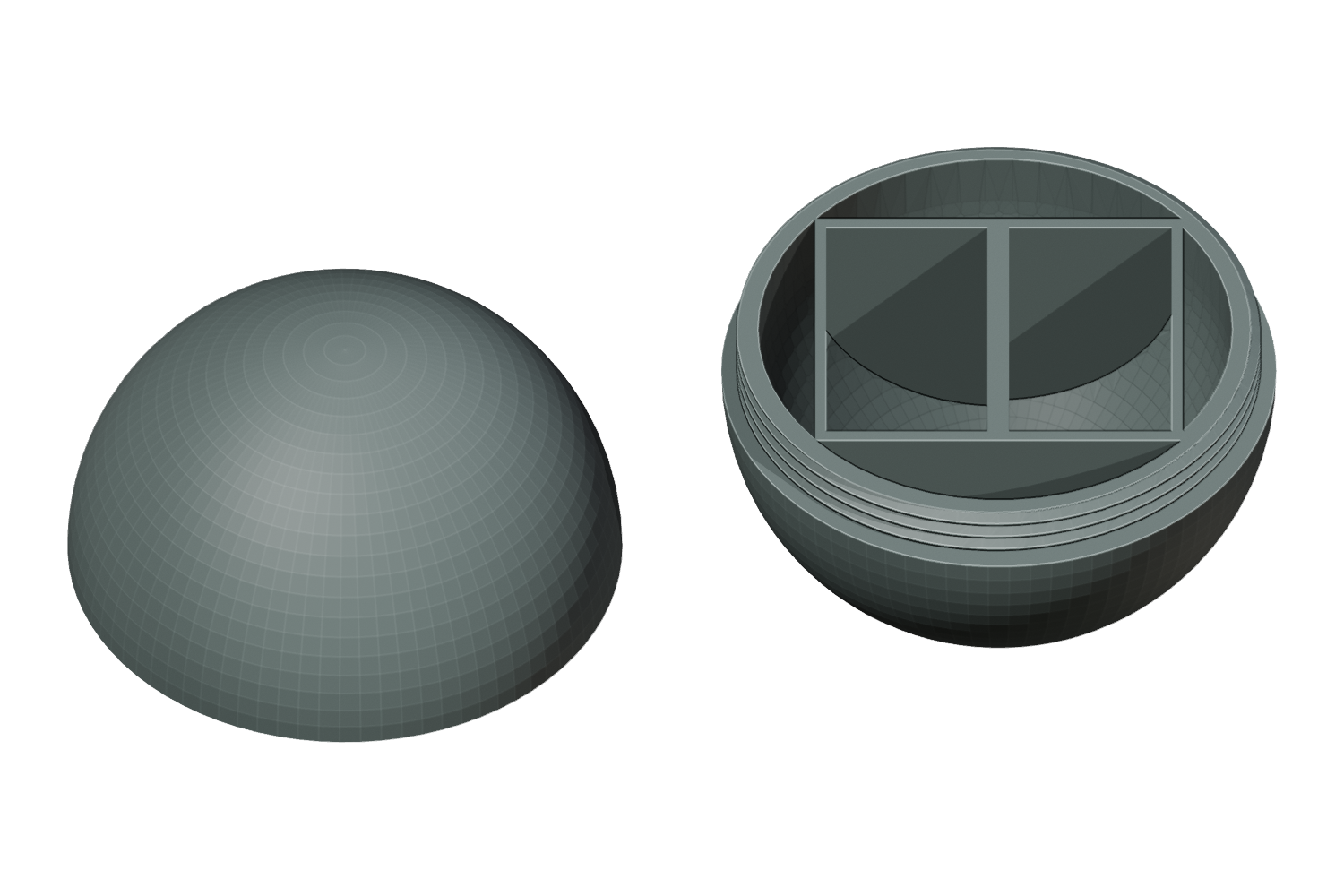
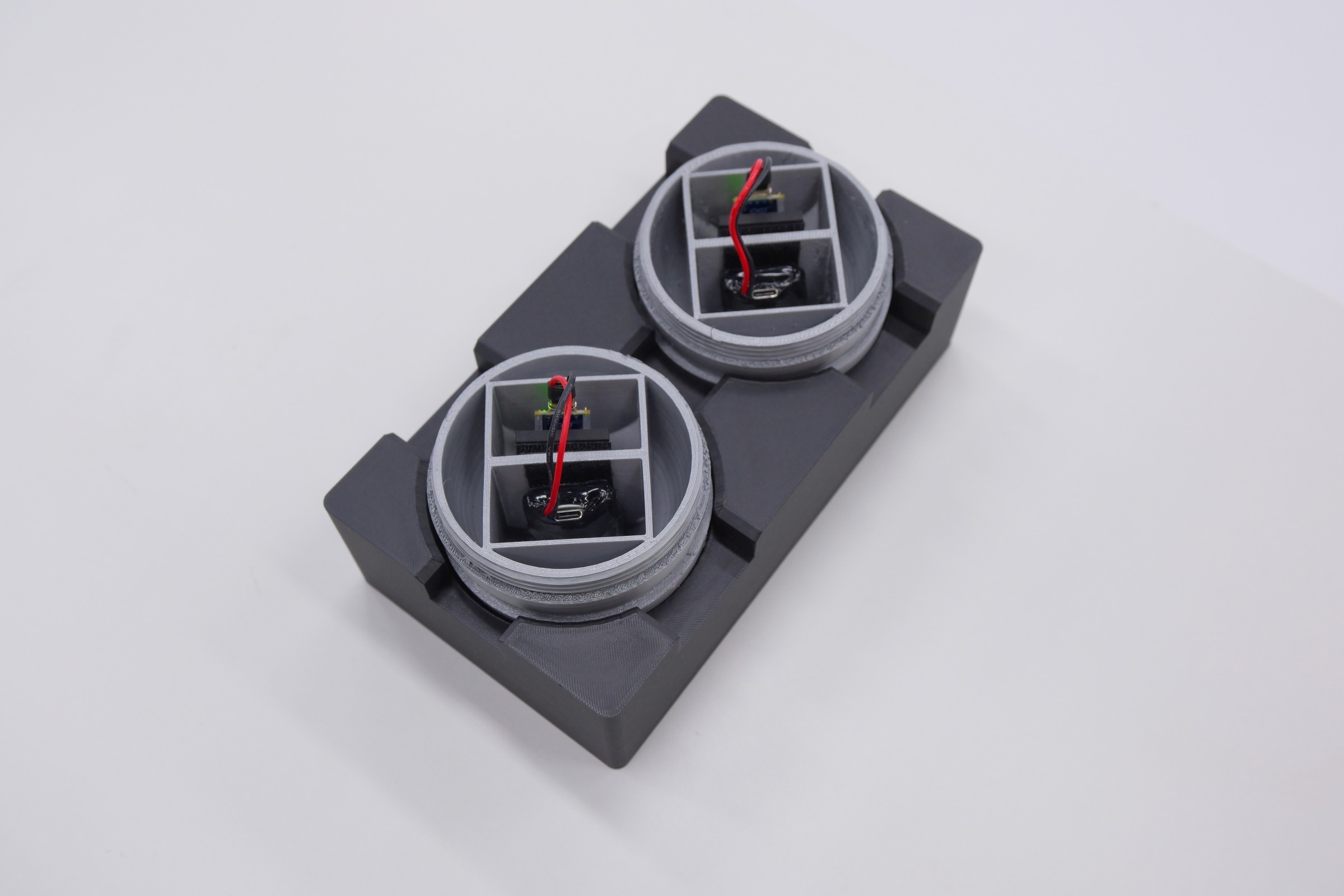
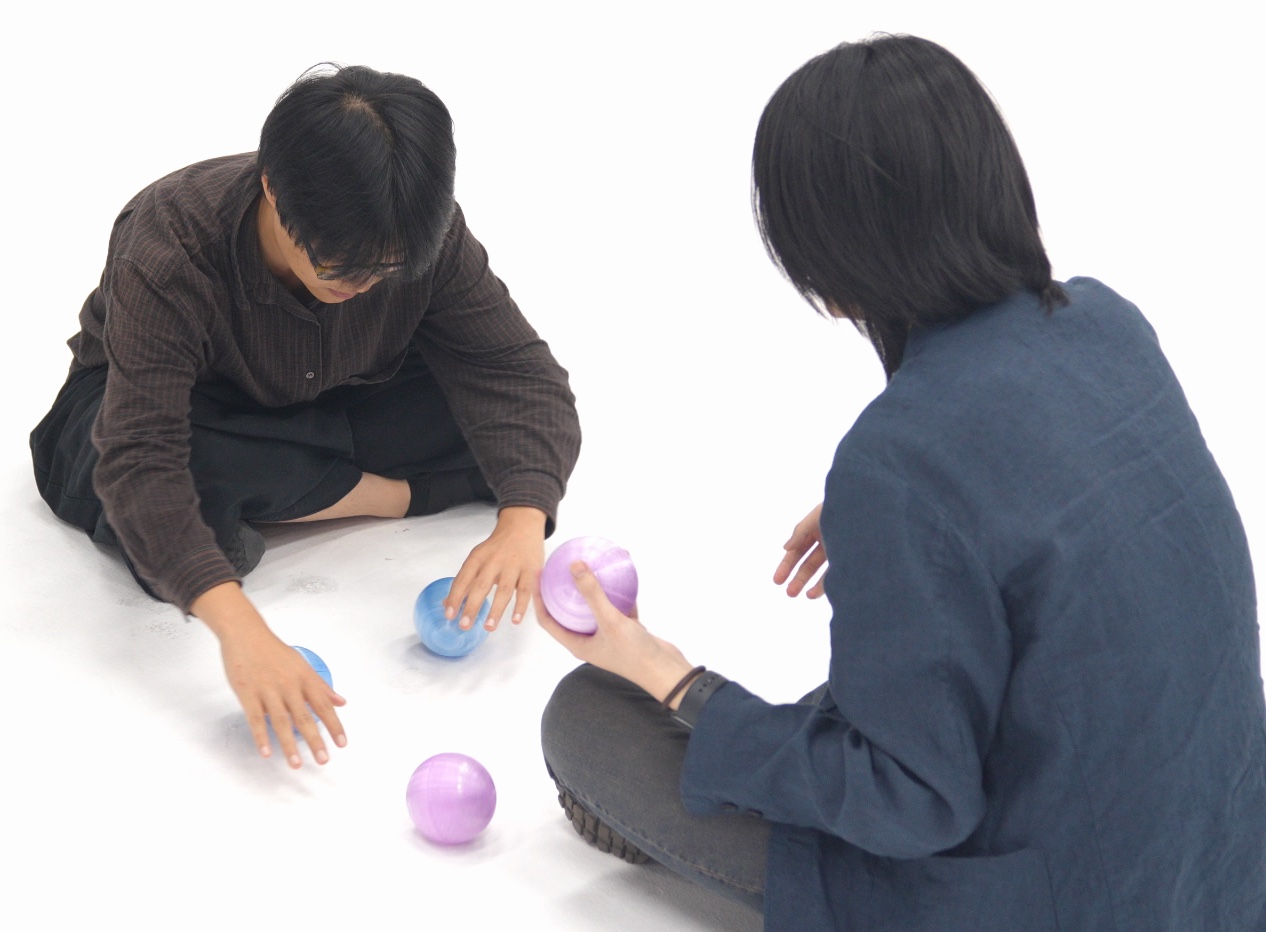
Each participant uses two wireless sensing balls that can move together, alternate, or act independently. Their spherical form leaves grip and movement direction open rather than prescribing a particular gesture. Flexible TPU shells house motion sensors and wireless electronics, translating acceleration and rotation into data for the audiovisual environment.
From Movement to Shared Feedback
The experience progresses from movement exploration without audiovisual feedback to a shared sound-and-visual environment, followed by a stage involving AI participation. This progression invites participants to discover the objects, learn through others’ actions, and reconsider their own creative choices as the environment changes.
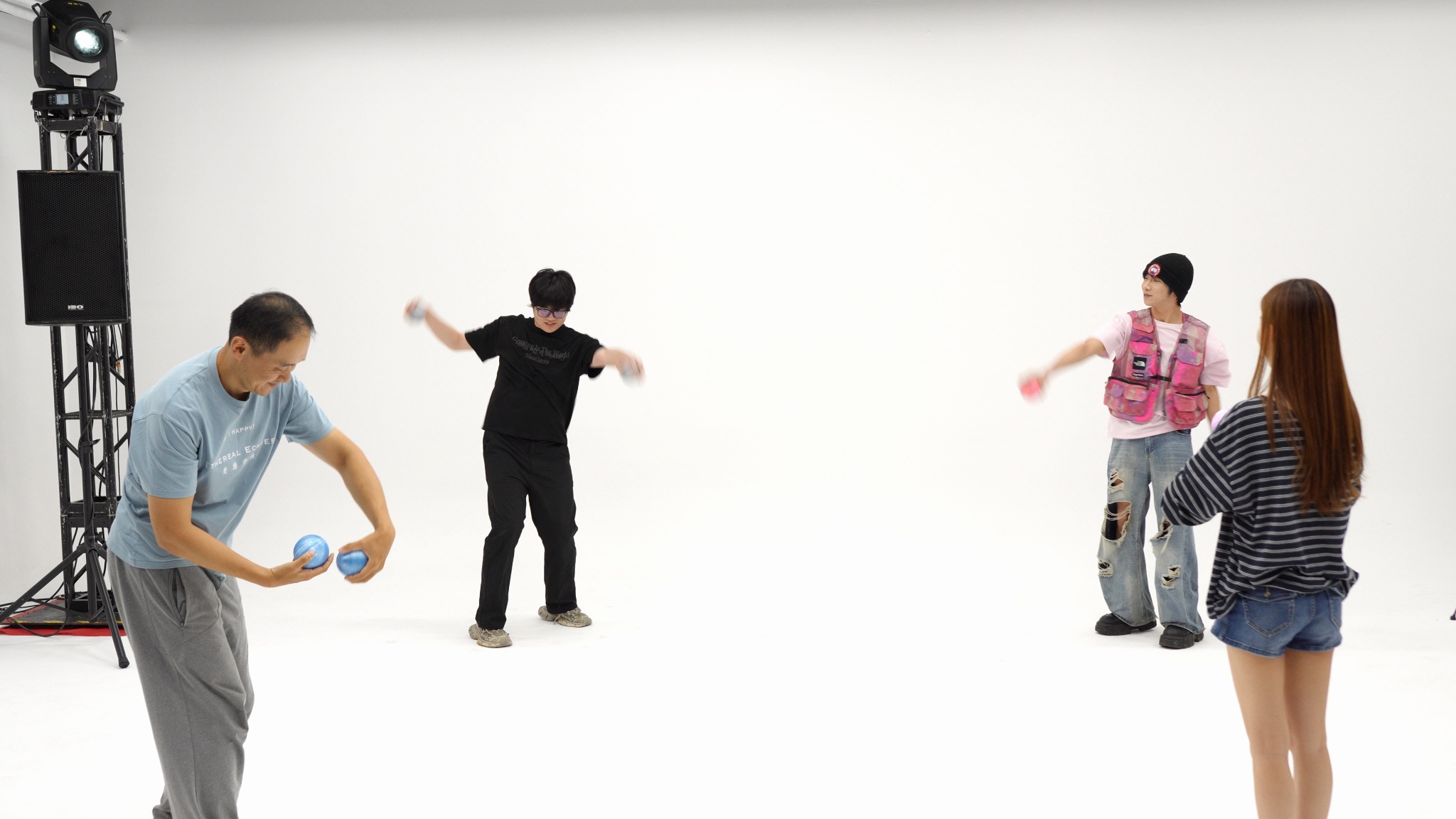
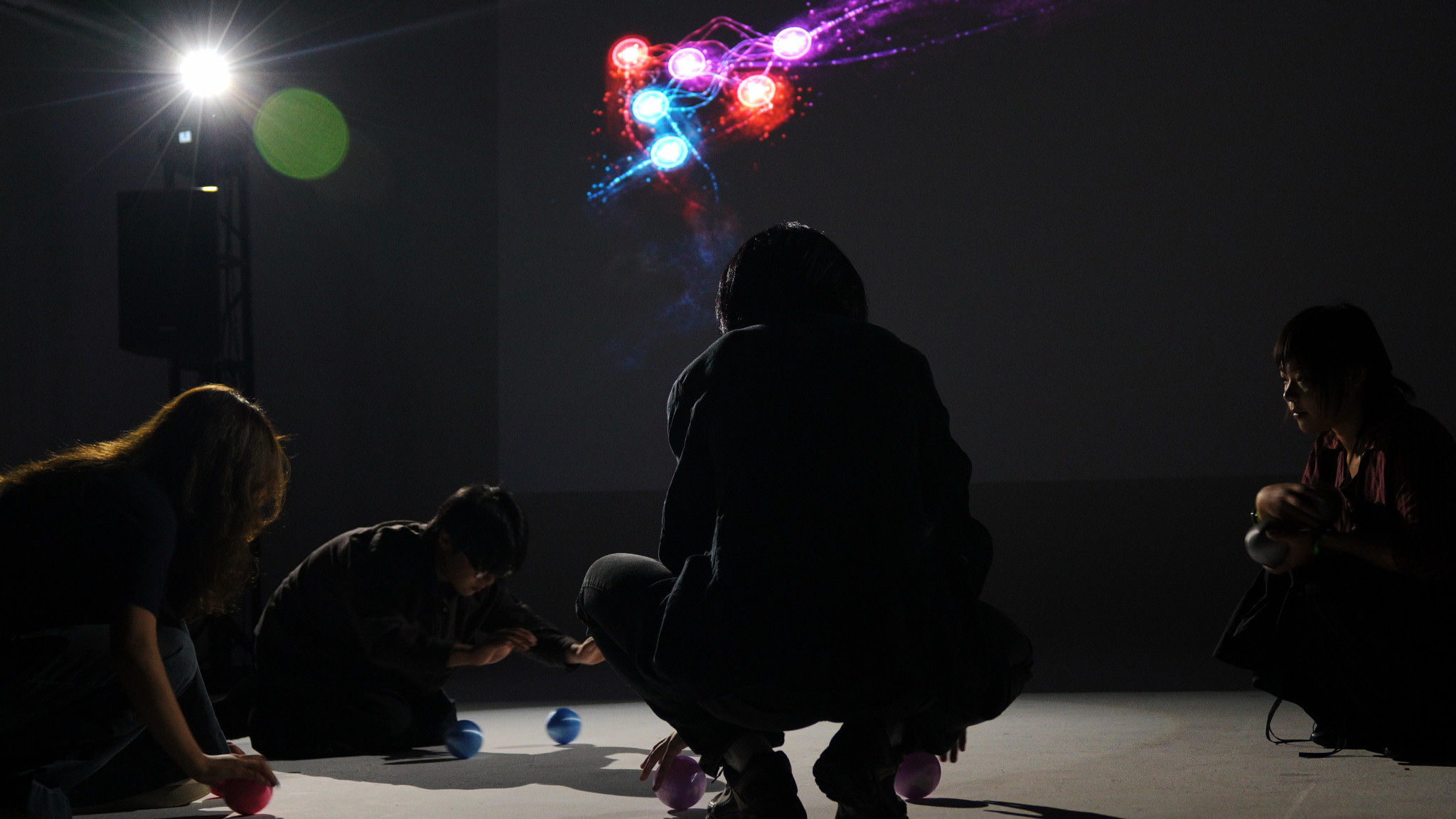
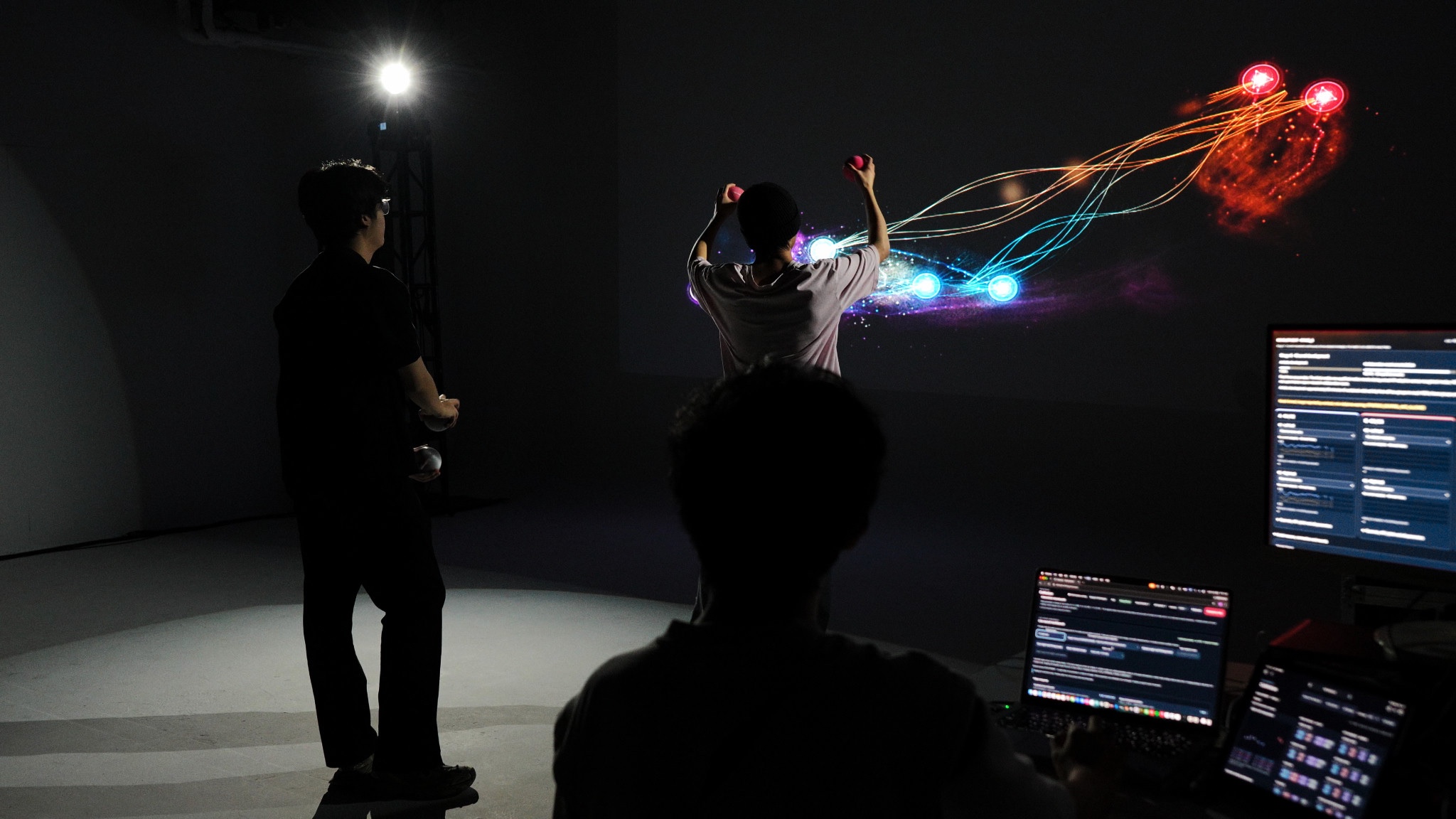
The three stages of the experience.
Sound: Individual Voices in a Shared Field
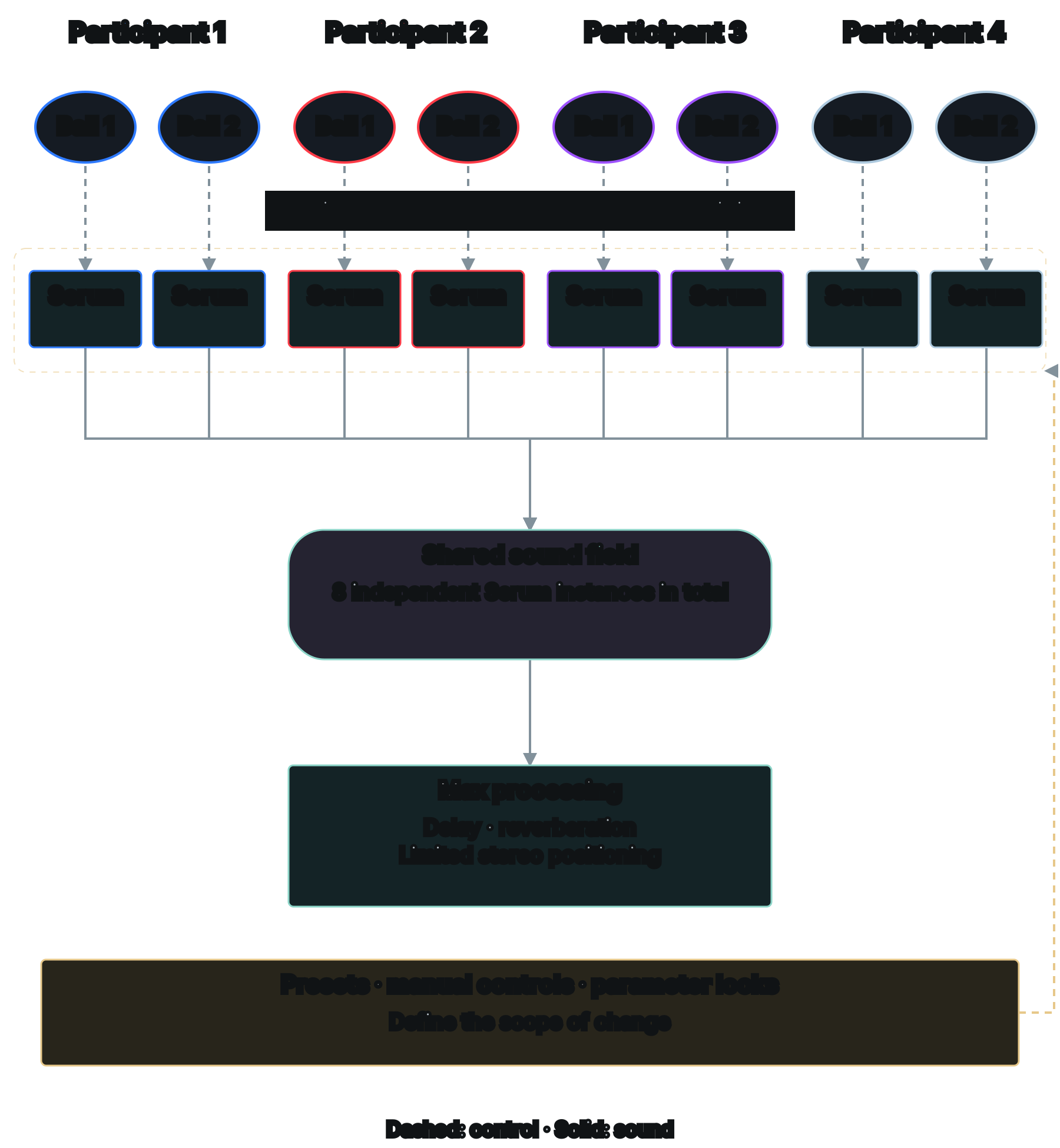
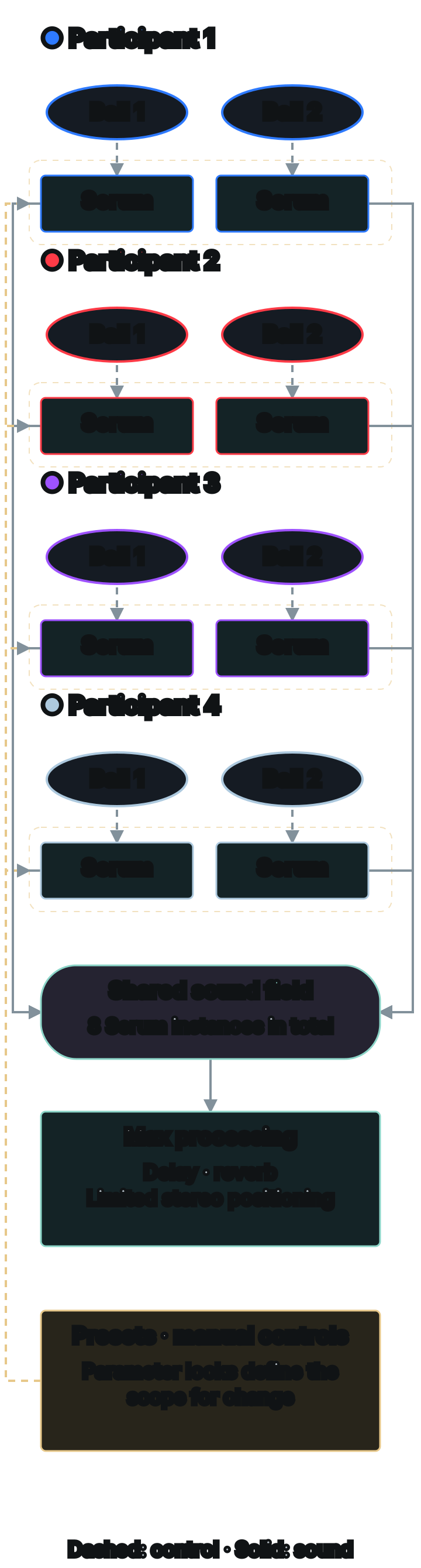
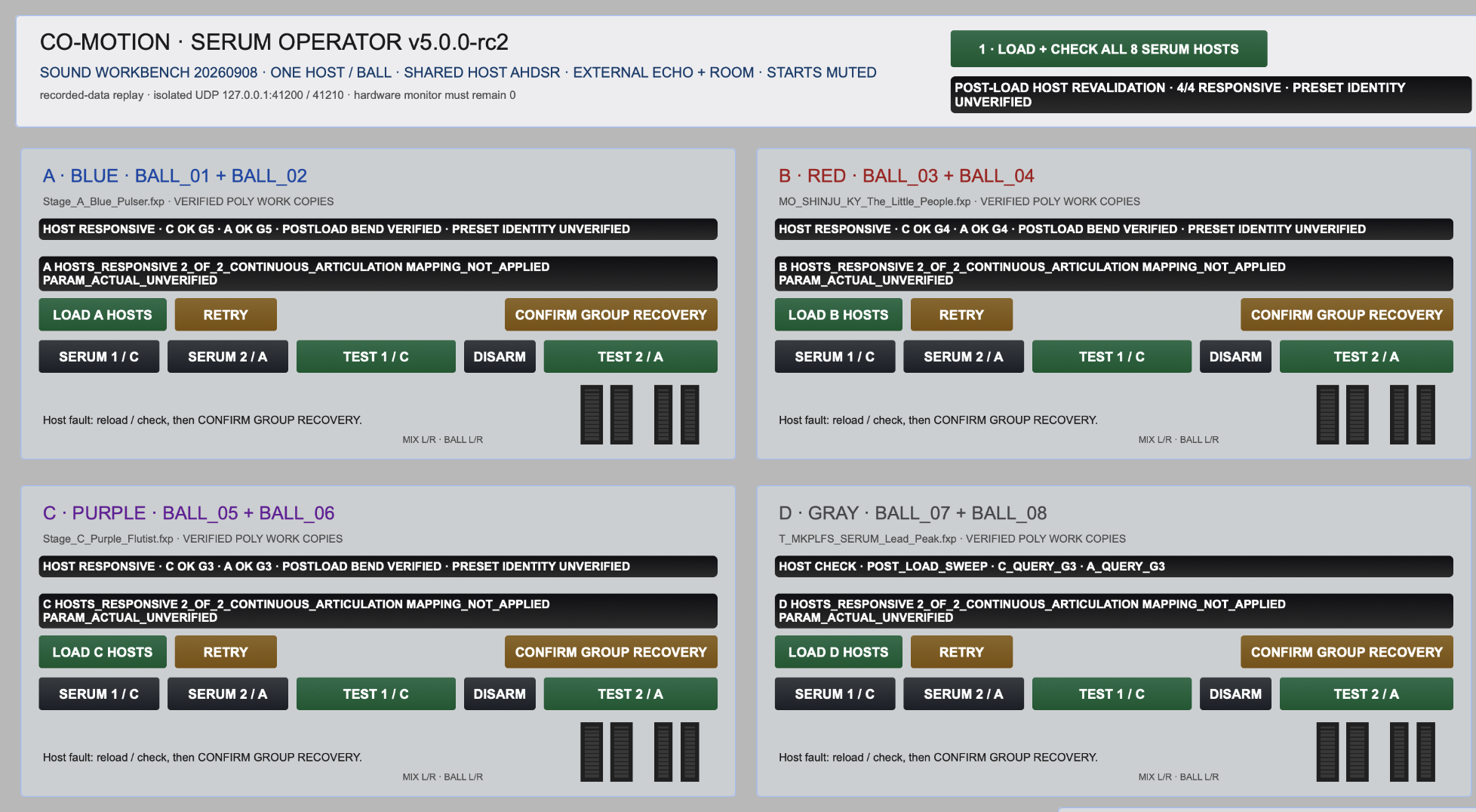
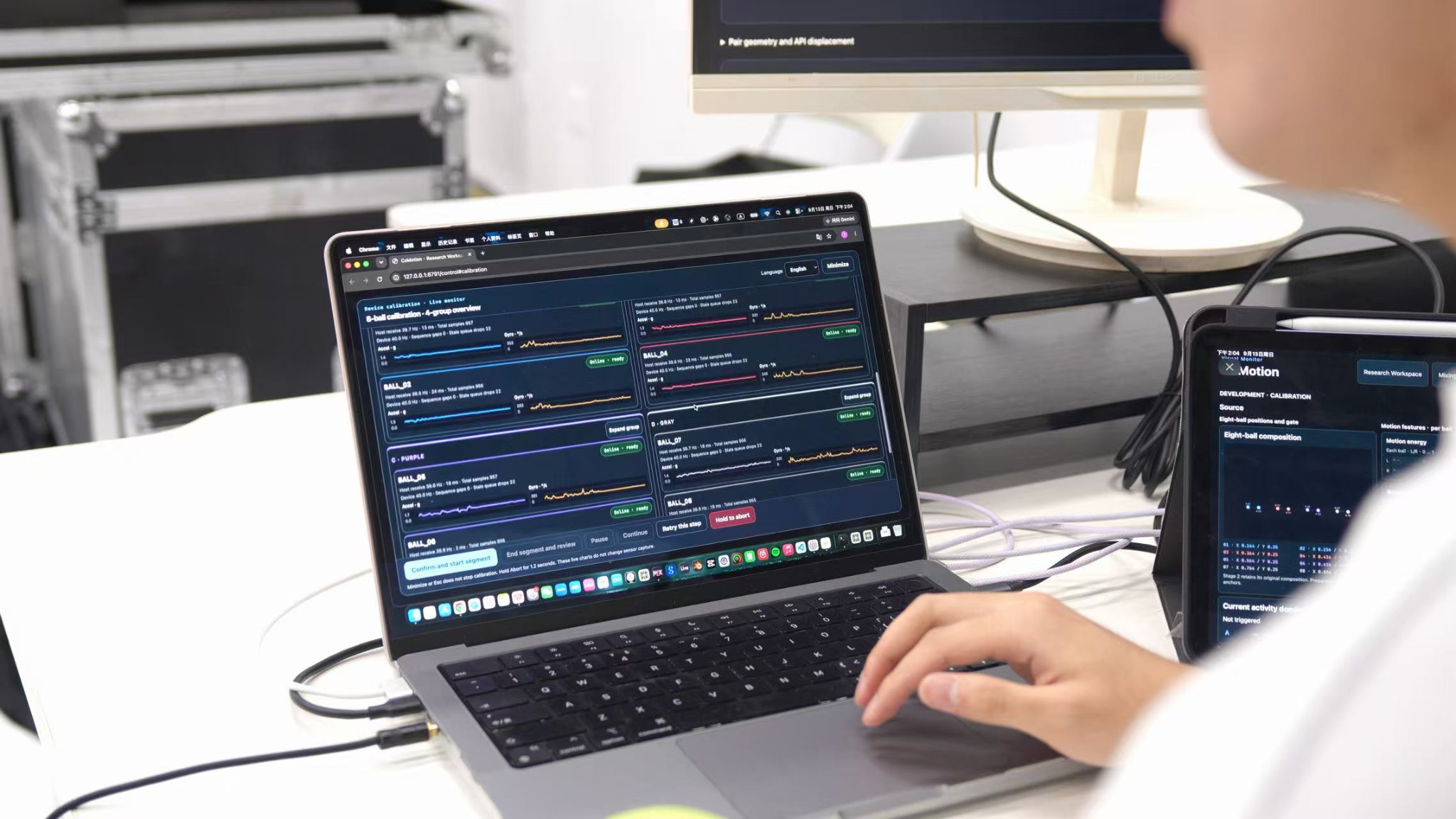
CoMotion’s sound environment is built around eight independently controlled Serum instances, giving each sensing ball a distinct control path within a shared sound field. With two balls per participant, the interface supports simultaneous, alternating, and independent actions without requiring a fixed sequence of gestures. Movement shapes articulation and timbre, while recurring motion patterns and coordination cues contribute to changes over longer timescales.
Max extends these voices with external delay, reverberation, and limited stereo positioning. Saved control settings and synthesizer presets establish a working baseline, while manual controls and parameter locks define which aspects of the sound remain fixed and which can change. The sound design therefore operates at several levels: the response to an individual movement, the development of recurring patterns, and changes to the shared sonic environment.
The artistic focus is on how participants listen and respond within this shared field. A movement produces a sonic consequence that becomes part of the environment encountered by others, opening possibilities for imitation, contrast, and adjustment. This makes sound both a medium of individual expression and a condition through which collaborative choices can develop.
Four participants, one shared sound field
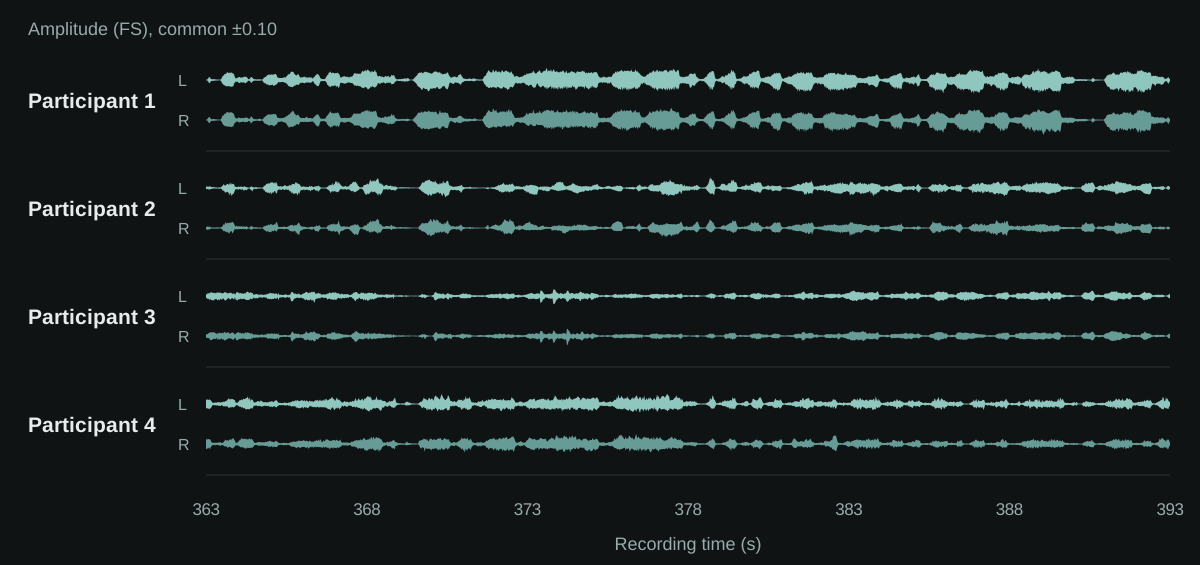
Four stereo outputs
Amplitude (FS), common ±0.10
Participant 1
Participant 2
Participant 3
Participant 4
Source recording time (seconds)
Listen to the shared sound field
Select one or more participants, then play the same 30-second interval together.
Ready
Select any combination of participants to hear how their voices combine.
Recording context and original excerpts
Stage 2 development recording. The four tracks share one capture sample grid.
Visual: Traces and Relationships
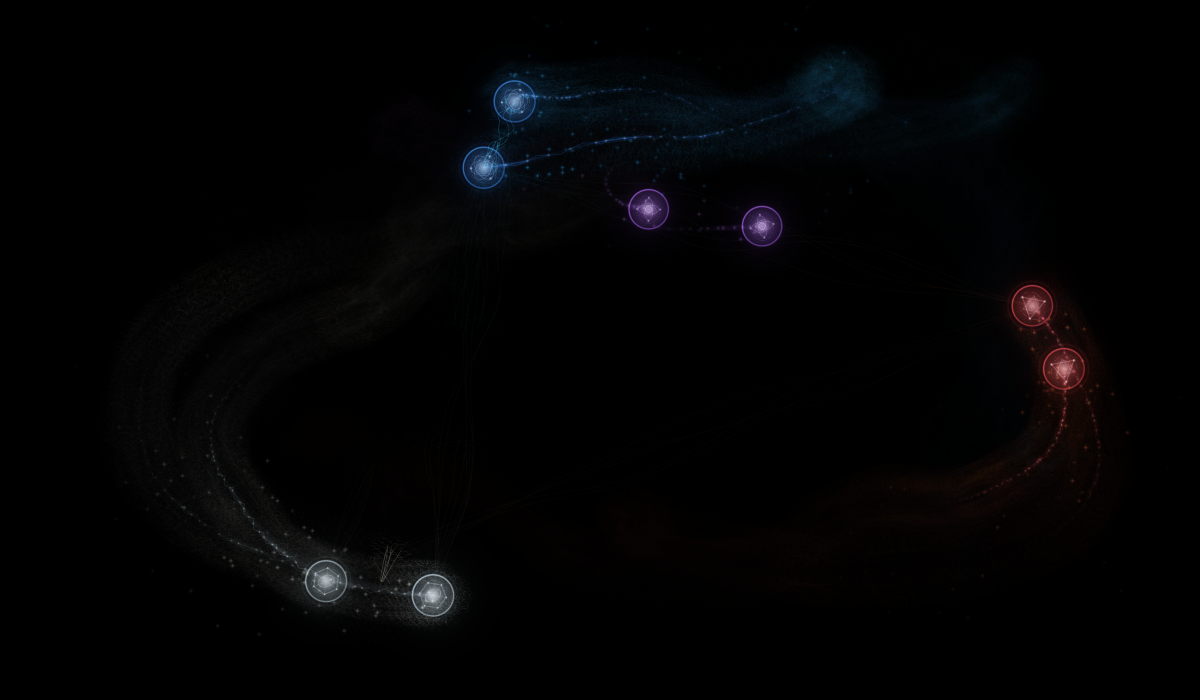
In the visual environment, participant colors, motion traces, event pulses, and connecting threads make individual activity and relationships visible. The generated positions describe activity within the visualization rather than tracking physical locations in the room.
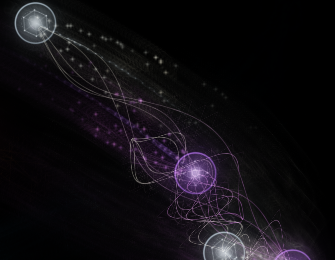
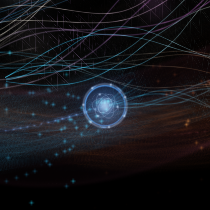

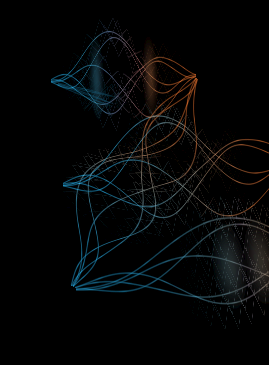
Visual layers: identity traces, event pulses, textures, and relational threads.
Bounded AI Participation
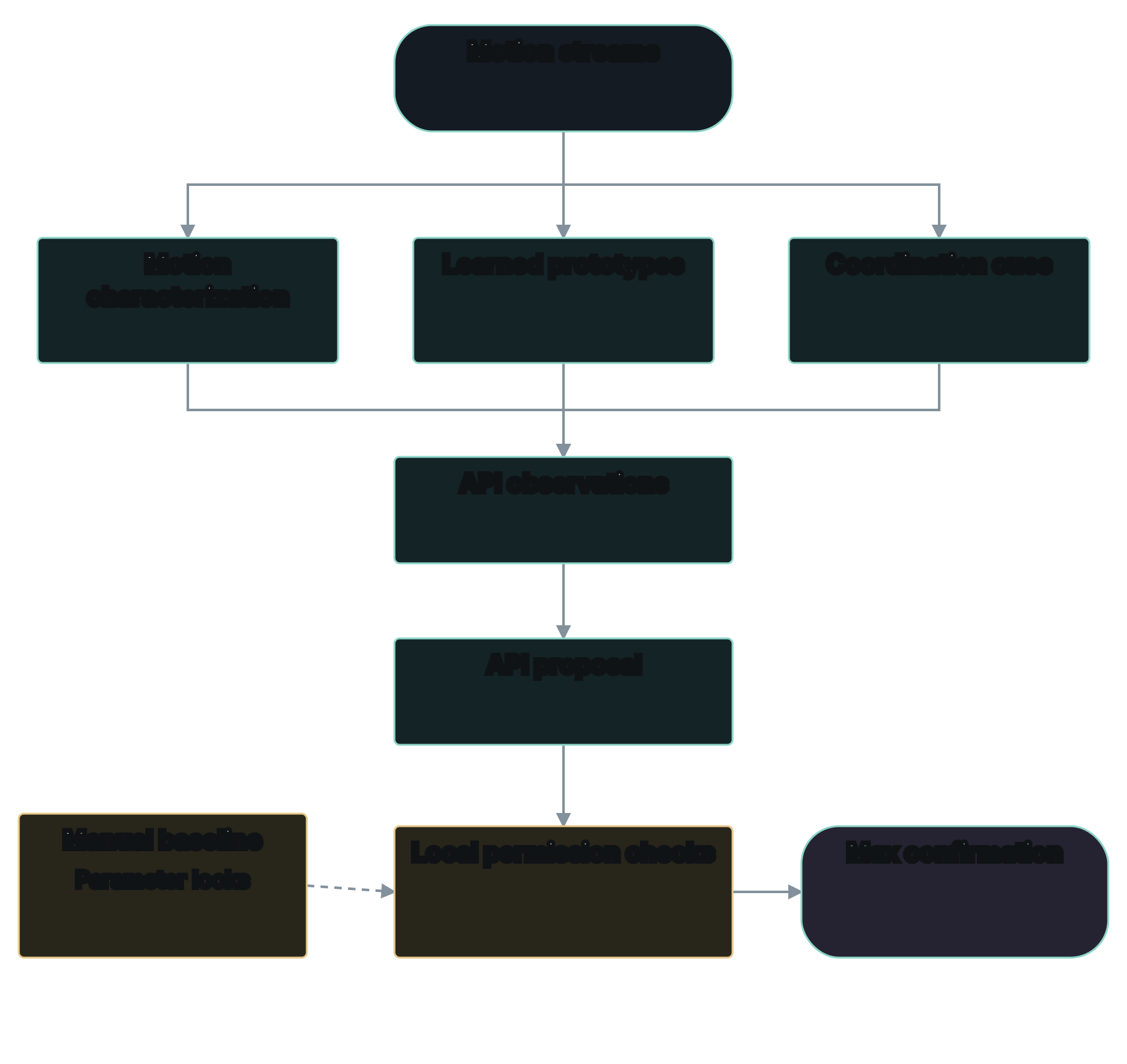
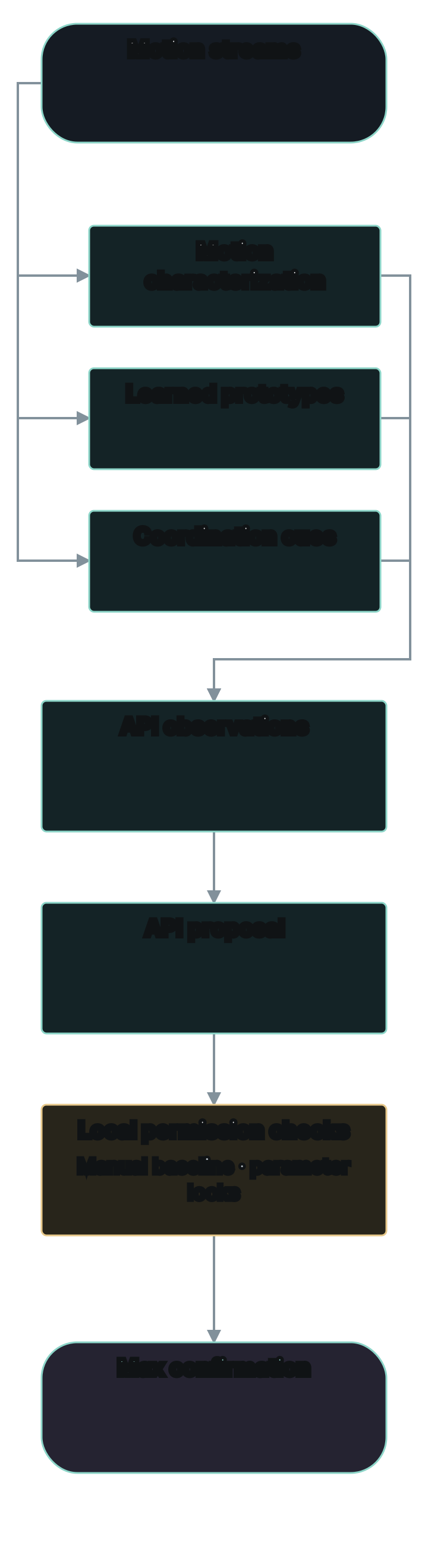
Movement summaries and coordination cues inform AI proposals for audiovisual changes. These proposals operate within defined permissions and parameter limits, alongside manual controls. Separating a proposed change from its adoption and execution makes AI participation inspectable while preserving human oversight of the creative environment.
Bounded AI participation
Discussion
CoMotion approaches artistic intention as something that can be revised through an encounter with others. Its central question is how a participant’s emerging idea relates to the actions of other people and to feedback from the shared environment. By changing the conditions of feedback across stages, the project creates a setting for examining how people initiate, borrow, negotiate, or redirect creative actions. AI participation extends this inquiry by introducing proposals whose influence must be considered alongside familiarity with the interface and learning through repeated interaction.
Reflection
The three-stage structure changes the feedback conditions while also allowing participants to become more familiar with the interface. Changes in later stages therefore cannot be attributed simply to AI: repeated interaction, observing others, and becoming familiar with audiovisual feedback may all have an effect. The next step is to examine how specific ideas are taken up, changed, or abandoned by others, rather than assuming that adding AI improves collaboration.
 GEMINI